


Short drama monetisation, from coins and VIP to brand deals, with honest numbers
A guide to monetising short drama: four revenue streams, a 70/30 creator split, how coins and VIP work, and realistic funnel numbers before you calculate what a title is worth.
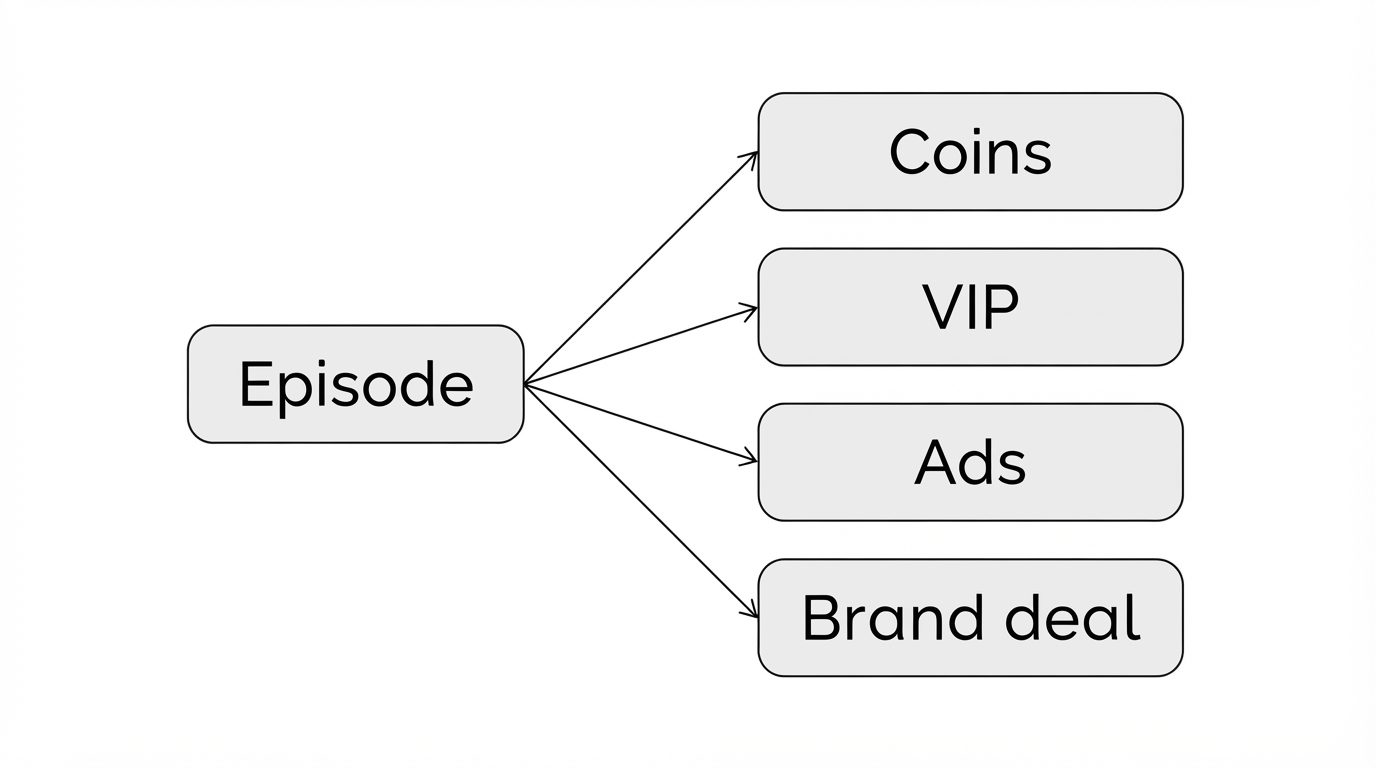
Short drama revenue does not arrive through one door. Four streams are common, and each behaves on a different rhythm. Understanding which one your title actually earns from changes what you should improve next.
The calculation that disappoints creators almost always starts from the assumption that a viewer equals a buyer. In reality there are several layers of shrinkage between the two, and the shape of that shrinkage is fairly consistent across genres.
This page covers the streams, the split, the funnel, and the arithmetic for valuing one title, so you can decide where to spend effort before spending money on promotion.
The key points on this page
- Four revenue streams that behave very differently: coins, VIP, ads, and brand deals.
- A 70/30 split in the creator's favour, calculated on net revenue per episode.
- Realistic funnel numbers: out of a hundred viewers, only a small fraction ever pay.
- Why giving away early episodes raises total revenue rather than lowering it.
- How to value a title before deciding to extend it or replace it.
Four revenue streams and how each behaves
Coins are per-episode purchases. A viewer unlocks a locked episode with credit bought earlier. This stream is tied most directly to cliffhanger strength: the stronger the last free episode, the more people pay for the next.
VIP is a subscription. Viewers pay periodically to unlock many titles at once. It is steadier, but the split is calculated from viewing share, so titles with many episodes and deep retention take a larger portion.
Ads produce the least per viewer but apply to everyone, including people who never pay. Brand deals are the only stream whose value is negotiated directly rather than set by the platform, and they usually open only once a title has an audience with a clear identity.
The 70/30 split and what counts as net revenue
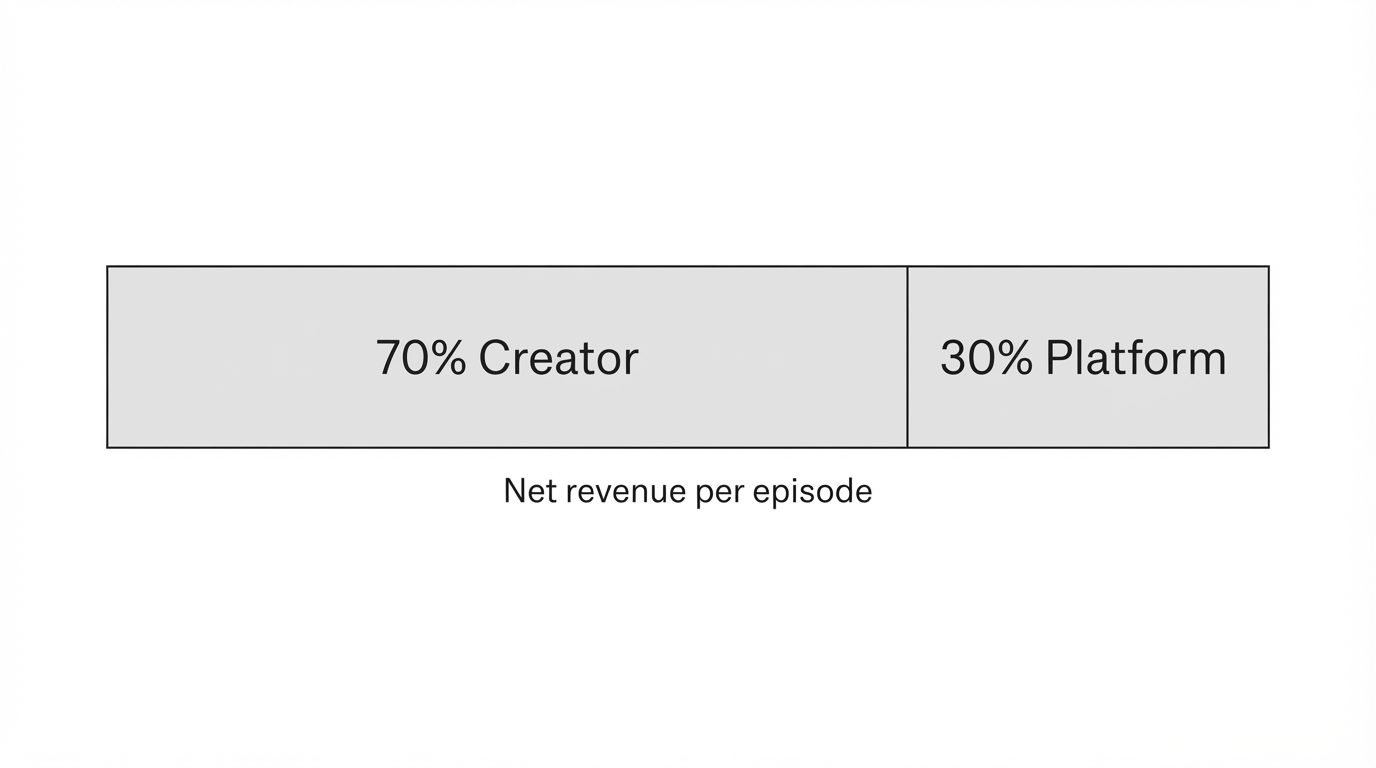
Microdrama AI splits revenue 70% to the creator and 30% to the platform. What gets split is net revenue per episode, meaning after payment processing fees and app store commissions have been deducted.
The difference between gross and net matters from the start. Coin purchases made through a mobile app pass through the app store, which takes its own cut before the figure reaches the platform. Coins bought through the web therefore return more to the creator for the same amount paid.
Accounting runs per episode rather than per title. That makes the report show clearly which episodes viewers were most willing to pay for, and you can use that to decide where the lock belongs on your next title.
Realistic funnel numbers, not marketing numbers
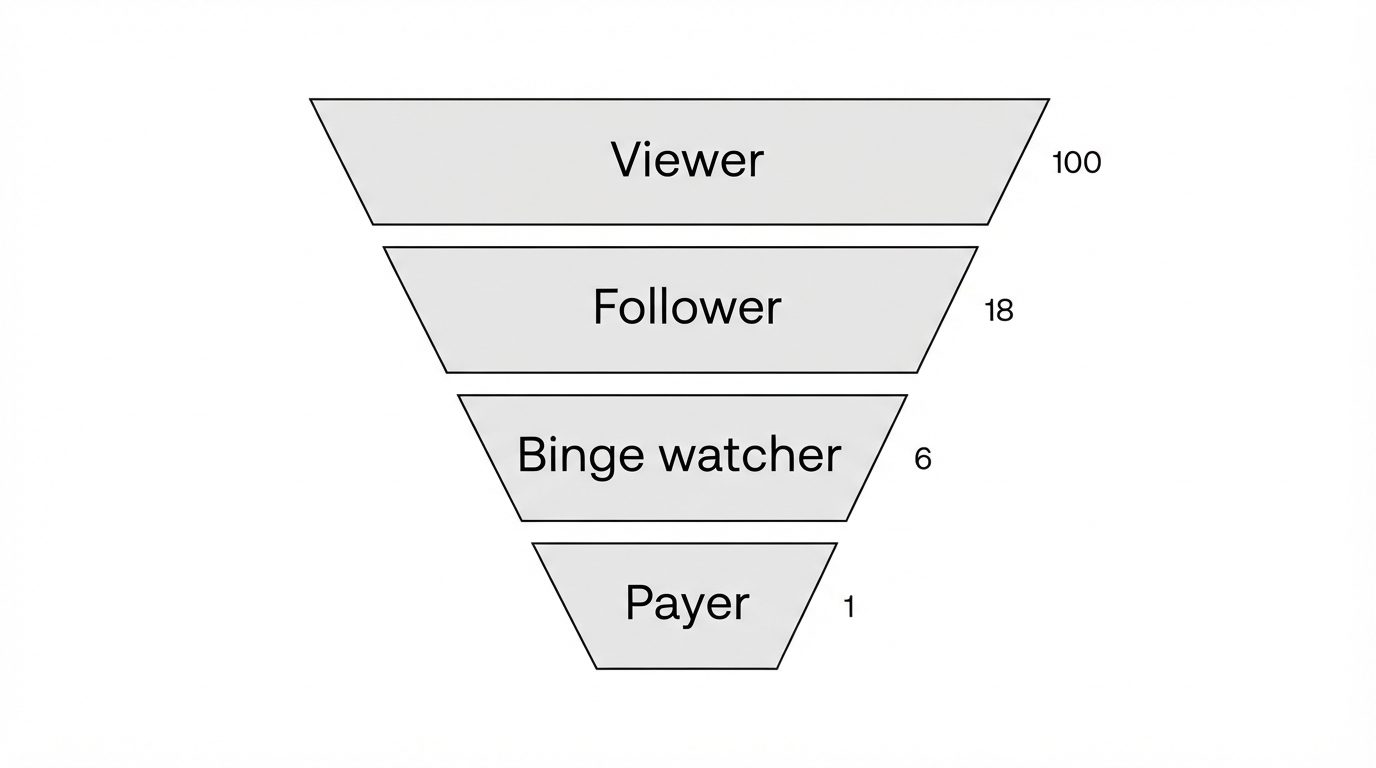
Out of a hundred people who see the first episode, typically a dozen or so follow the account, fewer than ten watch past five episodes, and roughly one eventually pays. The figures vary by genre and market, but the order of magnitude is fairly consistent.
The conclusion is not that monetisation is unviable. It is that episode count and retention decide outcomes more than impressions do.
So before increasing a promotion budget, check which episode your viewers stop at. That single number caps everything downstream.
Why free episodes raise total revenue
The biggest temptation for new creators is locking episodes too early. The result is almost always the same: few people pay, because few were given time to become attached.
The pattern that works lets viewers in far enough that they have something they want to know. For most titles, a healthy lock point sits after the opening episodes and exactly when a large question has just been opened.
Where the lock sits matters more than how many episodes are free. Locking immediately after the strongest cliffhanger converts far better than locking at a round number.
This is easy to test without risk: shift the lock one episode forward or back on your next title and compare what share of viewers open the first paid episode.
Valuing a title before you extend it
Before committing to another forty episodes, calculate three numbers: how many viewers reach the lock, what percentage of those pay, and average revenue per payer.
Each is improved differently. The count reaching the lock is improved through the hook and early retention. The paying percentage is improved through lock placement and the strength of the cliffhanger on the last free episode. Revenue per payer is improved through title length, because people who have already paid tend to continue.
If one of the three sits well below your other titles, fix that one before adding length. Extending a title that leaks early only increases cost without increasing return.
Brand deals: when they make sense and how to price them
Brand deals usually make sense only once a title has an audience you can describe in one sentence: who they are, roughly how old, and what they care about. Brands buy that clarity, not follower counts.
The least damaging format is product placement that becomes part of the conflict rather than an insert that halts the story. If the brand appears and the scene resumes as though nothing happened, viewers feel it and retention drops.
When assessing an offer, compare it with the title's organic revenue over the same period. A deal paying the equivalent of one month of coin revenue while depressing retention for ten episodes is not a good trade.
How to use this theme in production
Map your active revenue streams
Note which are running: coins, VIP, ads, or brand deals.
Find the stopping point
Identify the episode where most viewers leave. That is your monetisation ceiling.
Place the lock after the strongest cliffhanger
Not at a round episode number, but right after the biggest question opens.
Calculate the three core numbers
Viewers reaching the lock, share who pay, and average revenue per payer.
Fix the weakest number first
One at a time, and give it a full title before judging the result.
Only then extend the title
Adding episodes pays off only after early retention and conversion are healthy.
คำถามที่พบบ่อย
What is the creator revenue split on Microdrama AI?
70% to the creator and 30% to the platform, calculated on net revenue per episode, meaning after payment processing fees and app store commissions are deducted.
What is the difference between gross and net revenue?
Gross is what the viewer pays. Net is what remains after payment fees and app store commissions. The 70/30 split is applied to the net figure, not the gross one.
Which revenue stream is largest for a new creator?
Usually coins, because they connect directly to cliffhanger strength and do not require a large audience. VIP becomes more meaningful once a title has many episodes and deep retention.
How many episodes should be free before locking?
Placement matters more than count. Lock immediately after the strongest cliffhanger in the first act, when viewers have just received a large question they want answered.
How many viewers do you need before monetisation shows?
What matters is not the starting audience but how many stay to the lock. A smaller title with deep retention usually earns more than a viral title abandoned at episode three.
Is revenue counted per title or per episode?
Per episode. That makes reporting show clearly where viewers were most willing to pay, so you can adjust lock placement on the next title.
Do web and in-app coin purchases return the same amount?
Not exactly. In-app purchases pass through app store commissions first, so net revenue for the same amount paid is usually lower than for a web purchase.
When do brand deals start making sense?
Once you can describe a title's audience in one sentence: who they are and what they care about. Brands are buying that clarity rather than raw follower counts.
How do you place a product without damaging the story?
Make the product part of the conflict rather than an insert that halts it. If the scene resumes as though nothing happened after the brand appears, viewers feel it and retention drops.
Do older titles keep earning?
Yes, and that is an advantage of the serial format. New viewers enter at episode one at any time, so a finished title keeps earning while it remains available and recommended.
When should you stop adding episodes to a title?
When the number of viewers reaching the lock stops growing across several consecutive episodes. Extending a title that leaks early only grows cost without growing return.
Is it better to have many titles or one long one?
One deep title usually earns more than several shallow ones, because payers tend to continue. Start a second title only after the first has proven healthy retention.


Page summary
This section answers the most common questions so you can understand the page context faster before moving to the next creative step.