


Revenge drama where bringing someone down costs the avenger too
A revenge drama guide for vertical short drama: five steps of retribution with rising cost to the lead, three kinds of target and the order to bring them down, and where sympathy should drop.
Revenge must cost the lead, not only the opponent. If the character wins without losing anything, viewers are watching a performance rather than a story. What holds them is worrying about what will remain of that character.
Revenge is the motive audiences grasp fastest and the one that empties fastest. In three seconds viewers know who was wronged and who must pay. The problem arrives at episode ten, when nothing remains to bring down.
Revenge titles that run long always share one feature: the retribution is expensive for the lead as well. Every step forward takes something from them, so viewers are not only waiting for the opponent to fall but also worrying about what will be left of the character they support.
This page covers structure: how to build the ladder of retribution, in what order targets should fall, and where to place the moment the lead crosses a line.
Why Revenge Drama works in short form
Short drama viewers decide in seconds whether to keep watching or swipe away. A familiar theme helps in exactly those seconds, because nobody needs to be taught who the characters are and what the problem is.
For you as the maker, a familiar theme also cuts the work. The conflict already has a shape, the location needs are small, and titles are easier to write. That leaves your energy for what actually sets a series apart: why the character stays, and the turn nobody saw coming.
- Viewers understand the stakes in three seconds without needing to know the characters first.
- The ladder structure gives writers a natural reason to raise stakes every episode.
- Several targets mean several small arcs that can resolve without ending the main story.
- Location needs stay small because most retribution runs through information and relationships.
- Every scene can be tested: what did the character gain, and what did they pay for it?
What to prepare before the first episode
The three points below are usually enough to move an idea from a short note to a plan you can actually shoot.
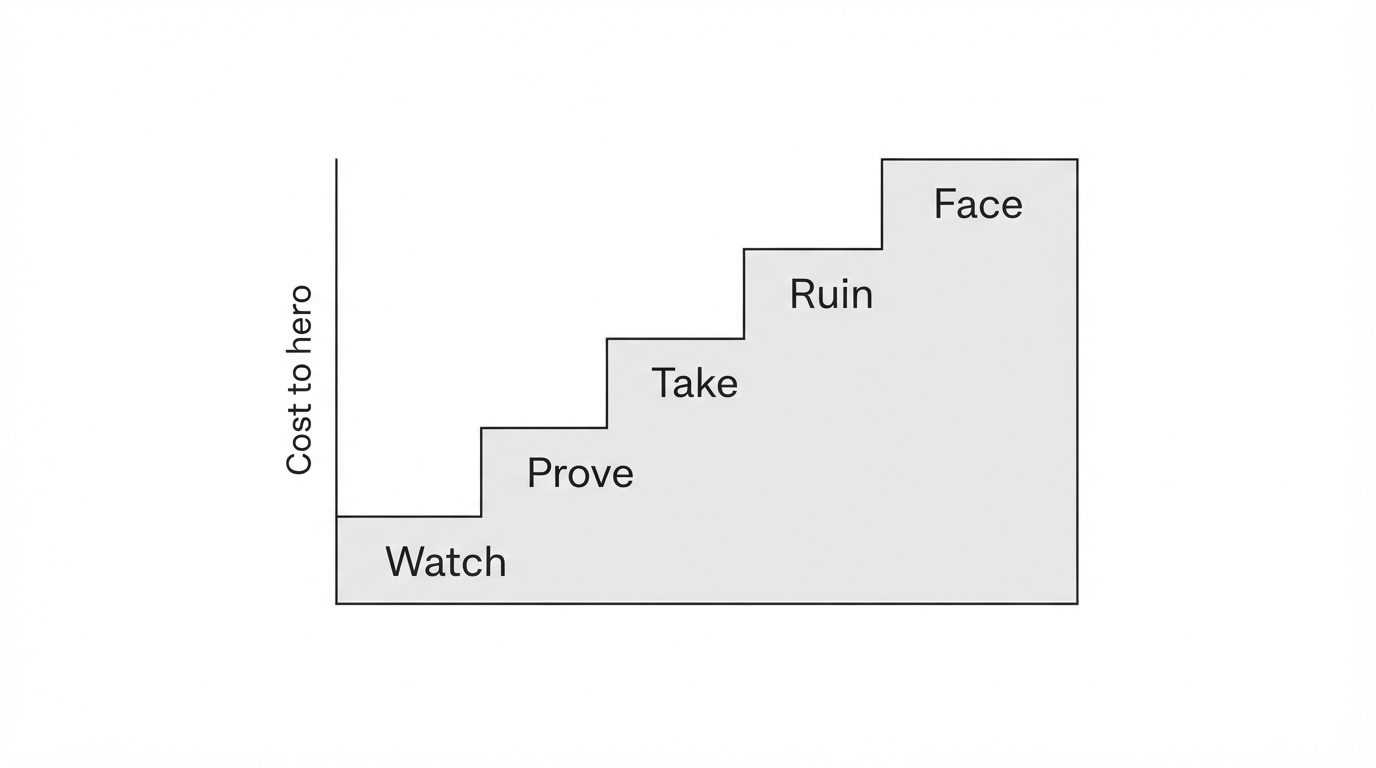
Five steps of retribution
Well-ordered revenge almost always moves through five stages: watch, prove, take, ruin, and face.
Watching is when the lead returns unrecognised and gathers information. Proving is when they obtain evidence they can use. Taking is when they begin seizing something the opponent values.
Ruining is when the opponent's loss becomes irrecoverable. Facing is the direct meeting where the opponent learns who has been behind all of it.
What rises at each step is not only the opponent's loss but the cost to the lead. At the first step they lose only time; by the fourth they have usually lost a person.
Three kinds of target and the order to take them
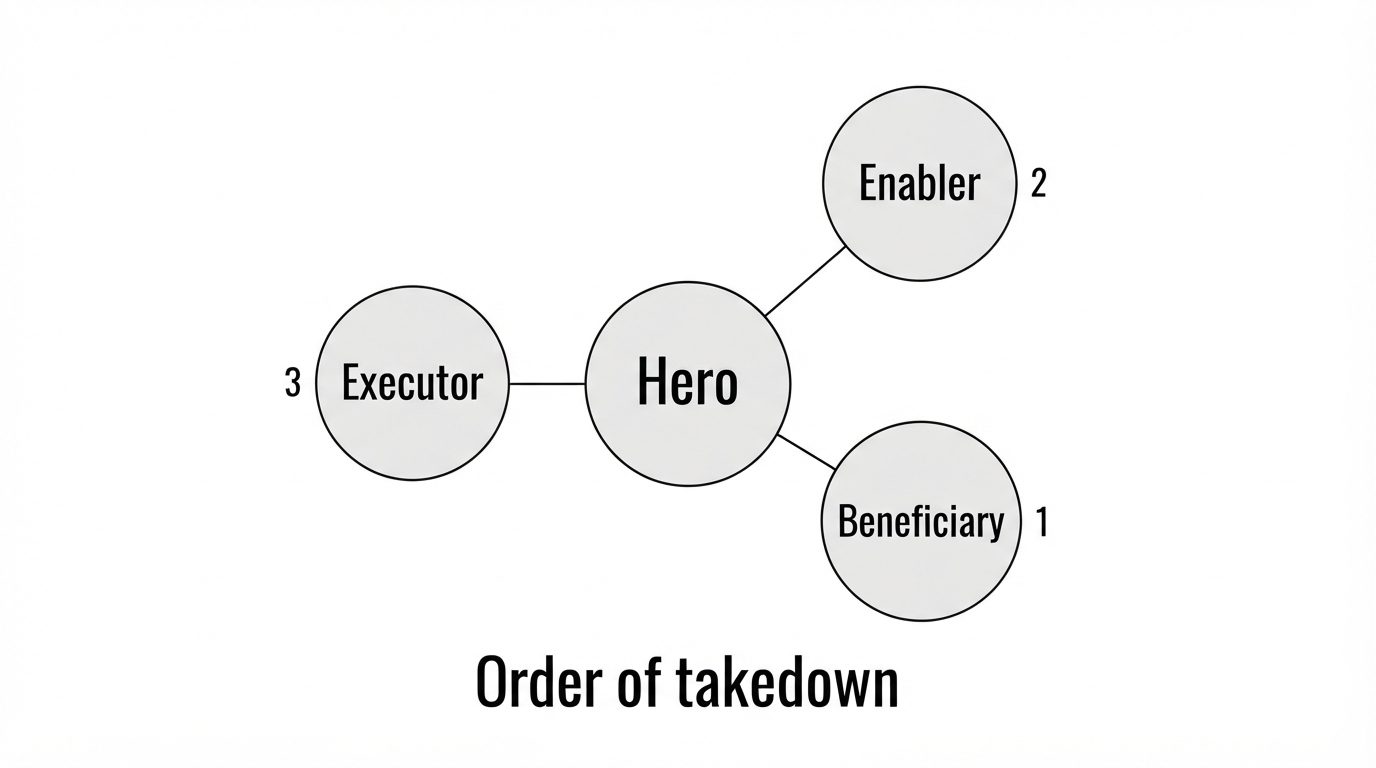
Most betrayals involve more than one person, and that benefits the story. Three roles are almost always present: the executor, the enabler, and the beneficiary.
The executor acted directly. The enabler knew and allowed it. The beneficiary gained most and usually sits furthest from the event.
The order that keeps tension climbing runs from nearest to furthest: executor first, then enabler, and the beneficiary last. With that order each victory opens the next layer and the story has a clear direction.
The reverse order almost always weakens a story, because once the mastermind falls the rest feels like tidying up.
The point where the lead goes too far
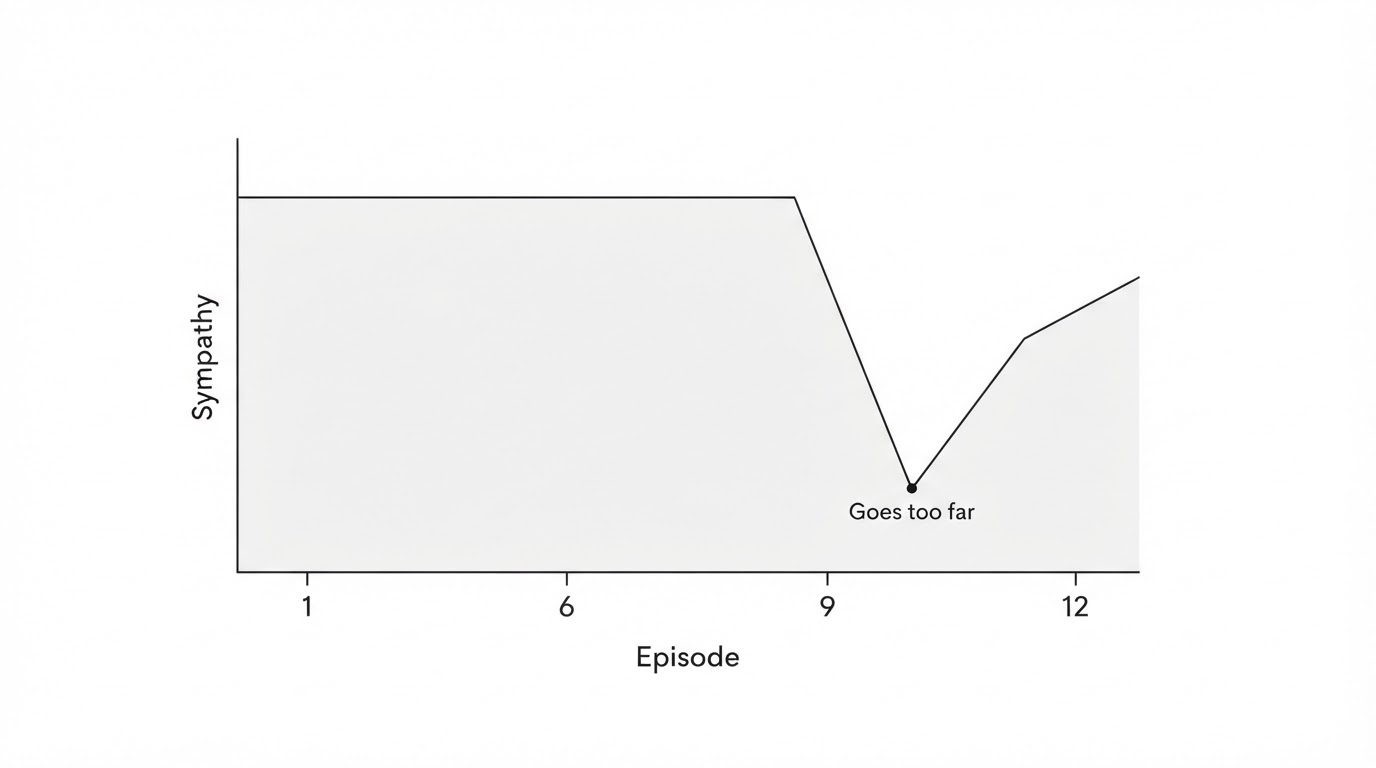
A revenge story that only climbs becomes exhausting. Viewers need one point where they are unsure whether they still support the lead.
Place it around three quarters of the title: the lead does something that clearly crosses a line, such as involving someone innocent or destroying something that did not need destroying. Sympathy drops sharply.
That drop is not a writing accident but a tool. It changes the story's question from "will they succeed" to "what will be left of them if they do", and the second question is far more interesting.
Allow partial recovery in the final episode, but not complete. An avenger who returns exactly as they began makes the whole journey feel meaningless.
An opponent with reasons
An opponent who is evil without cause makes retribution easy, and easy does not produce tension.
Give the opponent one reason that can be understood even if it cannot be justified: protecting their family, saving a company, or answering something done to them first. Viewers do not have to agree, only to understand.
The strongest reason is one that resembles the lead's. When the opponent did the same thing for a comparable motive, viewers are forced to consider whether the lead is genuinely different.
Give the opponent one human moment too, ideally before their fall. That moment makes the victory heavy, and heavy victories are remembered far longer than clean ones.
Mistakes that leave revenge hollow
Bringing all targets down too quickly. If three fall within five episodes, there is no direction left for the following seven.
A lead who never loses. Revenge without cost becomes a performance. Make sure every step takes something, and that what it takes grows more valuable.
Revealing the identity too early. The moment the opponent learns who this really is is one of the theme's largest weapons. Spending it in episode three wastes your best asset.
An ending that is only destruction. Total destruction often feels anticlimactic. The stronger payoff is the lead being able to destroy and choosing otherwise, because that proves something remains of them.
ประเด็นสำคัญที่ควรจำ
An opponent with plausible reasons produces a far stronger story than one who is simply evil. Their fall feels heavy, and the lead's decision to continue becomes a moral choice rather than the next step.
The most satisfying payoff is usually not total destruction but the moment the lead could destroy and chooses something else. That choice only means something once the audience has seen the price already paid.
- a decisive betrayal that destroys the lead's life
- a false identity, a plan of retribution, and fragile alliances
- the antagonist falling in front of the public or their own family
- แนวตั้ง 1–2 นาทีต่อตอน
How to use this theme in production
Map the three target types
Executor, enabler, beneficiary. Take them nearest to furthest.
Build the five-step ladder
Watch, prove, take, ruin, face.
Set a price at every step
What the lead loses at each stage, growing more valuable each time.
Give the opponent an understandable reason
It need not be justified, only understood. The strongest resembles the lead's own.
Place the too-far point
Around three quarters of the title. Audience sympathy must genuinely drop.
Save the identity reveal
This is the theme's largest asset. Do not spend it in the early episodes.
คำถามที่พบบ่อย
Why do revenge stories run out of energy in the middle?
Usually because all targets fall too quickly. Split the betrayal into three roles, executor, enabler, and beneficiary, then take them in order so each victory opens the next layer.
Does the lead have to lose something?
Yes, and the losses should grow more valuable. Revenge without cost becomes a performance. What holds viewers is worrying about what will be left of the character they support.
When should the lead's identity be revealed to the opponent?
As late as possible, ideally at the final step. The moment the opponent learns who has been behind everything is the theme's largest asset and is wasted in early episodes.
Should audience sympathy for the lead ever drop?
It should. Place one point around three quarters of the title where they clearly cross a line. It changes the story's question from whether they will succeed to what will remain of them.
How do you write an opponent who is not flat?
Give them one reason that can be understood even if not justified, and one human moment before their fall. A heavy victory is remembered far longer than a clean one.
How many targets is ideal?
Three is usually enough for twelve episodes, one per act, with the retribution ladder rising between them. More than four and viewers lose track of who has and has not fallen.
Does the revenge have to succeed in the end?
Not completely. The stronger payoff is often the lead being able to destroy and choosing otherwise, because that choice proves something remains of them after everything they paid.
How do you build a revenge hook in three seconds?
Show the loss, not the cause. A character standing in front of something already gone reads faster than a betrayal still unfolding.
Does this theme have to be action?
No. Most interesting revenge runs through information and relationships rather than violence, which also makes production requirements far smaller.
How do you keep viewers supportive after the lead crosses a line?
Allow partial recovery in the final episode, but not complete. A character who returns exactly as they began makes the whole journey feel meaningless.
How many episodes suit a revenge theme?
Twelve covers one complete cycle with three targets. For longer titles, add a new layer in the form of a party who was never visible, rather than more targets of equal weight.
What should you read after this?
The thriller genre page for withholding and releasing information, or the action genre page for raising physical threat in stages.


Page summary
This section answers the most common questions so you can understand the page context faster before moving to the next creative step.