


Make short drama faster with an AI workflow built around release
How to make a short drama with an AI workflow: five production milestones with review gates, a realistic split of where your time actually goes, and a six-point checklist before any episode ships.
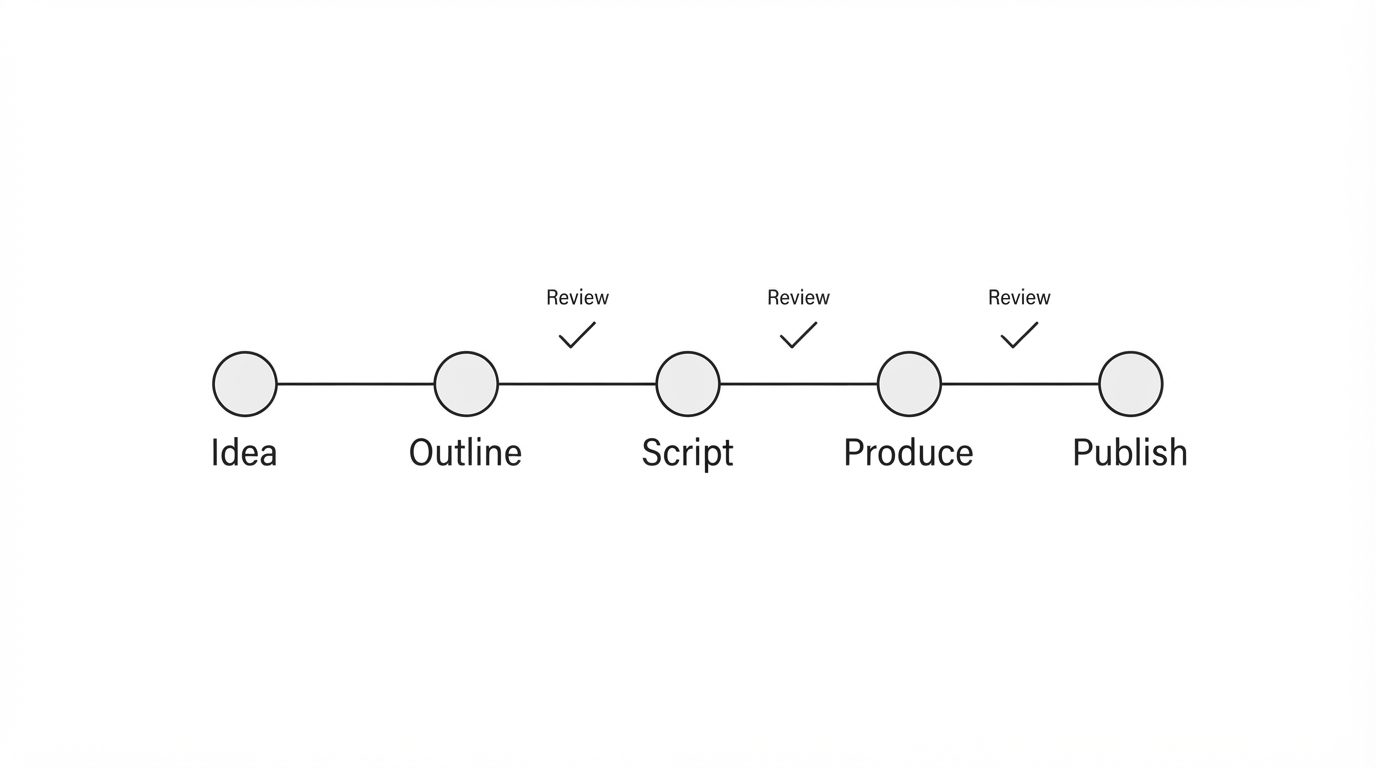
An orderly short drama production has five milestones: idea, outline, script, produce, publish. What separates a tidy workflow from a chaotic one is not the number of stages but whether there are review gates between them.
Skipping a gate feels fast on the day and costs a week afterwards. A structural error that reaches production means ten episodes get reworked, not one paragraph.
This page covers where the gates belong, where your time actually goes, and the checks that catch most of the reasons an episode gets abandoned.
The key points on this page
- Five production milestones with review gates, so mistakes are caught before they get expensive.
- A realistic time split: nearly half the effort goes into writing, not rendering.
- A six-point checklist every episode must pass before it ships.
- How to decide whether to continue a title or replace the premise.
- Where this connects to the script, character, voice, and subtitle stages.
Five milestones and where to stop and check
The five milestones are idea, outline, script, produce, publish. The three review gates that save the most time sit after the outline, after the script, and after the first produced episode.
Each gate answers one question: does the story have fuel, is the dialogue alive, and does this episode hold a viewer to the final second.
Skipping a gate feels fast on the day and expensive a week later. A structural error that reaches production means ten episodes are reworked, not one paragraph.
Where your time actually goes
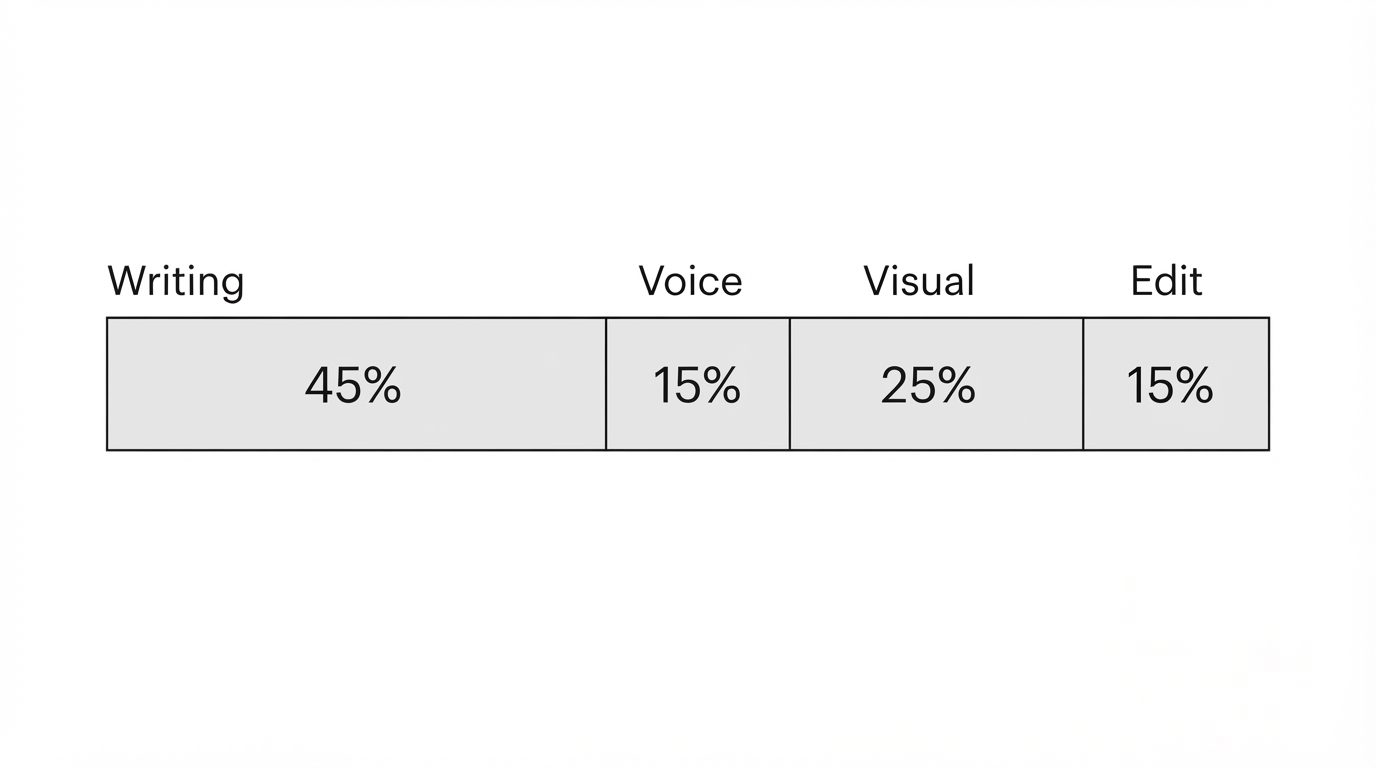
The estimate that most often misses is treating visual production as the heaviest stage. In an AI-based workflow, writing takes the largest share, usually around half of the total time.
That is both good news and a warning. The good news is that the part that costs money becomes cheap. The warning is that the part that decides quality cannot be accelerated by any tool, because what it requires is decisions rather than effort.
If you find your time disappearing into editing, that is usually a symptom that the script was not finished when production began. Finishing the script first almost always shortens the total, even though it feels slower at the start.
The checklist before an episode ships
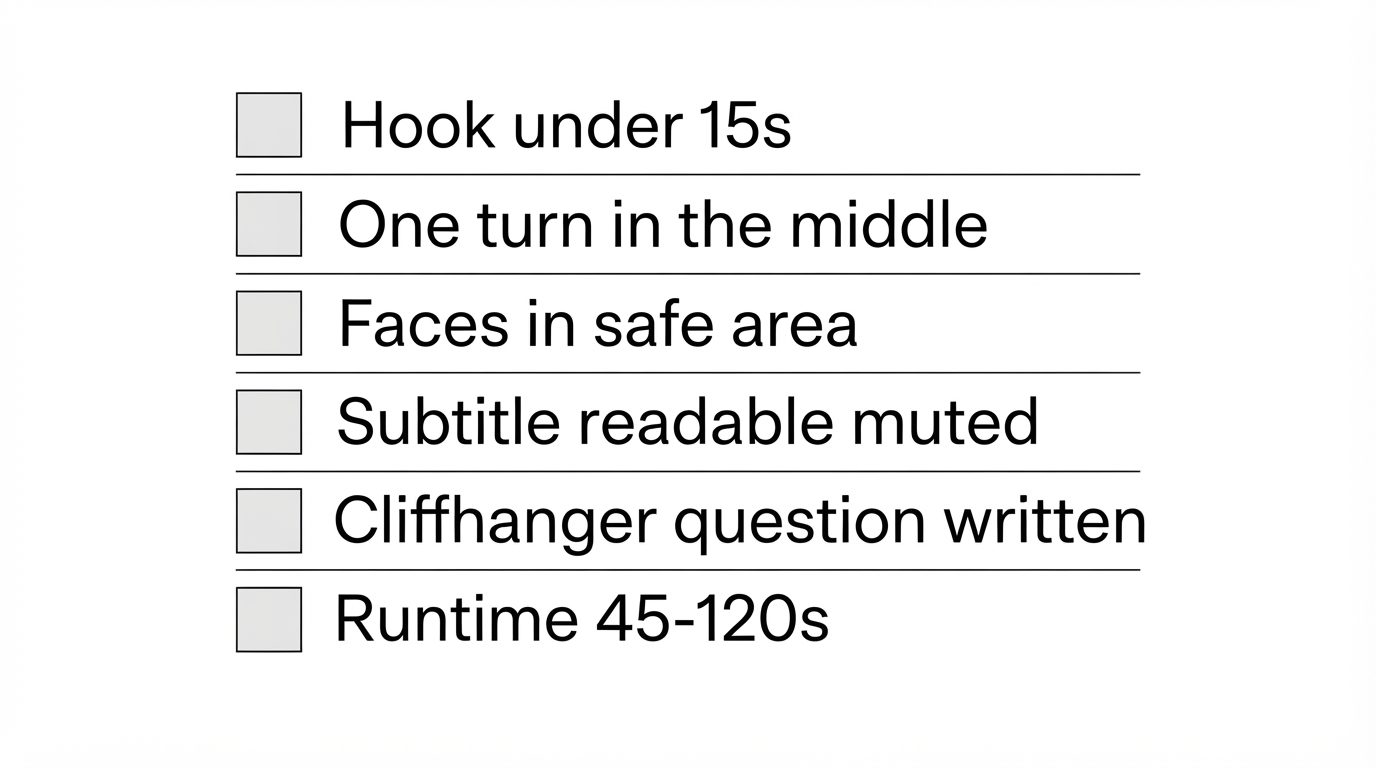
Six points catch almost every problem that stops an episode holding a viewer, and all of them can be checked in two minutes.
The hook finishes inside 15 seconds. There is one turn in the middle. Faces sit inside the app-safe area. Subtitles read with the sound off. The cliffhanger question is written in one sentence. Runtime sits between 45 and 120 seconds.
Treat this as mandatory rather than advisory. Creators who run it consistently almost always show better retention than creators relying on instinct, because your instinct has already adapted to the story and the audience has not.
When to continue and when to replace the premise
The hardest decision in serialised production is not how to continue but when to stop. Two signals are fairly reliable.
The first appears at the outline: if you struggle to write one line for episodes nine through twelve, the premise probably only has fuel for eight. Fix it now by adding a source of pressure, or replace it.
The second appears after three episodes are live: if retention on episodes two and three falls more steeply than on episode one, the problem is a promise that was not kept. Viewers came for something and did not get it.
Replacing a premise after three episodes feels like defeat and is in fact the cheapest option available. The cost of continuing a weak title always exceeds the cost of starting again.
Connecting to the next stage
Every milestone has a supporting page. Outlines and scripts run through the script generator. Characters and their visual consistency are built in the character tool. Voice is set in the voice tool, captions in the subtitle tool.
The order holds even if you do not use all of them. What causes rework is jumping: setting voices before characters are clear, or producing subtitles before the dialogue is final.
If you are starting out and have no premise yet, begin with the story ideas page. If the premise exists but the structure does not, begin with the how-to guide.
How to use this theme in production
Lock the premise and genre
One sentence with character, pressure, and stakes. Genre sets audience expectation from the first frame.
Write a twelve-episode outline
One line per episode. Stop and fix if episodes 9-12 feel forced.
Review the outline before scripting
The first gate. Far cheaper to fix here than after the scripts exist.
Write scripts episode by episode
Write one, read it aloud, then adjust the next outline line.
Produce episode one only
The second gate. Test whether it holds a viewer before producing the rest.
Run the checklist, then ship
Six mandatory points. Only then move to the next episode.
คำถามที่พบบ่อย
How long does it take to make a short drama?
For one episode, an AI-based workflow moves most of the time into writing while visual and audio production runs in hours. For a twelve-episode title, what matters most is how mature your outline is before production starts.
Can you make a short drama without filming?
Yes. Visuals, voice, and captions are generated from the script, so there are no locations, schedules, or crew to organise. What remains yours is the premise, the outline, and the decisions at each review gate.
What does one short drama title cost to produce?
The largest costs in conventional production are locations, crew, and shoot days. In an AI-based workflow all three disappear, so cost shifts to production credits and your own time for writing and review.
Where do you start with no experience at all?
Start with a one-sentence premise, then a twelve-episode outline, then scripts. Jumping straight to production almost always ends with a good first episode and a second one with no direction.
How many episodes should you produce before testing?
One to three. One episode tests the hook, three tests whether the story's promise is being kept. Producing twelve before testing bets the whole effort on a guess.
Which review gate is most often skipped?
The one after the outline. Skipping it feels fast because scripts can be written immediately, but a structural error that survives means ten episodes get reworked rather than one paragraph.
How do you know a premise is strong enough to continue?
Test it at the outline: if you struggle to write one line for episodes nine through twelve, the premise probably only carries eight. Add a source of pressure or replace it before production.
What should be checked before uploading an episode?
Six points: hook inside 15 seconds, one turn in the middle, faces in the safe area, subtitles readable muted, cliffhanger question written down, and runtime between 45 and 120 seconds.
Does this workflow suit teams as well as individuals?
It suits teams and arguably helps them more. Review gates give a team a defined place to agree on direction, so writers and production are not working from different assumptions.
Retention drops on episodes 2 and 3, what should be fixed?
Almost always a promise that was not kept. Viewers came for something episode one offered and did not receive it. Check whether the genre and stakes in episode two still match what episode one advertised.
Do you have to use every tool in the workflow?
No. The order matters more than the completeness. What to avoid is jumping, such as setting voices before characters are clear or producing subtitles before the dialogue is final.
When should you stop and change the title?
When the outline cannot be finished through episode twelve, or when retention across the first three episodes stays flat after two rounds of repair. Starting again is always cheaper than continuing a weak title.


Page summary
This section answers the most common questions so you can understand the page context faster before moving to the next creative step.