


What a microdrama is: a vertical serial the audience reads in seconds
A microdrama is a vertical series of 1-2 minute episodes with dozens of instalments. What defines the format, how it differs from short films and TV series, and why it grew so fast.
A microdrama is serialised fiction built specifically for a phone screen: each episode runs roughly 45 to 120 seconds, is shot or generated in vertical 9:16, and a single title usually contains 40 to 100 episodes.
Other names point at the same thing: short drama, vertical drama, and in some markets mini drama. All describe one form, a long story cut into very short pieces and consumed in order.
Three traits separate it from ordinary short video. It is continuous rather than standalone. It carries a deliberate cliffhanger at the end of nearly every episode. And it is read by the audience in seconds, which means genre and stakes have to be legible from the first frame.
The key points on this page
- Short definition: a 9:16 vertical serial, 45-120 seconds per episode, 40-100 episodes per title.
- Direct comparison with short films and television series across four measures.
- The anatomy of a single episode and why its structure differs from longer formats.
- The retention shape typical of the format and where the drop-off usually lands.
- Why the format grew so quickly, from both the audience and the production side.
A short definition and the traits that set it apart
A microdrama is serialised fiction made for a phone: 45 to 120 seconds per episode, vertical 9:16, and 40 to 100 episodes in a complete title.
The naming varies by market but the form does not. Short drama, vertical drama, and mini drama all refer to a long story deliberately cut into very short instalments meant to be watched in sequence.
What separates it from ordinary short video is continuity, engineered cliffhangers, and legibility. A standalone clip can afford ambiguity. A serial episode cannot, because the audience is deciding in seconds whether this story is for them.
How it differs from short films and television series
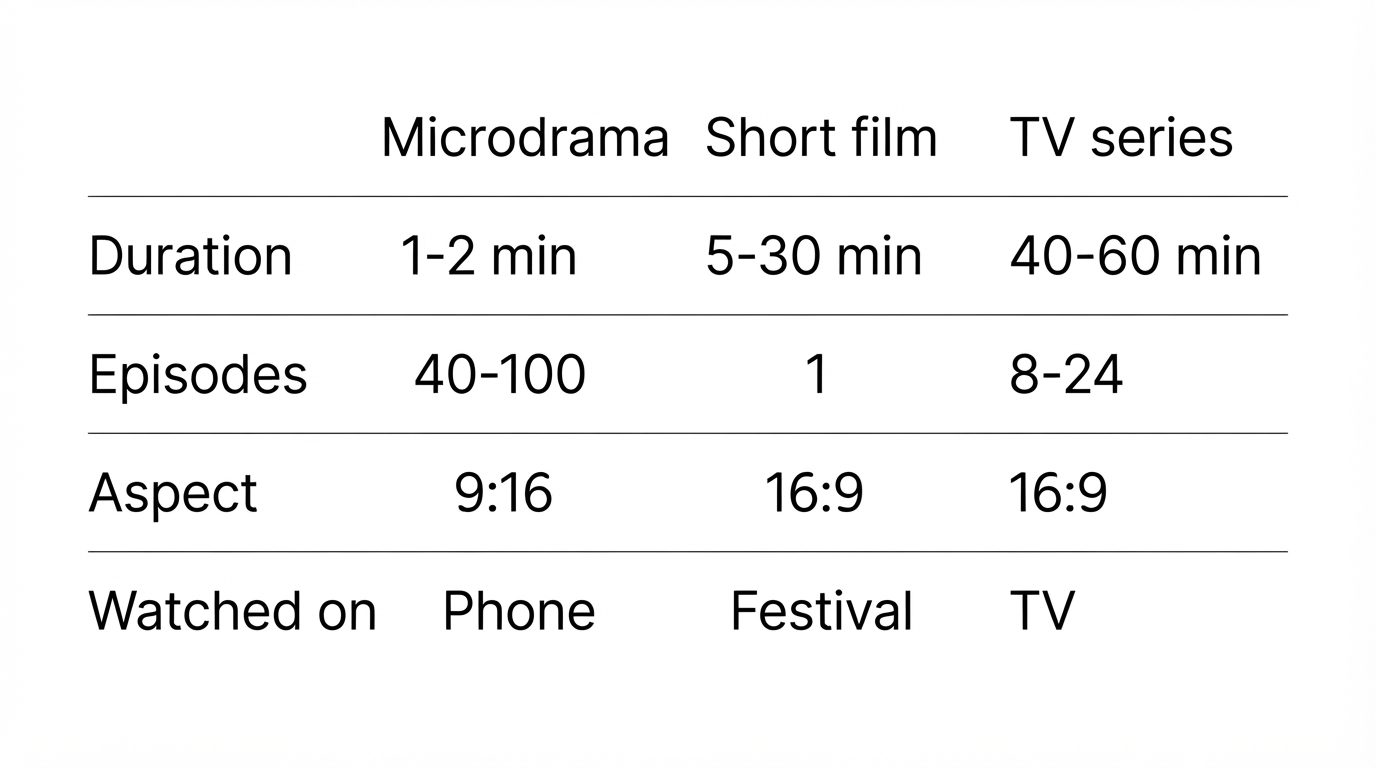
The fastest comparison runs across four measures: running time, episode count, aspect ratio, and where it is watched. All four are connected, and together they explain why scripts are not interchangeable between formats.
A short film resolves one idea in a single sitting and plays on a wide screen, often at festivals. A television series uses long episodes with parallel threads and assumes a seated audience. A microdrama assumes a viewer who is standing, queuing, and free to leave at any moment.
That last assumption changes everything. Because the audience can leave every second, the story must earn every second. It is exactly why opening scenes that establish mood, entirely normal in longer formats, are fatal here.
The anatomy of a single episode
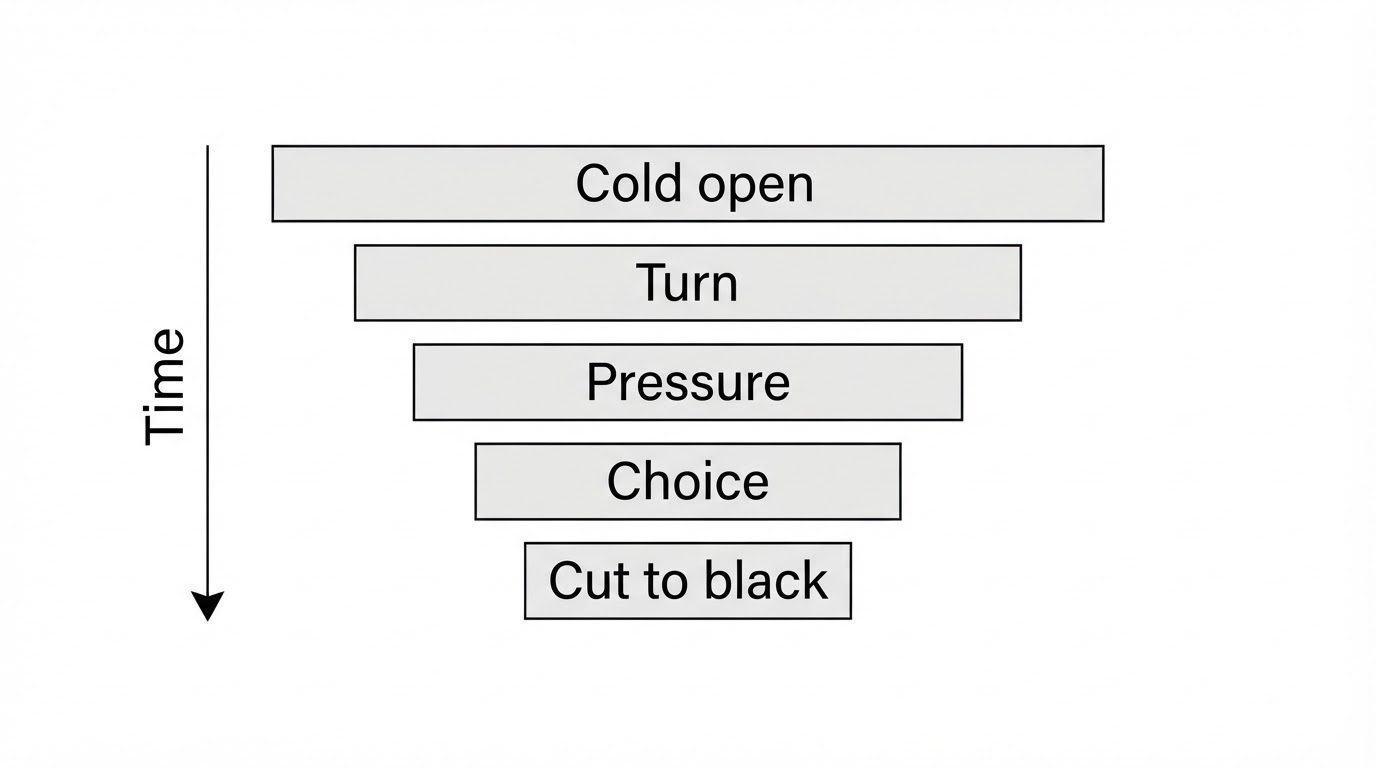
Episodes that work share a fairly fixed shape. They open directly on an event rather than an introduction. Then one turn changes the character's position. Pressure rises. The character makes a decision. Then the image cuts just before the consequence becomes visible.
Those five parts fit inside a minute because each is extremely short. An opening can finish in ten seconds. A decision can be delivered in a single look. What makes the format difficult is not its length but the discipline of removing everything that does not move.
Many writers coming from longer formats feel a microdrama episode is too fast. In practice viewers experience the opposite: what feels right to the writer often feels slow to someone who just found it in a feed.
The retention shape: where viewers stop
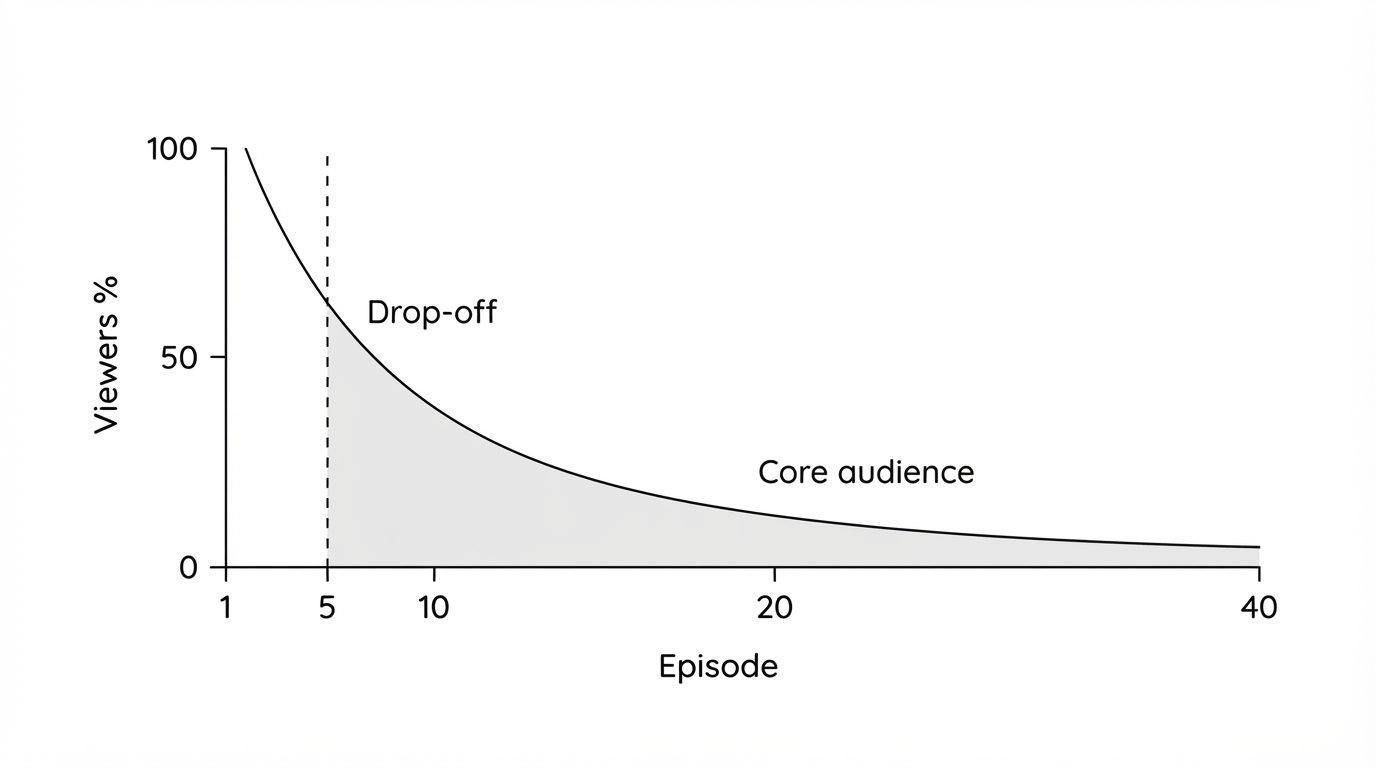
The viewer curve on a microdrama title has a distinctive shape: it falls very steeply across the first few episodes, then flattens into a long tail. That tail is the core audience, and it decides how a title performs.
The largest drop almost always sits between episodes one and five. Once a viewer clears episode five, the probability they reach episode twenty rises sharply. This is why the opening five episodes deserve disproportionate attention.
The same shape explains why view count is a poor success measure. A title with a large peak and a thin tail earns less than a title with a moderate peak and a thick one.
Why the format grew so fast
From the audience side the reason is simple: available viewing time is fragmented. Commutes, queues, and work breaks cannot absorb a forty-minute episode but suit a one-minute one that can be stopped at any point without feeling lost.
From the production side, cost per title sits far below a conventional series. Few locations, few characters, and a total running time that stays manageable even across many episodes. AI-based workflows push that cost lower again, particularly on visuals and voice.
From the distribution side, the vertical format suits how platforms recommend content. Short episodes produce behavioural signals faster, so recommendation systems can find the right audience in hours rather than weeks.
Together these make the format attractive to individual creators, not only production houses. One person with a strong premise can now finish a complete title.
Terms you will keep meeting
A hook is the opening that stops someone scrolling, usually the first three to fifteen seconds. A cliffhanger is the closing cut that withholds the answer to a question already alive in the viewer's head.
A payoff is the fulfilment of a promise made earlier, such as a confession, a reckoning, or a rescue. A beat is the smallest unit of change in a story; a microdrama episode usually holds two to four.
Retention is the percentage of viewers still watching at a given moment. Completion is the percentage who reach the end of an episode. The two are often confused although they measure different things, and both feed how widely an episode gets distributed.
How to use this theme in production
Respect the duration limits
45-120 seconds per episode. Outside that range the format reads wrong to the audience.
Design for 9:16
One dominant figure per shot, faces centred, text large and short.
Split the story, do not compress it
One long idea becomes dozens of episodes rather than being condensed into one.
Cut on a withheld answer
End just before the answer arrives, not mid-movement.
Prioritise the first five episodes
This is where most viewers decide to stop or stay.
Measure retention, not views
A thick tail decides the outcome more than a high peak.
अक्सर पूछे जाने वाले सवाल
What is a microdrama?
A microdrama is a vertical 9:16 fiction serial with episodes of roughly 45 to 120 seconds and 40 to 100 episodes per title. It is built to be watched in order on a phone, with a cliffhanger closing nearly every episode.
What is the difference between microdrama and short drama?
They refer to the same thing. Short drama, vertical drama, and mini drama are names used in different markets for one identical form: a short vertical serial with many episodes.
How long is one microdrama episode?
Usually 45 to 120 seconds. Below 45 seconds there is rarely room for a change that registers, and above 120 seconds viewers begin leaving before the cliffhanger lands.
How many episodes make up one title?
Industry norms run between 40 and 100 episodes for a complete title. Many creators begin by planning twelve to test whether the premise carries enough fuel.
How is a microdrama different from a short film?
A short film resolves one idea in a single viewing and is designed for a wide screen. A microdrama splits one idea into dozens of vertical episodes, each with its own hook and cliffhanger, assuming a viewer who can leave at any moment.
How is it different from a television series?
A television series uses long episodes, a horizontal frame, and assumes a seated audience. A microdrama uses episodes under two minutes, a vertical frame, and is built to be watched while scrolling.
Why did microdramas grow so quickly?
Three things met at once: fragmented viewing time, production costs far below conventional series, and short episodes that generate behavioural signals fast enough for recommendation systems to find an audience early.
Does a microdrama have to be vertical?
In practice yes. The format lives in vertical feeds, where a horizontal video reads as foreign and loses most of the screen. 9:16 at 1080x1920 is the safe standard.
What is a cliffhanger and why does it matter here?
It is a closing cut that withholds the answer to a question already alive in the viewer's mind. It matters because there is no broadcast schedule holding the audience; curiosity is the only reason they open the next episode.
At which episode do viewers usually stop?
The largest drop sits between episodes one and five. Once past episode five, the chance a viewer reaches episode twenty rises sharply, so the opening five deserve the most attention.
Is the format viable for individual creators?
Yes, largely because production cost is low and revenue accrues per episode. What decides the outcome is not view count but how many viewers stay long enough to reach the paid episodes.
How do you start making one?
Begin with a one-sentence premise, then plan twelve episodes on paper before producing anything. The how-to guide walks through the work order from premise to an upload-ready file.


Page summary
This section answers the most common questions so you can understand the page context faster before moving to the next creative step.