


Short drama tips: what recommendation systems really read, and what is just folklore
Testable tips for short drama: the three seconds that decide everything, the four signals recommendation systems actually measure, cliffhanger patterns, and how to read a retention graph before blaming the content.
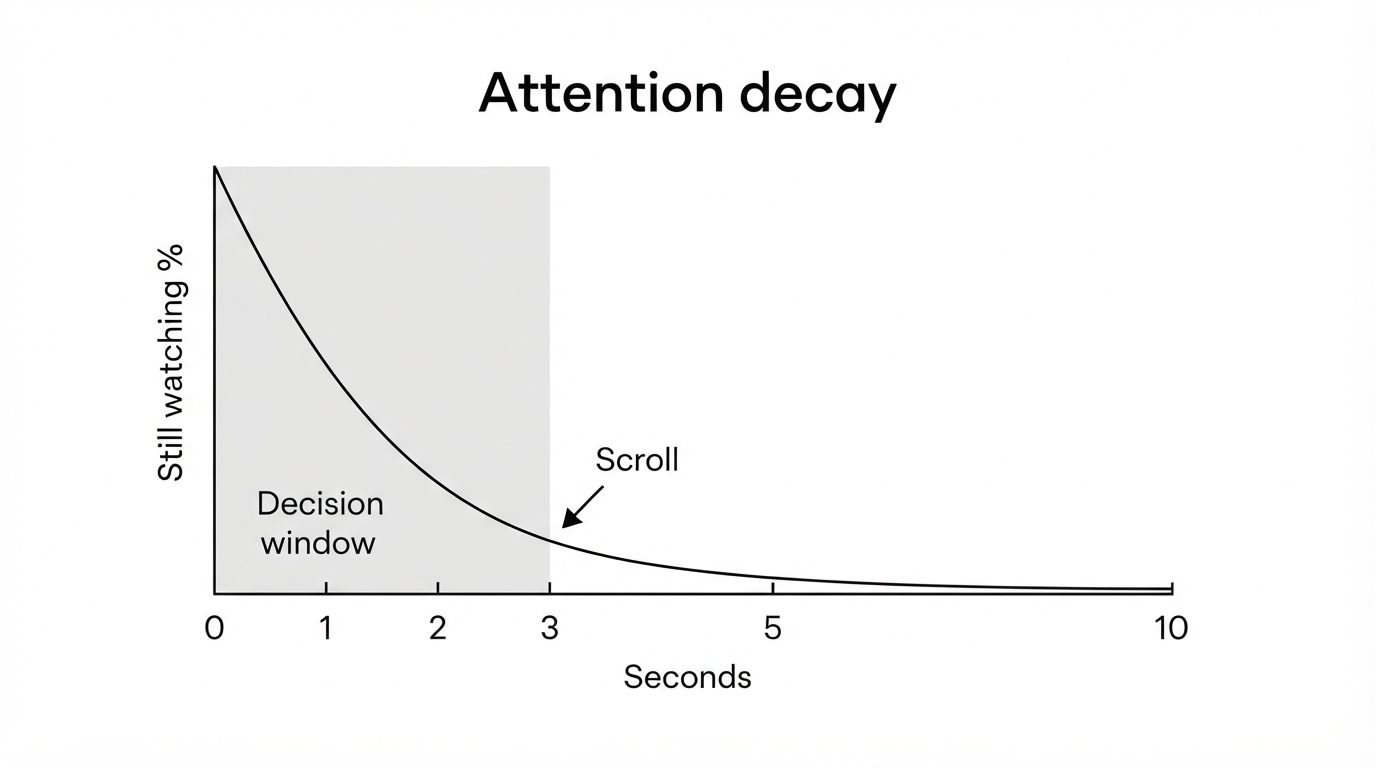
Viewers in a vertical feed are not choosing what to watch; they are filtering. The decision to stay or scroll is made before they notice making it, usually inside three seconds.
That single fact reorders every other priority. Improving the second minute is pointless if the third second leaks. The repair order always runs front to back, which means replacing the opening frame rather than the background music.
This page covers what actually moves distribution: the behaviours recommendation systems count, where cliffhangers belong, how to read your own retention data, and which widely repeated advice is not worth your time.
The key points on this page
- The first three seconds set the ceiling for everything else; the rest can only hold, not rescue.
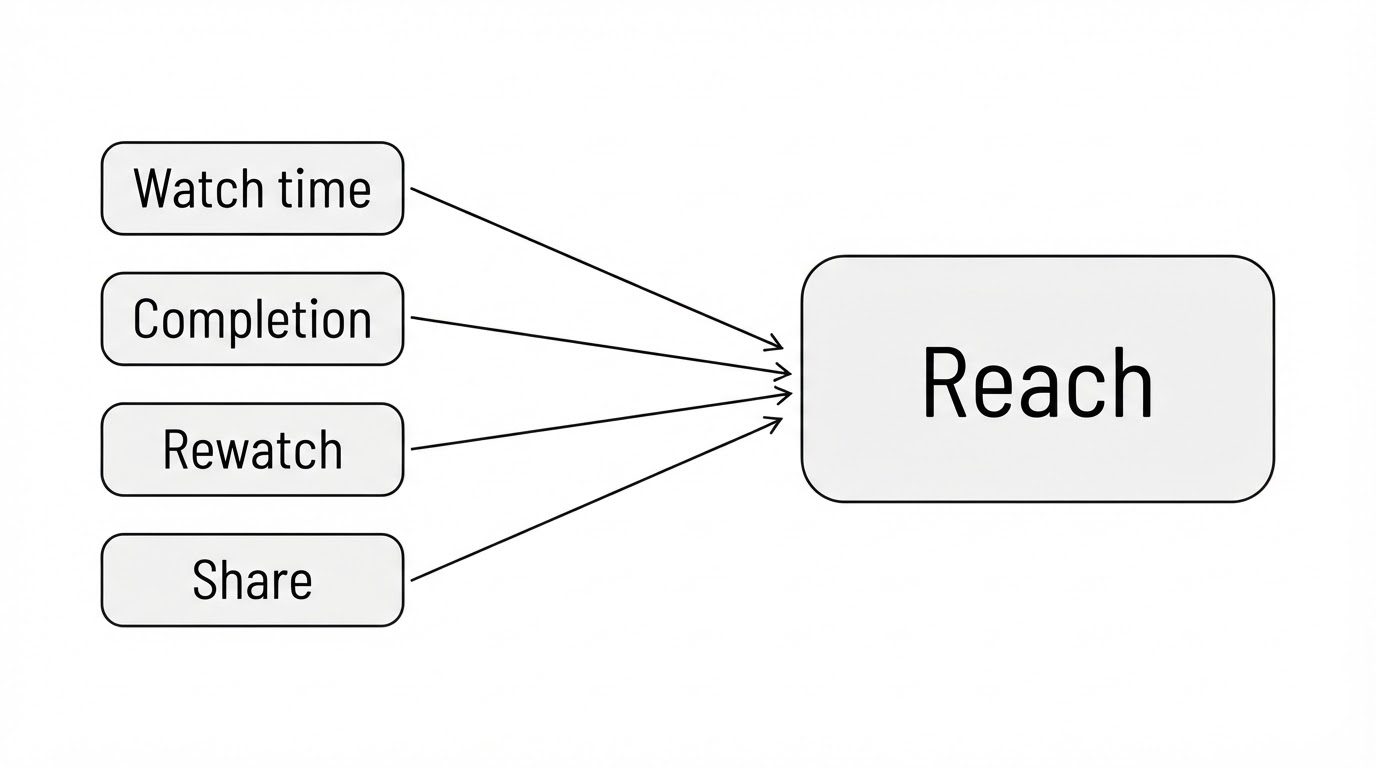
- Four signals recommendation systems actually measure: watch time, completion, rewatch, and share.
- A cliffhanger pattern that keeps tension rising without exhausting the audience.
- How to read a retention graph to know exactly which part is leaking.
- The myths that waste the most time for new creators.
The first three seconds set the ceiling
The count of viewers remaining at second three is almost always the highest number that episode will produce. Everything after it can only preserve that figure.
The practical consequence is a fixed repair order: front first. Replace the opening frame, not the score.
Three things most often save a first second: a face mid-reaction, an object that is clearly out of place, and a line that clearly should not have been overheard. All three work because they raise a question without requiring context.
What reliably destroys it: logos, title cards, establishing shots, and greetings. Each asks the viewer to wait, and waiting is the one thing they will not do.
The four signals that actually get measured
Recommendation systems on vertical platforms do not assess storytelling. They count behaviour. The four that consistently matter are watch time, the share of an episode completed, how many viewers repeat it, and how many pass it on.
Watch time and completion measure different things. A fifteen-second video watched fully can lose to a sixty-second video watched for forty. For short drama, 45 to 90 seconds is usually the balance point: long enough to accumulate watch time, short enough to be finished.
Rewatch is the signal creators most often ignore. An episode carrying one detail that only becomes visible on a second viewing, a background reaction or the contents of an on-screen message, earns repeats naturally.
Sharing comes from emotion someone needs to discharge, not from production value. Anger at an antagonist and frustration at a couple who will not be honest are the two most reliable triggers in this format.
Treat cliffhangers as breathing, not constant shouting
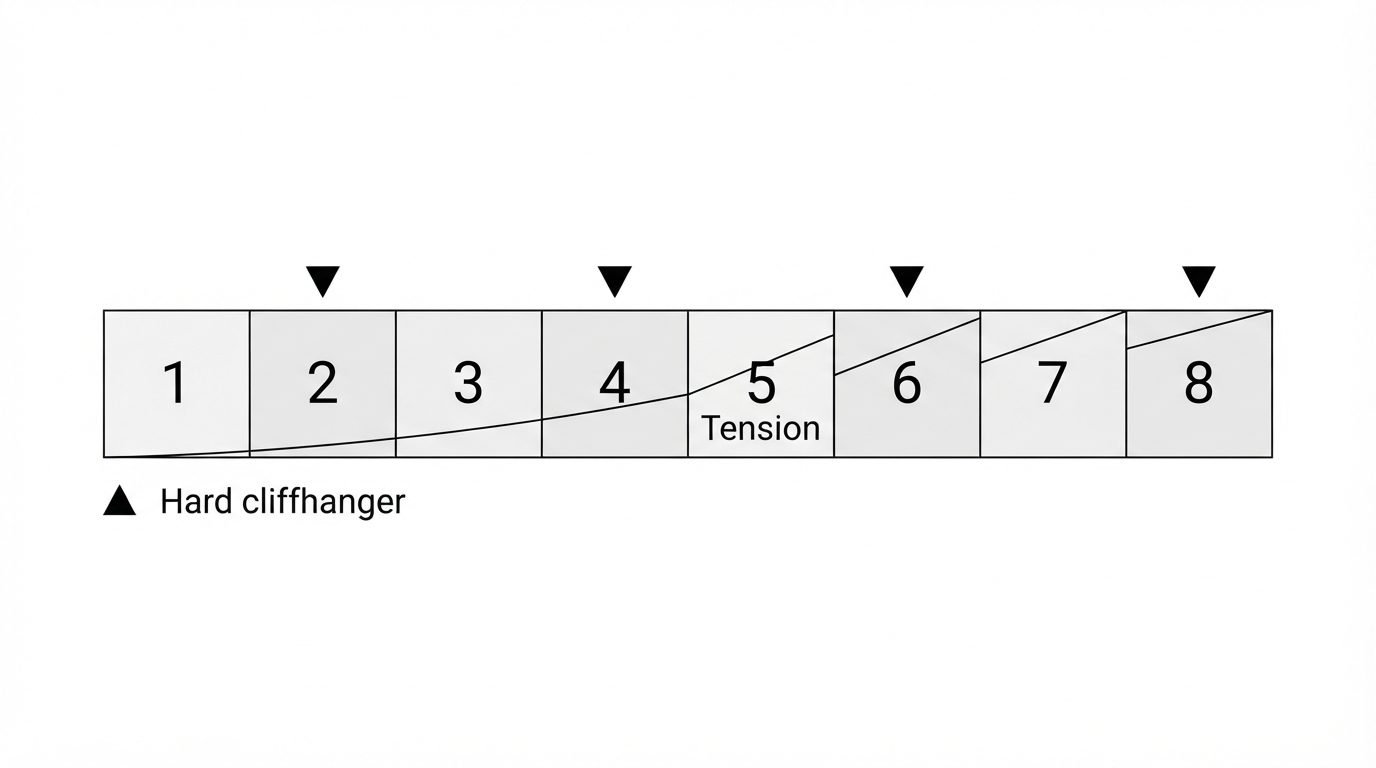
Cliffhangers of identical intensity at every episode end actually reduce their own effect. Viewers learn that every ending feels urgent, then stop treating any of them as urgent.
A more durable pattern alternates: odd episodes close on a small satisfying resolution, even episodes close on a sharp question. Tension still climbs, but the audience gets room to breathe.
A strong cliffhanger always attaches to a question already living in the viewer's head. If they do not yet want any particular answer, cutting mid-event just reads as a video that stopped.
A simple test: write the question you hope forms in the viewer's mind at the final second. If you cannot write it in one sentence, the cliffhanger does not exist yet.
Read the retention graph before changing anything
Every vertical platform provides a per-video retention graph. It tells you which part is leaking, which is far more useful than guessing.
A steep fall in the first three seconds means the hook. A gradual slope across the whole episode means the pace is slow or there is no turn in the middle. A sudden drop at one point means a specific stretch is dull, and you can usually find it at exactly that second.
A line that rises again at the end indicates rewatching, and that is good news. Note what sits at that point and repeat the pattern in later episodes.
Compare episodes against each other, not titles against titles. Retention is heavily shaped by genre and length, so measuring a 50-second romance episode against a 110-second thriller produces no usable conclusion.
The myths that waste the most time
"Posting time decides virality." Posting time affects how quickly the first impressions arrive, not the ceiling on reach. A strong episode finds its audience within days; a weak one is not rescued by any hour.
"The right hashtags increase reach." Hashtags assist topic classification, but their effect is small next to the first three seconds. Two to four relevant tags is enough; thirty adds nothing.
"Camera quality decides the outcome." Plenty of simply produced titles outperform expensive ones because the premise reads faster. Clarity beats sharpness.
"You must post daily." Consistency helps, but posting weak episodes daily trains your audience to ignore you. Holding a minimum standard is safer than chasing volume.
The repair order when a title is not working
Fix in order of cheapness and impact. First, the opening three seconds of episode one. Second, episode length. Third, the placement and strength of the cliffhanger. Fourth, how clearly the premise reads in the description and cover.
Change one thing per test. If you swap the hook, the title, and the duration at once, you will not learn which one worked.
Give each change at least three episodes before judging it. A single episode can move either way by chance; three gives you a pattern.
If four rounds of repair leave the numbers flat, the problem is usually the premise rather than the execution. Go back to the story ideas page and find a sharper source of conflict.
How to use this theme in production
Measure viewers at second three
Record it for your last five episodes. This becomes the baseline before you change anything.
Replace the opening frame
Start on a reaction, a misplaced object, or a line that should not have been heard.
Adjust episode length
Bring it into 45-90 seconds so watch time and completion both hold.
Write the cliffhanger question
One sentence per episode. If you cannot write it, the cliffhanger is not there.
Read the retention graph
Find the drop point and fix that exact second, not somewhere else.
Test one change across three episodes
Hold the other variables so the result is readable.
अक्सर पूछे जाने वाले सवाल
Why is my short drama not getting distribution?
The most common cause is not the algorithm but an opening three seconds that raises no question. Check the retention graph: if the line falls steeply before second three, no other fix will register until the opening is replaced.
What episode length works best for reach?
45 to 90 seconds is usually the balance point. Shorter sacrifices watch time, longer reduces the share of viewers who finish. Both are counted by recommendation systems.
Does posting time really matter?
It affects how quickly early impressions arrive, not the ceiling on reach. A strong episode still finds its audience within days. Focusing on the opening is far more decisive than chasing a particular hour.
How many hashtags should you use?
Two to four that genuinely describe the genre and theme. Stacking dozens adds no reach and blurs the topic classification of your episode.
What is watch time and why does it beat view count?
Watch time is the total duration actually watched. View count only records how often the video appeared. Distribution widens based on how long people stay, not how many scrolled past.
How do you make viewers rewatch an episode?
Plant one detail that only becomes visible on a second viewing: a background reaction, the contents of an on-screen message, or a line whose meaning changes once the ending is known.
What kind of cliffhanger is most effective?
One that withholds the answer to a question already alive in the viewer's head. Cutting mid-sentence or mid-movement is not a cliffhanger, it is an interruption.
Does camera quality decide the outcome?
Far less than assumed. Simply produced titles regularly outperform expensive ones because the premise reads faster in three seconds. Clarity matters more than sharpness.
Should you post every day?
Consistency helps, but daily weak episodes train the audience to ignore you. Holding a minimum standard per episode is safer than chasing upload volume.
How long before judging a change?
At least three episodes. One episode can move either way through distribution chance; three with other variables held gives you a readable pattern.
My retention drops mid-episode, what does that mean?
Something at that second gives nothing. Open the episode at the drop point and check: it is usually expository dialogue, an over-long transition, or a scene where nothing changes.
When should you stop repairing and change the title?
If four rounds across hook, length, cliffhanger, and cover leave the numbers flat, the problem is usually the premise. Change the source of conflict rather than the execution.


Page summary
This section answers the most common questions so you can understand the page context faster before moving to the next creative step.