CEO drama built on power distance, office pressure, and a confession that costs something
A CEO drama guide for vertical short drama: why the power gap is the engine, four conflict sources always available in an office setting, and four steps of admission with rising risk.
The power gap is the fuel. Every time it narrows too quickly the story loses energy. What holds viewers is not their closeness but how much has to be broken to reach it.
CEO drama endures not because audiences want to look at wealthy people but because they want to watch power tested. What holds attention is not the car or the office but the moment someone accustomed to giving orders meets the one person they cannot order.
That is why the theme fails when the power gap is thin. If the subordinate can push back without risk, or the superior has nothing to lose, all tension disappears and what remains is conversation in a nice room.
This page covers what decides the writing: how to keep the power gap felt, where each episode's conflict comes from, and how to structure an admission so it costs something rather than simply arriving.
Why CEO Drama works in short form
Short drama viewers decide in seconds whether to keep watching or swipe away. A familiar theme helps in exactly those seconds, because nobody needs to be taught who the characters are and what the problem is.
For you as the maker, a familiar theme also cuts the work. The conflict already has a shape, the location needs are small, and titles are easier to write. That leaves your energy for what actually sets a series apart: why the character stays, and the turn nobody saw coming.
- Viewers understand the power relationship in a single shot, so three seconds are not spent explaining.
- The office setting supplies ready conflict: promotions, contracts, meetings, and rumour, with no world to build.
- Location needs stay small and consistent, keeping production cost predictable across dozens of episodes.
- Thumbnails are easy because status difference reads through clothing and space.
- Every scene can be tested with one question: does the power gap grow or shrink here?
What to prepare before the first episode
The three points below are usually enough to move an idea from a short note to a plan you can actually shoot.
The power gap is the engine
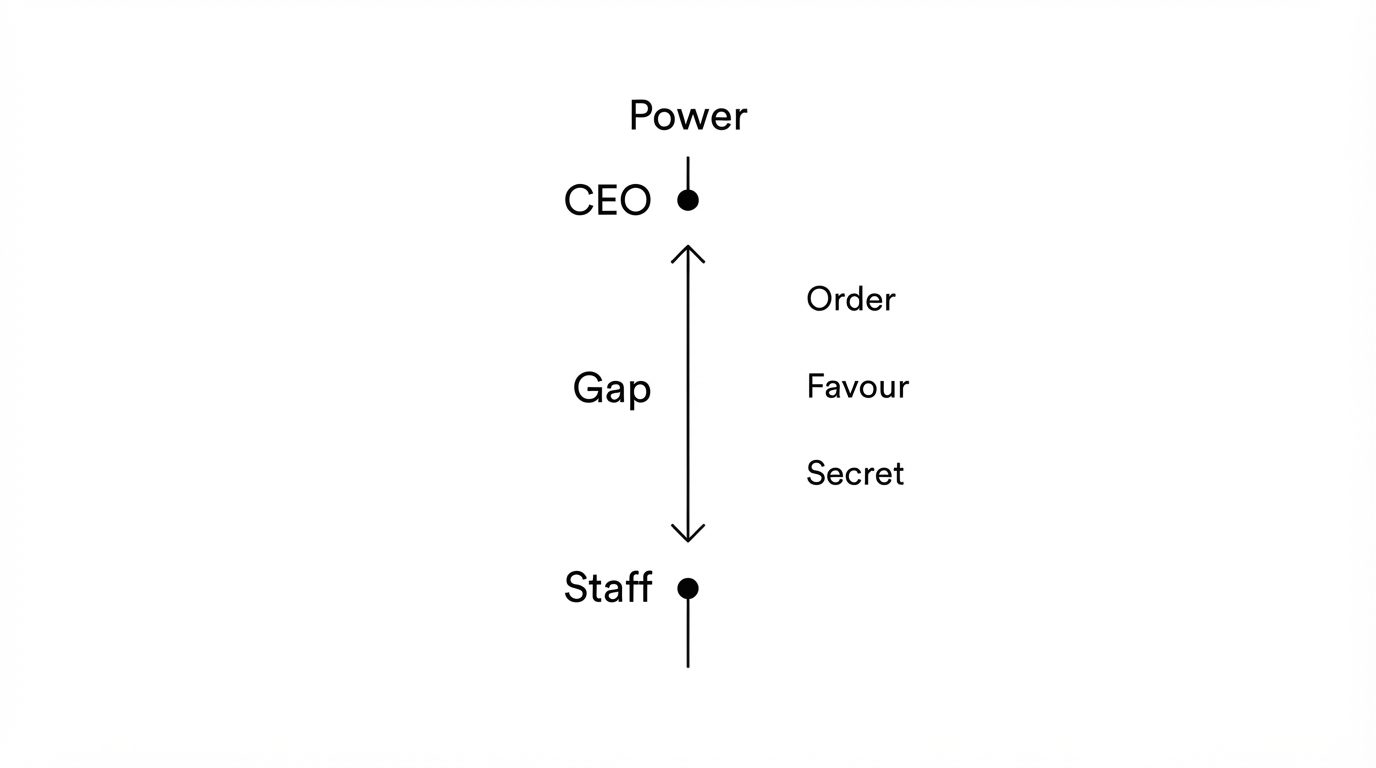
Place both characters on a single axis of power. The superior sits high, the subordinate low, and the distance between them is the story's fuel.
That distance is expressed through three things viewers can see: orders that must be obeyed, favours that create obligation, and a secret one party holds over the other. All three can be rotated across dozens of episodes.
The common error is closing the gap too early because it is more pleasant to write. Once the subordinate can speak as an equal without risk, the engine stops.
Keep the gap in place until roughly two thirds of the title. After that, its narrowing becomes the payoff rather than merely a development.
Four conflict sources in an office setting
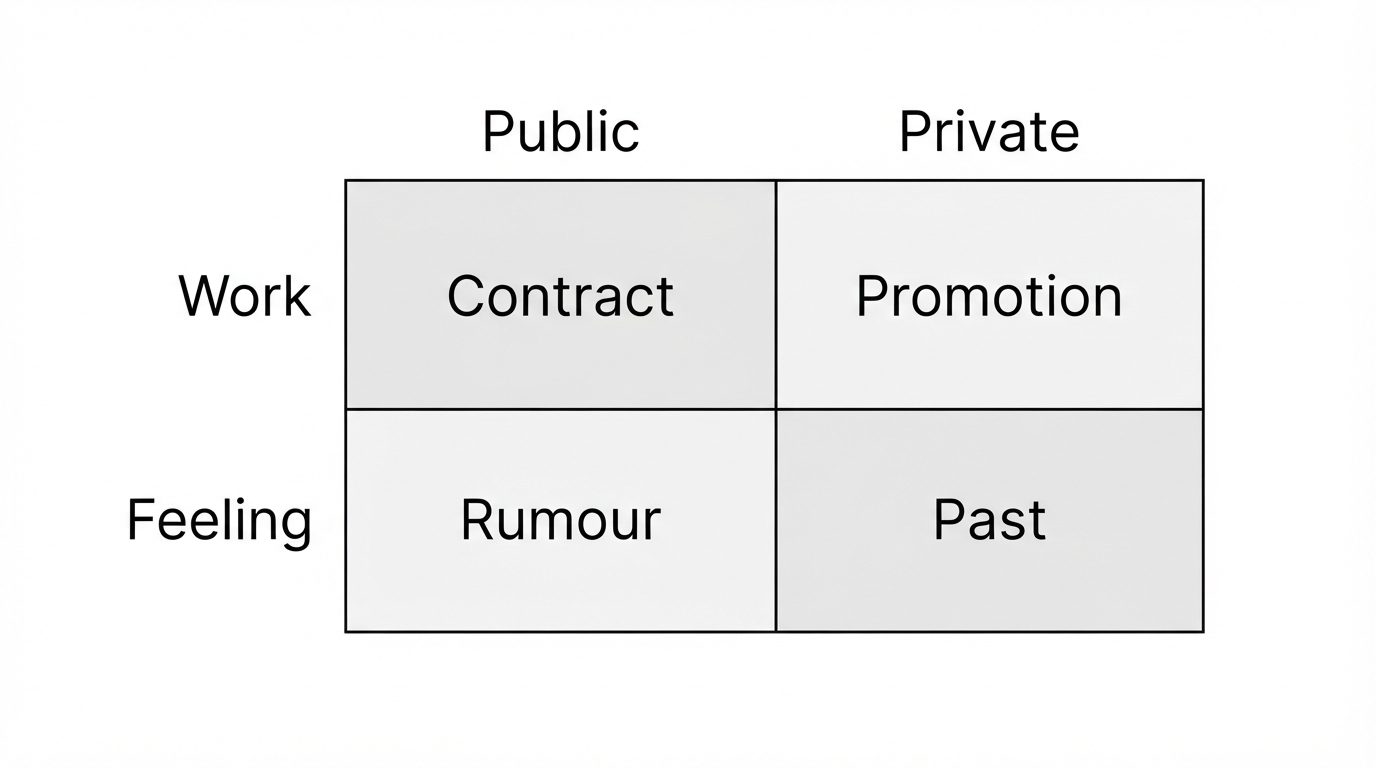
An office supplies ready-made conflict, and it maps into four boxes: public or private, multiplied by work or feeling.
A contract is public work conflict: a business decision that binds them both. A promotion is private work conflict: a decision that looks professional but is taken for personal reasons.
Rumour is public feeling conflict: what other people see and discuss. The past is private feeling conflict: something only the two of them know that must not surface.
Rotating the four keeps episodes from repeating. If three consecutive episodes draw from the same box, viewers begin to feel the story is circling even when the events differ.
Four admission steps
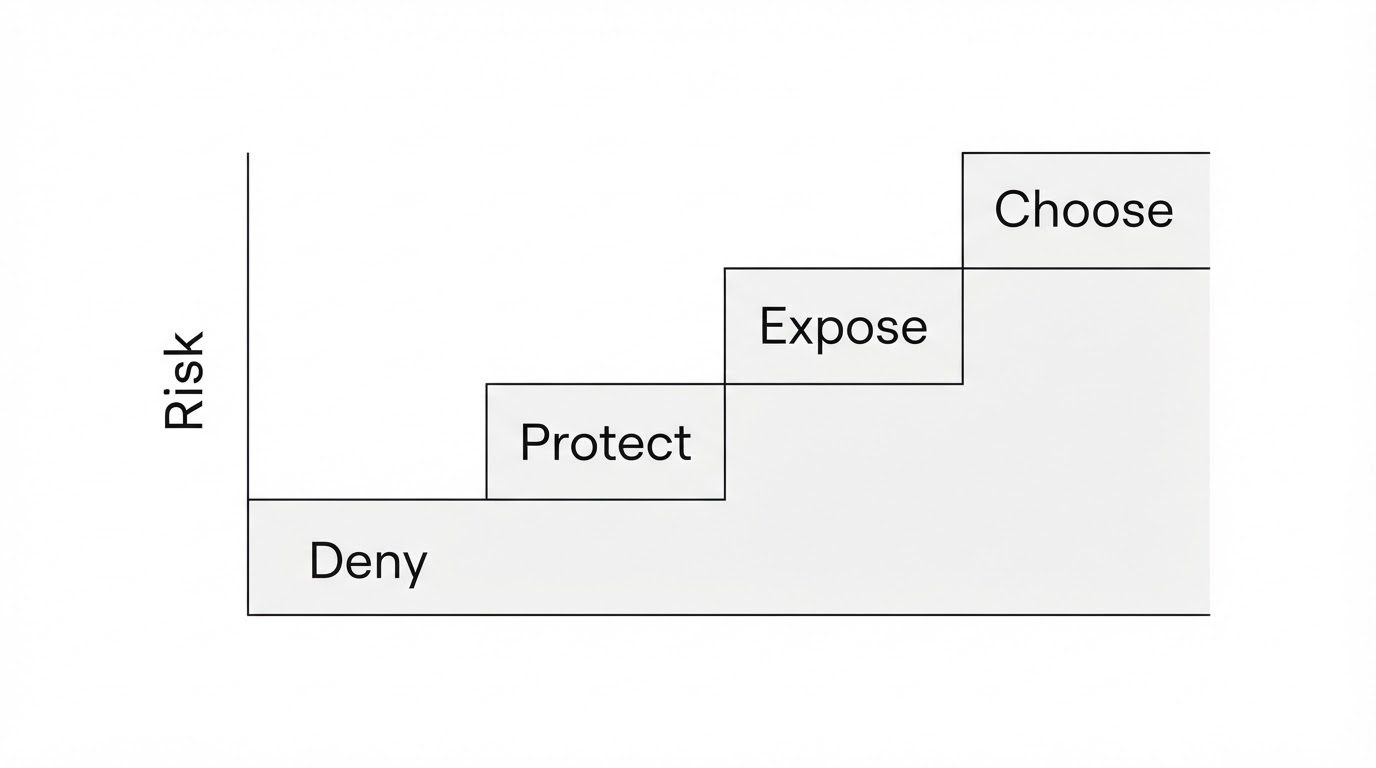
Admission in CEO drama rarely works when spoken directly. It needs four steps with rising risk: deny, protect, expose, choose.
Denial is when the powerful character refuses their own feeling even privately, usually on professional grounds. Protecting is when they act in the other's interest without admitting why.
Exposure is when the relationship becomes known to a third party, and this is where the real cost appears: a board, a family, or the press. Choosing is when they knowingly surrender part of their power.
The third step is the one writers most often skip because it demands real consequence. Without visible consequence, the fourth step loses its weight.
The subordinate needs something unbuyable
A one-way relationship does not last on screen. If the superior can give everything and the subordinate has nothing, viewers stop believing the interest is genuine.
Give the subordinate one thing beyond the reach of money and position. It can be a rare skill the company genuinely needs, information that would be dangerous if released, or a principle that will not bend at any price.
The third is usually strongest because it can be tested repeatedly. Every time the superior tries to solve a problem the way they usually would, they collide with that principle, and new conflict appears without extra events.
A simple test: if the story's problem can be solved with money, the obstacle is not yet sufficient.
Mistakes that make it read as fairy tale
Wealth without burden. A powerful character who never faces pressure from a board, a family, or a rival feels unreal, and the stakes become hollow.
A subordinate who only waits. If they never make a risky decision, viewers stop treating them as a protagonist and start treating them as a prize.
Expensive homes and offices standing in for conflict. Attractive settings do not hold viewers; what holds them is a status difference producing real risk in every scene.
An admission that costs nothing. A line of love spoken with nothing changing afterwards reads as information rather than a decision.
याद रखने योग्य मुख्य बातें।
The subordinate must hold something money cannot buy: a rare skill, dangerous information, or a principle that will not bend. Without it the relationship runs one way and viewers stop believing the attraction is real.
The most satisfying payoff is the powerful character surrendering part of their power in front of other people. A private admission is easy; one that carries a visible public cost is what makes the audience feel repaid.
- an intense meeting between a powerful boss and the one person they cannot control
- office politics, family secrets, and class difference
- an identity revealed, a proposal, or the fall of a main rival
- वर्टिकल, हर एपिसोड 1–2 मिनट
How to use this theme in production
Establish the power gap
Express it through orders, obligation, and secrets. All must be visible to viewers.
Give the subordinate something unbuyable
A rare skill, dangerous information, or a principle that will not bend.
Rotate the four conflict sources
Contract, promotion, rumour, past. Not three consecutive episodes from one box.
Build the four admission steps
Deny, protect, expose, choose. Do not skip the third.
Hold the gap to two thirds
Closing it too early kills the story's engine.
Apply the money test
If the problem can be solved with money, the obstacle is not enough.
अक्सर पूछे जाने वाले सवाल
Why is CEO drama so popular in short form?
Because the power relationship reads in a single shot. Viewers immediately know who can give orders and who must comply, so the first three seconds are not spent on explanation.
What makes a CEO drama feel flat?
A power gap that closes too quickly. Once the subordinate can speak as an equal without risk, the engine stops and what remains is conversation in a nice room.
What should the subordinate character hold?
One thing money cannot buy: a rare skill, dangerous information, or a principle that will not bend. The last is strongest because it can be tested repeatedly across a serial.
Where does each episode's conflict come from?
Four boxes: contracts and promotions for work matters, rumour and the past for feeling. Rotate them so viewers do not sense the story circling.
When should the feeling be admitted?
After passing through denial and protection, and ideally only once a third party knows so there is a real cost. An admission without cost reads as information rather than a decision.
Does the CEO character need problems of their own?
Yes. Wealth without burden feels unreal. Pressure from a board, a family, or a rival gives their eventual sacrifice a price the audience can count.
How many locations does this theme need?
Few, and that is its advantage. One workspace, one shared space, and one private space carry dozens of episodes, because the conflict comes from status rather than place.
How do you build a CEO drama hook in three seconds?
Show a rule already broken: a document being held that should not be, a superior's door standing open, or an order refused in front of other people.
Does this theme have to be romance?
No. A power gap also works for corporate revenge or business thriller. What remains necessary is someone the powerful character cannot control.
How many episodes suit this theme?
It is among the most durable because its conflict sources are plentiful. Plan twelve first, though many CEO titles run comfortably to sixty episodes or beyond.
How do you avoid the fairy tale feeling?
Attach consequences to every decision. If problems resolve with nothing sacrificed, viewers stop treating it as a stake and begin treating it as fantasy.
What should you read after this?
The contract marriage theme for a more clearly shaped obstacle, or the romance genre page for managing the rise and fall of closeness across a serial.



Page summary
This section answers the most common questions so you can understand the page context faster before moving to the next creative step.