

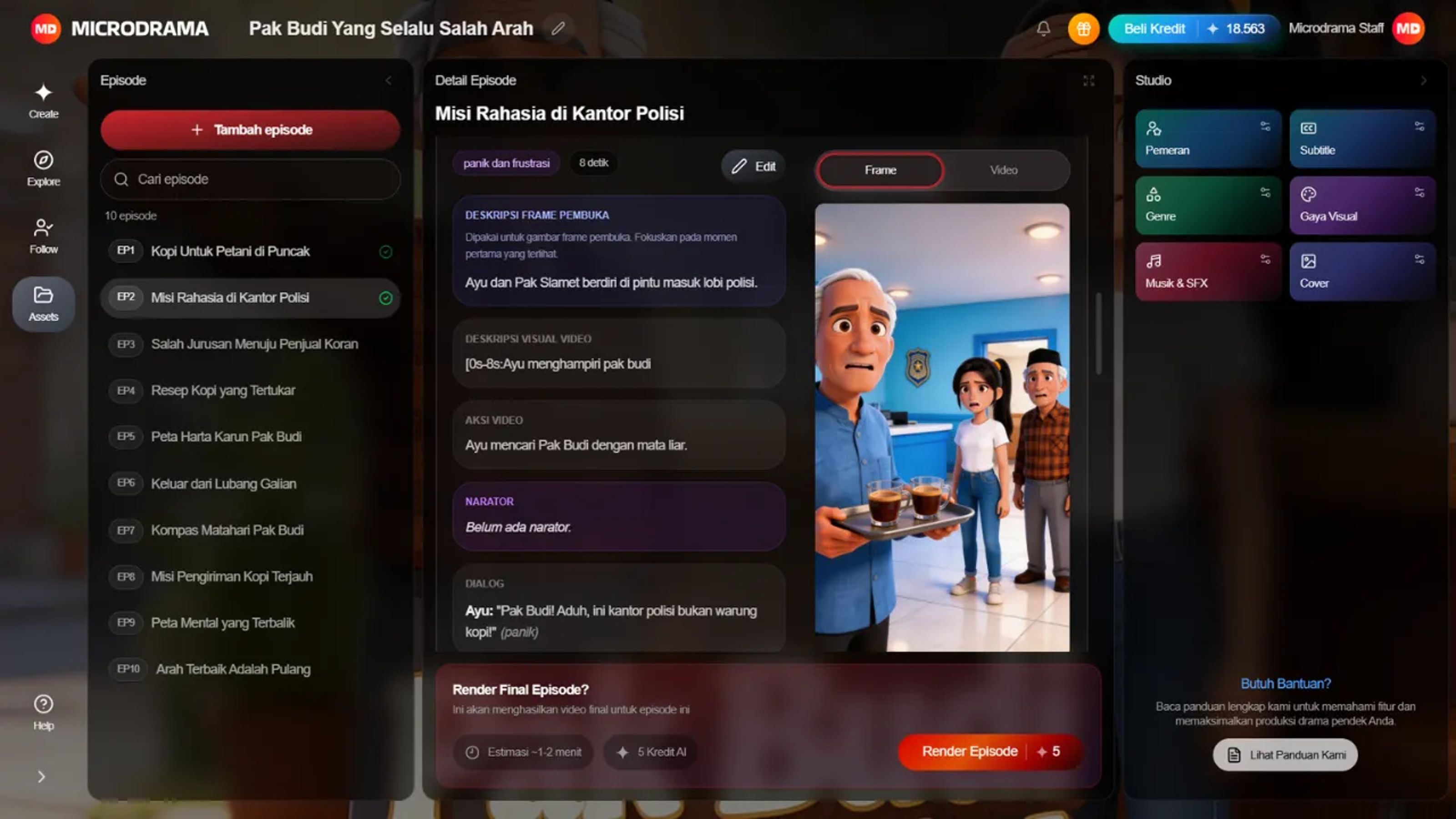
A drama script generator for fast hooks, tight episodes, and strong cliffhangers
A script generator built for vertical short drama: the prompt structure that returns specific scripts, how to break an outline into scenes, and a script format production can actually use.
General text generators optimise for fluent sentences. Drama needs something else: rhythm, stakes, and a cliffhanger that fits inside ninety seconds. The difference is not writing ability, it is the structure you ask for.
That structure is learnable and repeatable. A prompt that names five specific things returns a usable script; one that names only the situation returns something correct and lifeless.
This page covers the prompt structure, the two levels of breakdown from outline to dialogue, and the format that lets a script pass to production without anyone having to interpret it.
The key points on this page
- Five prompt components that decide whether a script comes back specific or generic.
- How to break one outline line into scenes and dialogue without losing direction.
- A script format suited to vertical production rather than feature film convention.
- The most common reason AI scripts sound flat, and how to fix it.
- What must be locked before a script moves into production.
Five prompt components that decide the result
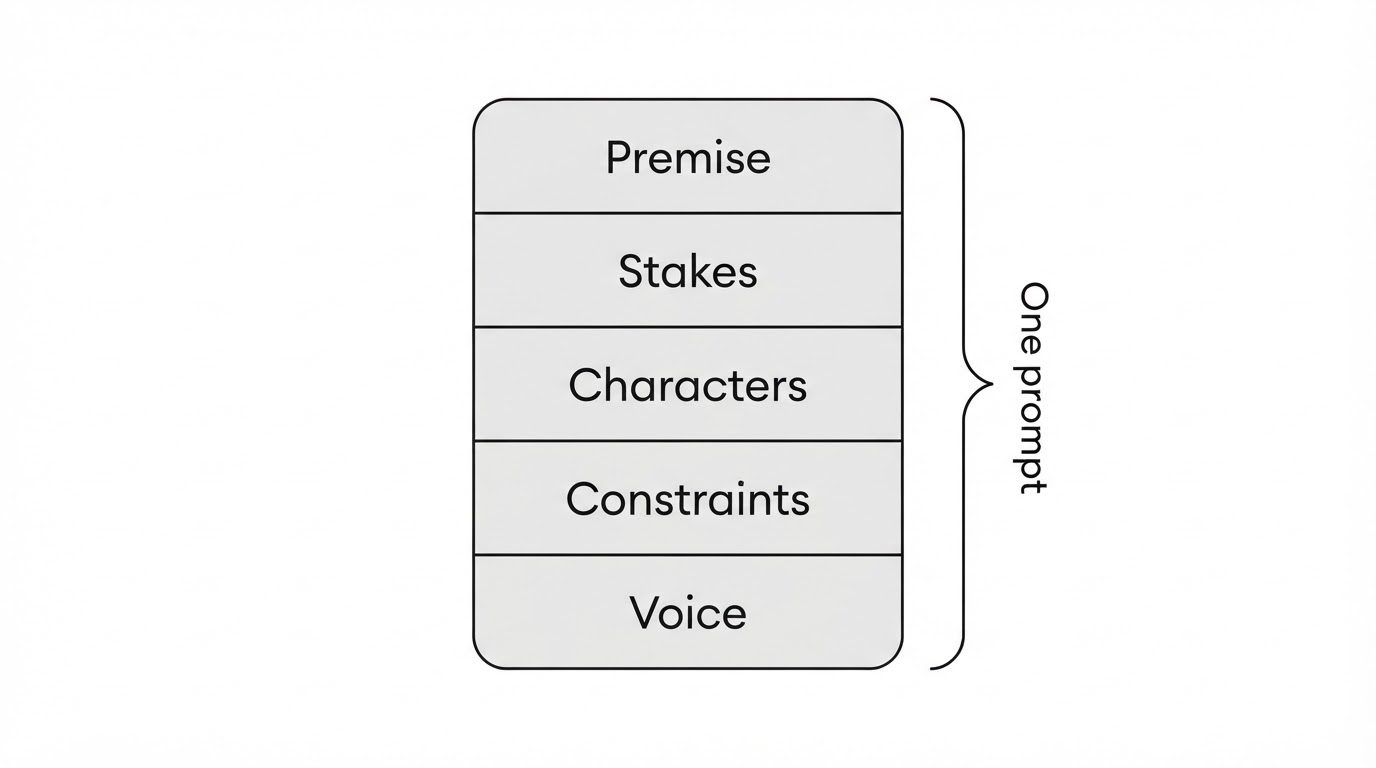
A prompt that produces a usable script almost always contains five things: premise, stakes, characters, constraints, and voice. One that produces generic output usually contains only the first.
The premise names the situation. The stakes name what is lost if the character fails, and this is the part most often missing. Characters name who is on screen, because without a limit the output tends to add a new person every scene.
Constraints name episode length, location count, and what must not happen. Constraints feel like narrowing but actually produce specificity. Voice names how each character speaks, and this is what stops everyone sounding identical.
All five fit in a prompt that is not long. What decides the outcome is not word count but whether those five things are present.
From one outline line to scenes and dialogue
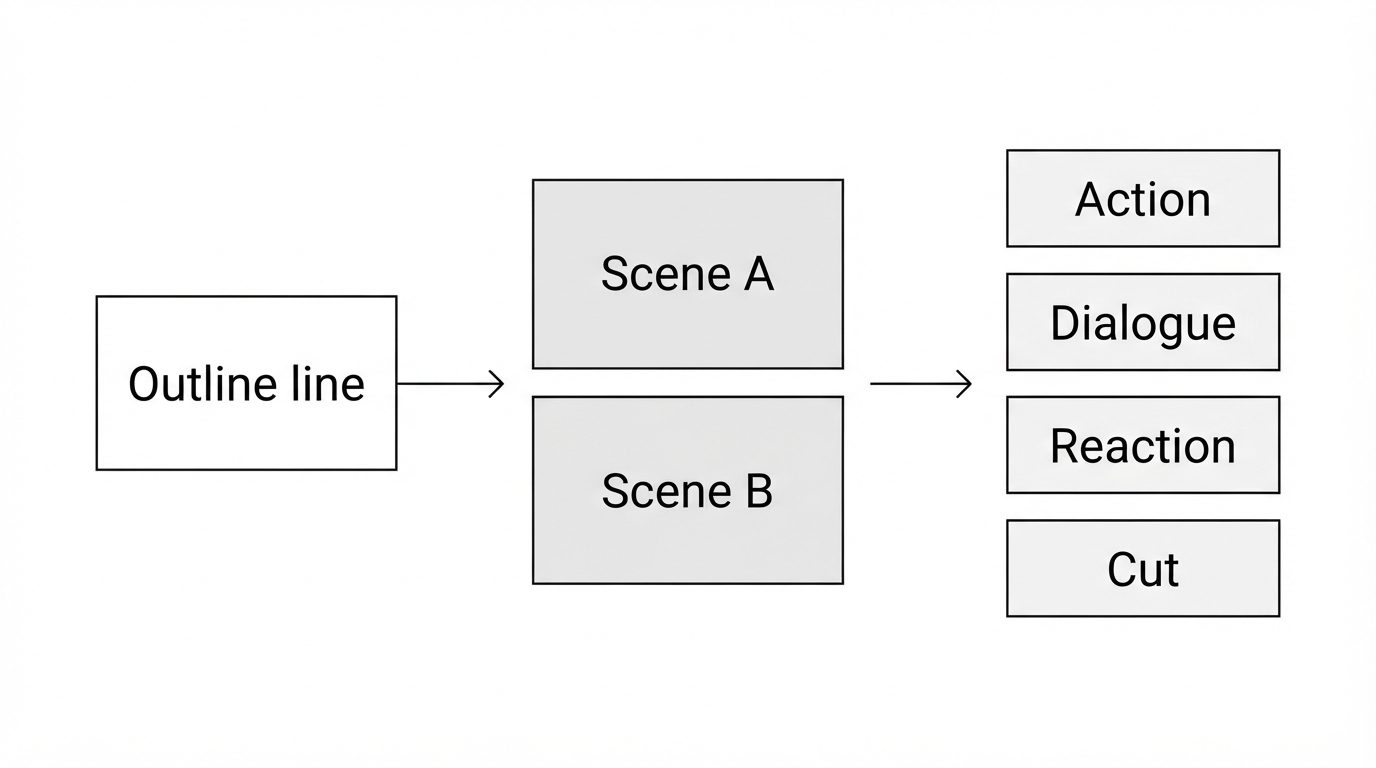
An outline line such as "Rina learns the document is forged" cannot become a script directly. It needs two levels of breakdown.
The first breaks it into scenes. Two is usually enough for a short episode: one that sets up, one that reverses. More than three scenes in a minute and viewers lose track of where they are.
The second breaks each scene into four elements: action, dialogue, reaction, and cut. Reaction is the element beginners skip most, yet in a vertical frame a responding face often carries more than a line of dialogue.
Ask the model to work one level at a time. Requesting a complete script directly from one outline line almost always produces scenes that feel rushed.
A script format for vertical production
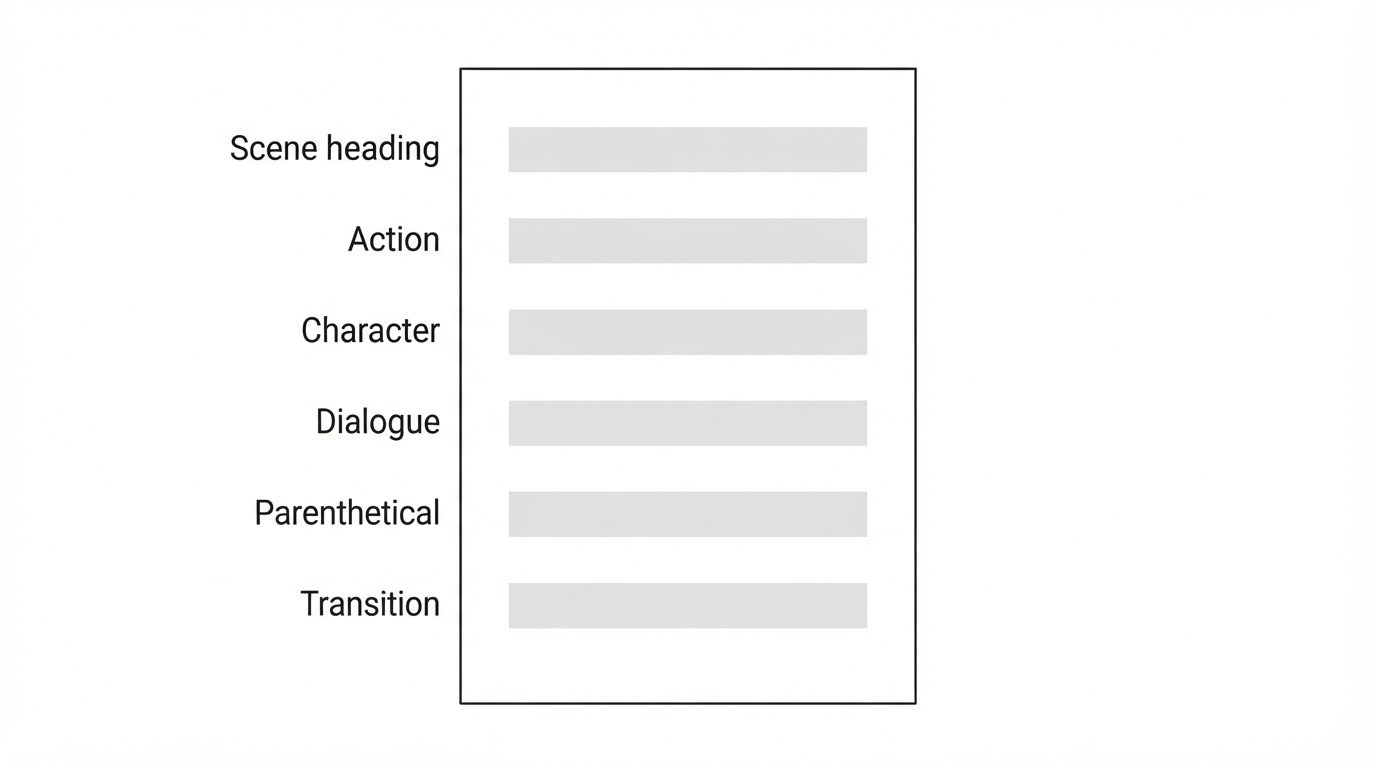
Short drama scripts do not need feature film formatting, but they do need enough order to hand to production without interpretation.
Six elements are sufficient: a scene heading naming location and time, action lines, character names, dialogue, a short delivery note where needed, and a cut marker. Almost everything else adds length without adding clarity.
One addition specific to vertical: mark the lines where subtitles will run long. Any line of dialogue exceeding two caption lines almost always needs splitting, and splitting is far cheaper while writing than while timing captions.
Keep each episode in its own file with consistent numbering. By episode twenty, tidy numbering saves more time than it appears to at the start.
Why scripts sound flat and how to fix it
A script that is tidy but flat almost always has one cause: nothing is at stake in that scene. The lines are correct, the sequence makes sense, but nothing can be lost.
The fastest fix is not rewriting dialogue but adding one thing that can be lost in that scene. Time running out, a witness who could walk in, or a secret about to surface. Once stakes exist, the same dialogue often reads completely differently.
The second cause is every character speaking with the same rhythm. Assign one speech trait per character and state it in the prompt: who answers briefly, who circles, who never answers directly.
The third cause is dialogue addressed to the audience rather than the other character. Any line beginning "as you know" almost certainly needs deleting.
Handing a script to production
A finished script is not automatically production ready. Three things need locking first.
A character list with fixed descriptions, so visuals and voice stay consistent across episodes. A location list, so no unnecessary new place appears. And notes marking which lines need particular emotional emphasis.
All three can be prepared through the character and voice pages. If you are working from a ready-made episode framework, the template page removes the outline breakdown stage entirely.
How to use this theme in production
Build a five-part prompt
Premise, stakes, characters, constraints, voice. Without stakes the output will be generic.
Generate a twelve-line outline
One line per episode. Fix at this level before breaking it down.
Break one line into scenes
Two scenes per episode: one sets up, one reverses.
Break scenes into script
Action, dialogue, reaction, cut. Do not skip reaction.
Check the stakes in every scene
If nothing can be lost, add time pressure, a witness, or a secret.
Lock characters and locations
Fixed lists before the script moves to voice and visuals.
Câu hỏi thường gặp
How is a drama script generator different from a general text generator?
A general generator optimises for fluent sentences. Drama needs rhythm, stakes, and a cliffhanger inside a very short runtime. The difference lies in the structure you request, not in writing ability.
How do you write a prompt that avoids generic output?
Include five things: premise, stakes, characters, constraints, and each character's voice. Stakes is the one most often missing, and without it the output is tidy but nothing is at risk.
How many scenes should one short episode have?
Two is usually enough: one that sets up the situation and one that reverses it. More than three scenes in a minute and viewers lose track of location and relationships.
Can you request all twelve scripts at once?
You can, but the result is usually weaker. Writing one, reading it, then adjusting the next outline line produces a story that develops. Requesting twelve at once tends to repeat patterns.
What script format does vertical drama need?
Six elements suffice: scene heading, action lines, character name, dialogue, delivery note where needed, and a cut marker. Also mark any dialogue that will produce more than two caption lines.
Why does every character sound the same?
Because the prompt does not describe how each one speaks. Assign one trait per character: who answers briefly, who circles, who never answers directly. It is the single change with the most noticeable effect.
How do you fix a scene that feels flat?
Do not rewrite the dialogue first. Add one thing that can be lost in that scene: time running out, a witness who could enter, or a secret about to surface. The same dialogue often reads differently.
Do AI-written scripts need human editing?
Yes, particularly for emotional dialogue and cliffhanger placement. The efficient division is letting the model produce structure and variations while you decide which version is used and where the cut lands.
How do you keep characters consistent across episodes?
Keep a character list with fixed descriptions and include it in every episode prompt. Without a written reference, small details drift between generations and loyal viewers notice.
How long can a line of dialogue safely be?
Any line producing more than two caption lines should be split. Splitting while writing is far cheaper than while timing captions, because a good split usually changes the word choice.
Can it be used for specific genres like thriller or comedy?
Yes, and the genre should be stated in the prompt. Genre determines scene length, dialogue rhythm, and which kind of cliffhanger works, so naming it early saves a great deal of revision.
What comes after the script is finished?
Lock the character list, the location list, and the emotional notes per line. All three are needed before the script moves to character, voice, and caption stages so nothing gets reinterpreted mid-production.


Page summary
This section answers the most common questions so you can understand the page context faster before moving to the next creative step.