


Genre "Short Drama Horror" ใน Microdrama คืออะไร?
A horror genre guide for vertical short drama: why building beats jump scares, four world rules to lock before episode one, and how to divide a 9:16 frame into light zones.
Horror works through anticipation rather than surprise. A viewer who knows something is behind the door is far more tense than one startled by something that suddenly appears. The first lasts a minute; the second lasts a second.
Horror is the genre most tempting to produce quickly and the hardest to get right. Frightening someone for one second is easy; keeping them uneasy for a full minute is much harder, and the second is what makes them open the next episode.
The most common error is treating horror as surprise. Surprise produces a momentary reaction and then ends. What keeps viewers is the sense that something bad is coming and they do not yet know when. That sense is built, not sprung.
This page covers what decides horror in the vertical format: how to raise tension in a very short runtime, which rules to fix before writing, and how to use light in a narrow frame to create danger you never have to show.
ทำไม Genre "Short Drama Horror" จึงสำคัญกับการผลิต short drama
ในงานจริง genre ที่ชัดช่วยให้ผู้ชมตัดสินใจเร็วว่าเรื่องนี้เกี่ยวข้องกับเขาไหม conflict น่าสนใจไหม และตอนต่อไปควรดูต่อหรือไม่
ดังนั้น genre ไม่ใช่แค่ป้ายหมวดหมู่ แต่ช่วยกรอง tone จังหวะ dialogue รูปแบบ conflict visual style และ cliffhanger ที่เหมาะที่สุด
- Viewers feel something is wrong within three seconds without anything being shown.
- A hard limit on scares stops them being spent in episode one.
- Simple lighting outperforms expensive effects, keeping production affordable.
- World rules written early prevent inconsistency by episode twenty.
- Every scene can be tested: does this add unease, or only add events?
วิธีอ่าน genre นี้ก่อนเขียน episode
ส่วนนี้ครอบคลุมทิศทางเรื่อง hook เปิดเรื่อง แรงกดดันของ conflict และวิธีทำให้ตัวละครยังรู้สึกเป็นมนุษย์
Build slowly, scare once
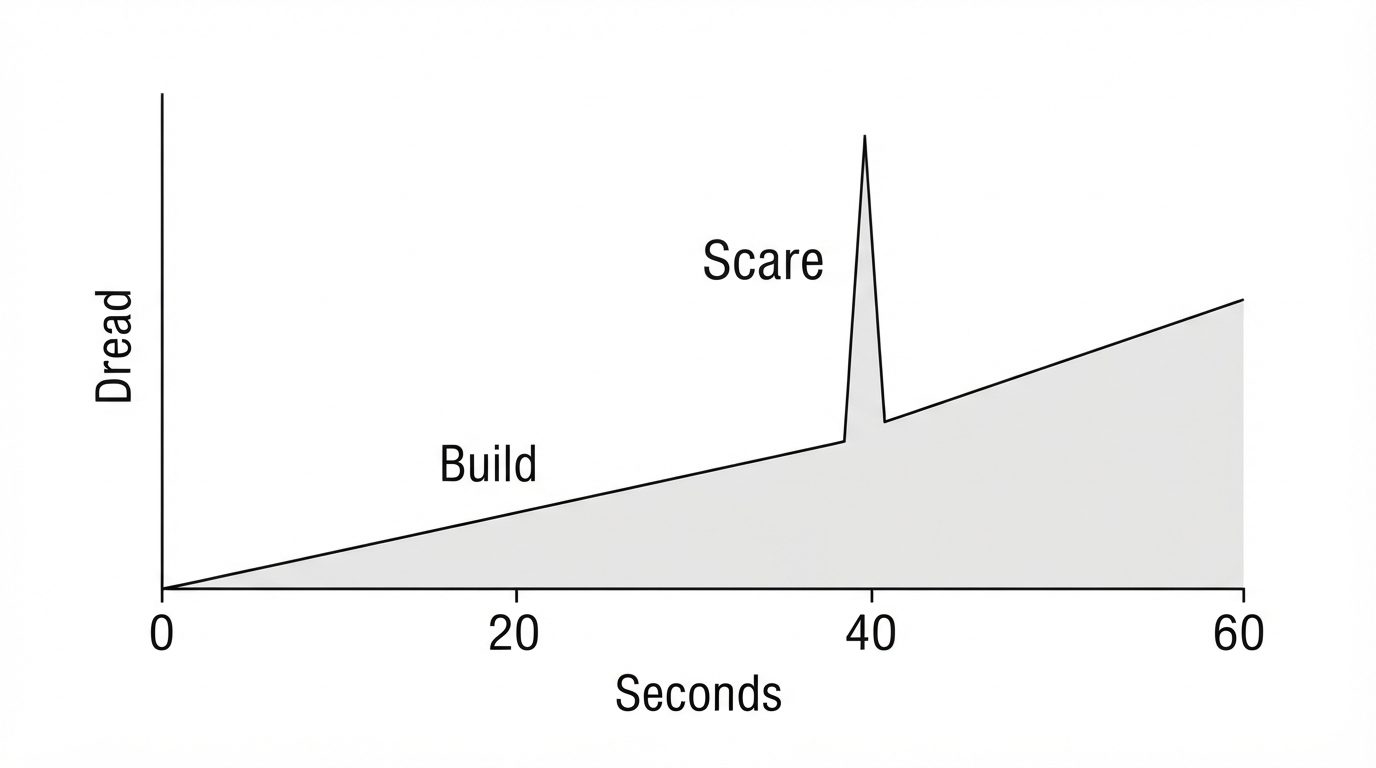
A working horror tension curve is a long climb with one sharp spike near the end. Not a saw blade with many small peaks.
The climbing part is where the real work happens. Here you accumulate small wrong things: a sound out of place, a shadow that moves after the character turns away, an object that shifts without explanation. None is frightening alone; together they make viewers unable to settle.
One scare per episode is enough, and it belongs at roughly three quarters of the runtime. Placing it early spends tension that has not yet been built; placing it at the very end removes room for the cliffhanger.
If you use two scares in one episode, the second almost always lands weaker. Viewers have adjusted, and a body cannot be startled the same way twice in a minute.
Four world rules to lock first
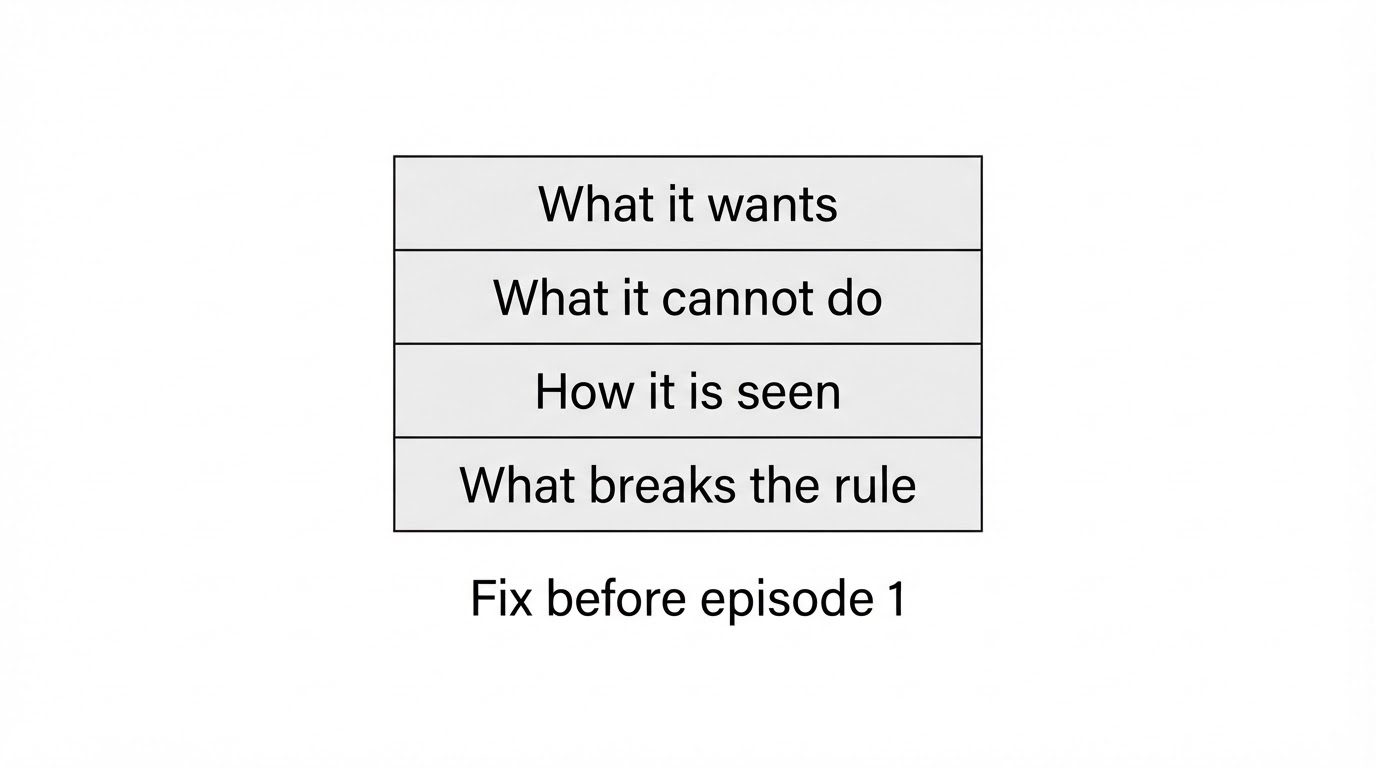
Before writing episode one, fix four things about your threat: what it wants, what it cannot do, how it can be seen, and what breaks its rules.
The second is the most important and most often skipped. A threat that can do anything is not frightening, because viewers stop hoping the character can survive. Limits make hope possible, and threatened hope is where tension comes from.
The rule about how it can be seen determines your entire visual language: through mirrors, through cameras, only in darkness, or only by one person. That choice also determines production cost, so set it early.
The fourth rule is your story's exit. Without it, the final episode has no way to resolve anything except coincidence, and coincidence is the most disappointing ending in this genre.
Light zones in a 9:16 frame
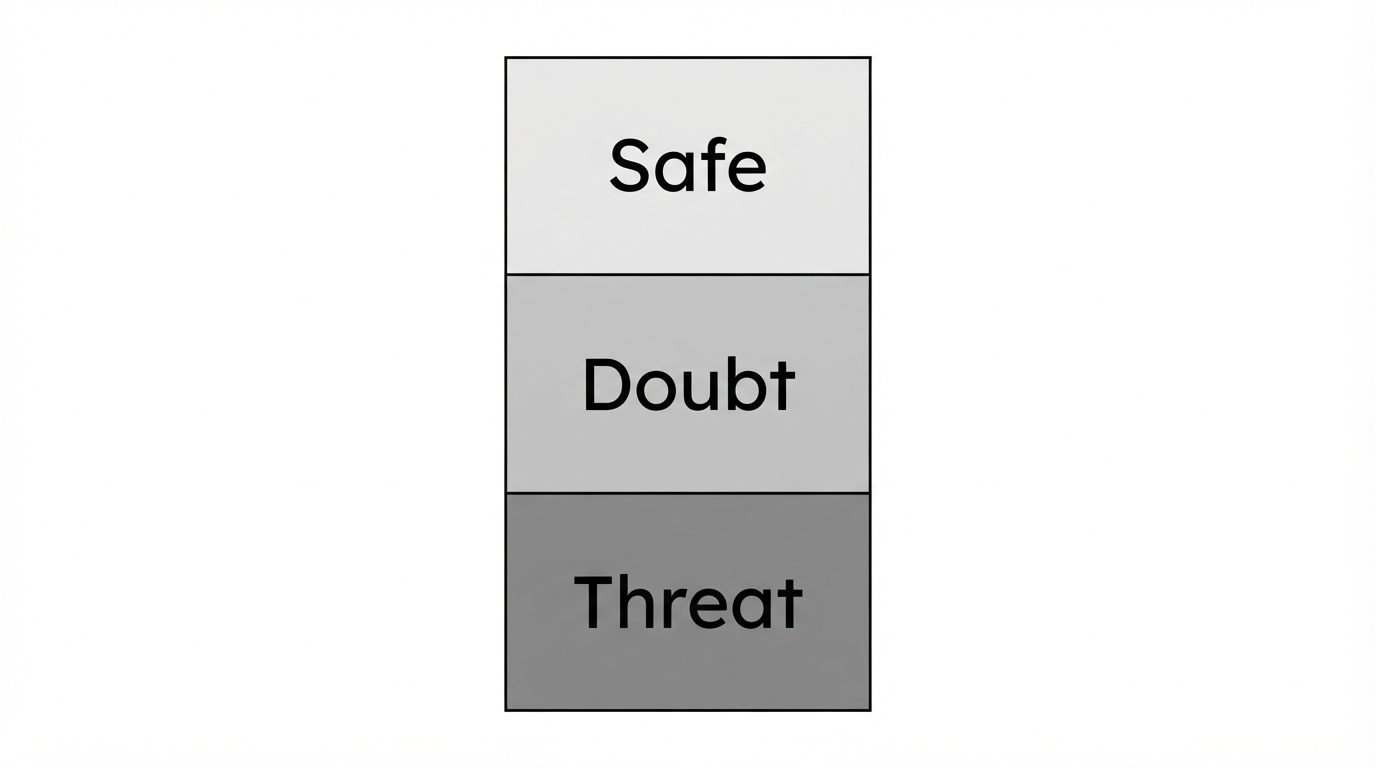
The vertical frame gives you one advantage a wide screen does not: height. That height can divide the space into zones with different levels of safety.
The upper part of the frame, usually brighter, becomes the safe zone where the character's face sits. The middle becomes the doubtful zone, where something might be. The darkest lower part becomes the threat zone.
With that division you can make viewers uneasy simply by moving a character slightly down in frame, without showing anything at all. Viewers read the change in position as a change in safety even without noticing why.
Simple lighting is enough. What decides the effect is not the number of lights but consistency: once viewers learn the bottom of the frame is dangerous, every later scene gains tension for free.
The unseen frightens more
Every time you show a threat completely, it becomes finite. Viewers stop imagining and start assessing, and assessment is always lighter than imagination.
This is also a practical advantage for small productions: a threat that is not shown does not have to be made. Sound, shadow, character reaction, and the traces left behind carry the first ten episodes comfortably.
When you do have to show something, show part of it briefly. One hand, part of a face, one movement at the edge of frame. A fragment leaves room for imagination; a full image closes it.
Save the full reveal for one moment in the entire title, and place it after viewers have imagined long enough. Afterwards, return the threat to the shadows.
Mistakes that make horror funny
A threat that appears too often. Something appearing every episode stops being frightening by the fourth. Give it gaps; absence is what keeps fear alive.
Characters behaving stupidly without reason. Viewers will laugh at someone entering a dark room for no cause. Give a plausible reason for every dangerous decision, such as saving someone or genuinely having no alternative.
Music announcing when to be afraid. Music that tightens just before a scare erases the scare. Complete silence is often far more effective.
Visual effects beyond your production's reach. An unconvincing effect breaks the mood instantly and is difficult to recover. Showing the aftermath is safer than showing the cause.
ประเด็นสำคัญที่ควรจำ
Inconsistent world rules are the most common killer of horror. Once viewers realise the threat can do anything, nothing can frighten them, because nothing can be predicted or avoided.
What makes a horror payoff linger is when viewers can look back and see the signs were present from episode one.
- Digital horror, Family curse, Haunted house
- dark, uneasy, and full of unseen threat
- rules the threat cannot break
- revealing the culprit, the origin of the curse, or realising it is too late
- แนวตั้ง 1–2 นาทีต่อตอน
วิธีใช้ genre นี้ใน production
Lock four world rules
What it wants, what it cannot do, how it is seen, and what breaks the rule.
Design a single-spike curve
A long build with one scare at roughly three quarters of the runtime.
Set the light zones
Safe at the top, doubt in the middle, threat at the bottom. Keep it consistent.
Accumulate small wrong things
A sound out of place, an object moved, a late shadow. None frightening alone.
Justify every dangerous decision
Characters acting stupidly without cause make viewers laugh, not fear.
Save the full reveal
Once in the whole title, after viewers have imagined long enough.
คำถามที่พบบ่อย
What makes a short drama horror frightening?
Anticipation rather than surprise. A viewer who knows something is behind the door is far more tense than one startled by something that suddenly appears. The first lasts a minute, the second a second.
How many jump scares should one episode have?
One, placed at roughly three quarters of the runtime. A second in the same episode almost always lands weaker because viewers have adjusted and a body cannot be startled the same way twice in a minute.
What rules must be set before writing horror?
Four things about the threat: what it wants, what it cannot do, how it can be seen, and what breaks its rules. The second matters most, because a threat without limits stops being frightening.
Why should the threat not be shown completely?
Because showing makes it finite. Viewers stop imagining and start assessing, and assessment is always lighter than imagination. It is also far cheaper to produce.
How do you make horror on a vertical screen without expensive effects?
Use the height of the frame. Divide it into three light zones: safe at the top, doubt in the middle, threat at the bottom. Moving a character slightly down changes the sense of safety without showing anything.
Why does my horror feel funny rather than frightening?
The most common cause is characters acting stupidly without reason. Give a plausible cause for every dangerous decision, such as saving someone or genuinely having no alternative.
How often may the threat appear?
Less often than feels comfortable. Something appearing every episode stops being frightening by the fourth. It is absence that keeps fear alive.
How should music be used in horror?
Avoid music that tightens just before a scare, because it erases the scare itself. Complete silence is often far more effective, especially in the seconds before something happens.
Which horror subgenre is cheapest to produce?
Digital horror, because the threat arrives through screens, messages, or recordings. All of it can be made without special locations or visual effects, while feeling more personal rather than less.
How do you build a horror hook in three seconds?
Show one thing that is wrong without explaining it: a door already open, a chair facing the wrong way, a message not yet sent. One unnatural sign beats a threat shown outright.
What kind of payoff satisfies in horror?
Revealing the perpetrator, the origin of the curse, or the moment the character realises they left too late. What makes it linger is viewers being able to look back and see the signs were there from episode one.
What should you read after this?
The thriller genre page for techniques on withholding information, or the story ideas page to find a source of pressure you can attach to a horror premise.


Page summary
This section answers the most common questions so you can understand the page context faster before moving to the next creative step.