


Microdrama में Genre "Short Drama Comedy" क्या है?
A comedy genre guide for vertical short drama: the ratio between setup and punchline, how many laugh beats per episode, and four kinds of joke worth mixing.
Comedy in short form is a timing problem before it is a writing problem. The same joke succeeds or fails on half a second of pause. Before rewriting an unfunny line, try moving the cut.
Comedy is the least forgiving genre when it comes to timing. A drama survives being slightly slow; a joke half a second out of place fails outright, and viewers feel it without being able to explain why.
The good news is that the vertical format suits comedy. Short runtimes force every scene straight to the point, and fast cutting has been a comedic tool for a very long time. What it takes is discipline about timing.
This page covers the most technical and most decisive aspects: how long a setup may run, where the punchline falls, how many laugh beats an episode needs, and how to mix joke types so an episode does not feel monotonous.
शॉर्ट ड्रामा निर्माण के लिए Genre "Short Drama Comedy" क्यों मायने रखता है
व्यवहार में, एक मज़बूत शैली दर्शकों को तेज़ फ़ैसला लेने में मदद करती है: सीरीज़ प्रासंगिक लगती है या नहीं, conflict दिलचस्प है या नहीं, और अगला एपिसोड देखने लायक है या नहीं।
इसीलिए शैली केवल एक कैटलॉग लेबल नहीं है। यह tone, संवाद की लय, conflict का आकार, विज़ुअल स्टाइल, और सबसे प्रभावी cliffhanger के प्रकार को छानती है।
- Viewers know within two seconds this is light viewing and stop expecting tension that will not arrive.
- Writers get a measurable timing target instead of a feeling of funny or not funny.
- Visual teams can plan cuts from the script, because in comedy the cut is part of the joke.
- Characters with clear habits produce recurring jokes that do not need rewriting each episode.
- Failed jokes are usually fixable by moving the timing rather than changing the line.
एपिसोड लिखने से पहले इस शैली को कैसे पढ़ें।
इस हिस्से में कहानी की दिशा, ओपनिंग हुक, conflict का दबाव, और किरदारों को इंसानी बनाए रखने का तरीका शामिल है।
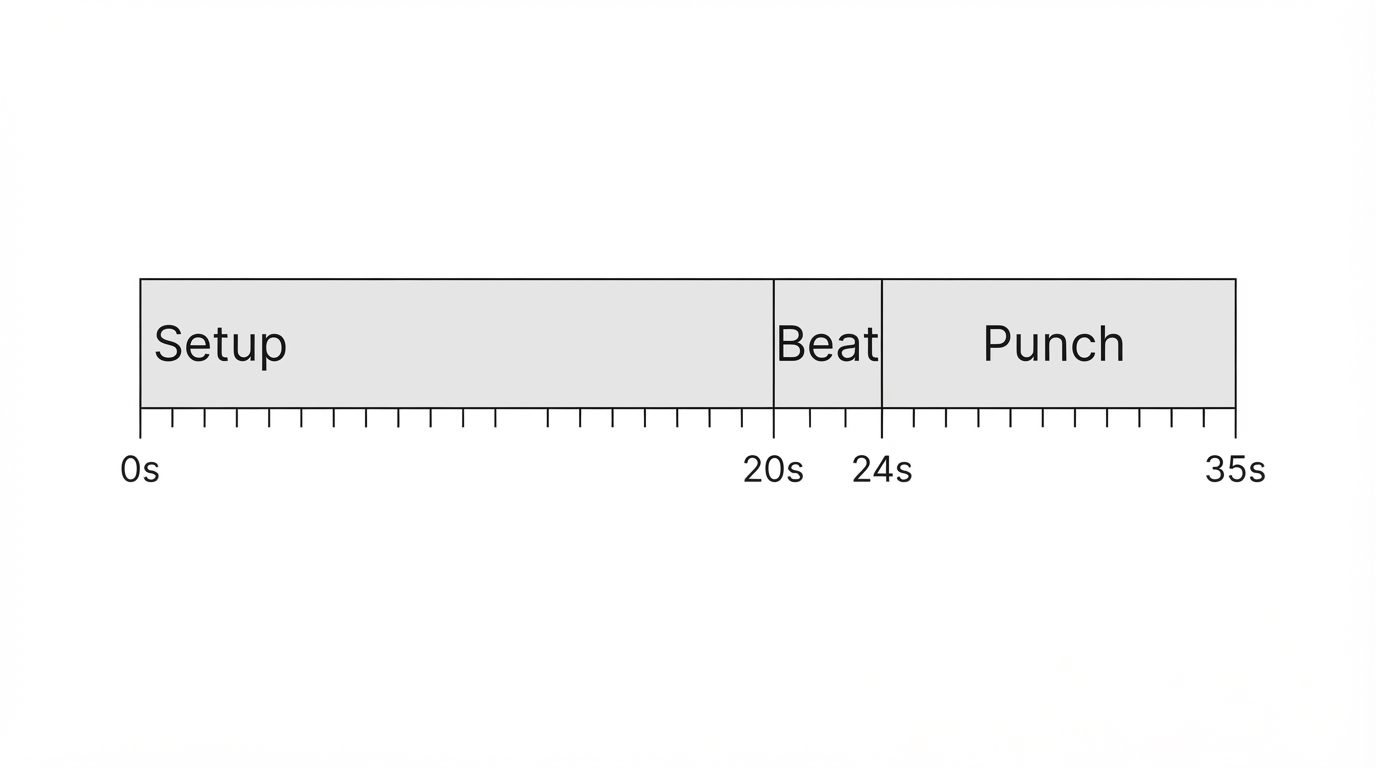
Time ratio: long setup, fast close
Comedy has a different time structure from other genres. The setup takes the largest share, the pause is very short, and the punchline is followed by a rapid close.
A long setup is not waste. It installs an expectation, and jokes work by breaking that expectation. A setup that is too short has installed nothing, so the punchline has nothing to break.
The pause before the punchline is the most technical element. Too short and viewers have not begun to anticipate; too long and they guess it themselves. Around one second is usually right, and it is easiest to control at the editing stage rather than in the script.
After the punchline, close fast. Letting a scene run on invites viewers to evaluate, and evaluation always reduces laughter. Cut while the laugh is rising, not after it falls.
Laugh density rises rather than spreads
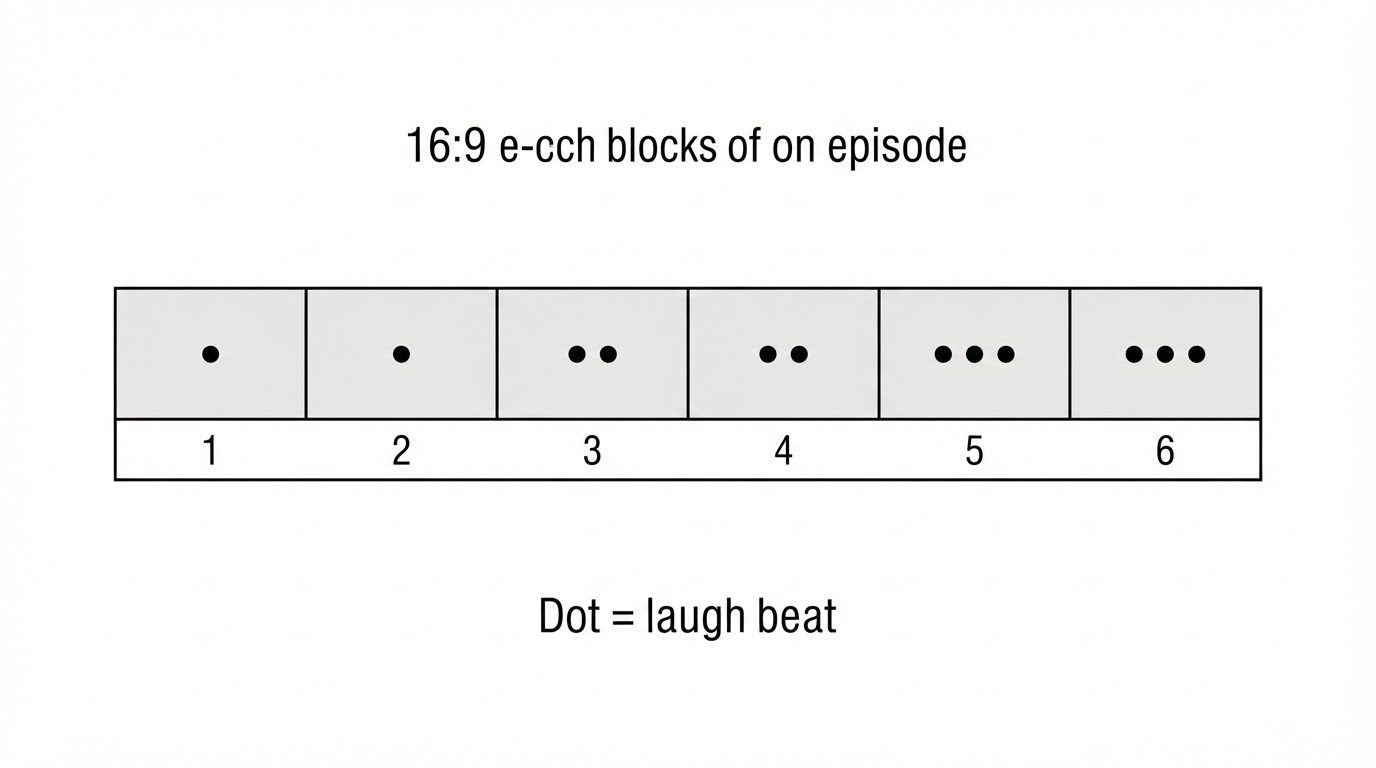
A one-minute comedy episode needs more than one joke, but spreading them evenly makes the episode feel flat.
The pattern that works climbs: sparse at the start while the situation is installed, denser in the middle, and densest in the final ten seconds. Viewers experience that acceleration as an episode getting funnier, even though the total joke count is the same.
The first ten seconds are better spent installing the situation with one light joke only. Opening with your strongest joke makes the rest of the episode feel like a decline.
Save the best joke for just before the final cut. In a serialised format, viewers decide whether to open the next episode based on the last ten seconds, not on the episode average.
Four kinds of joke and how to mix them
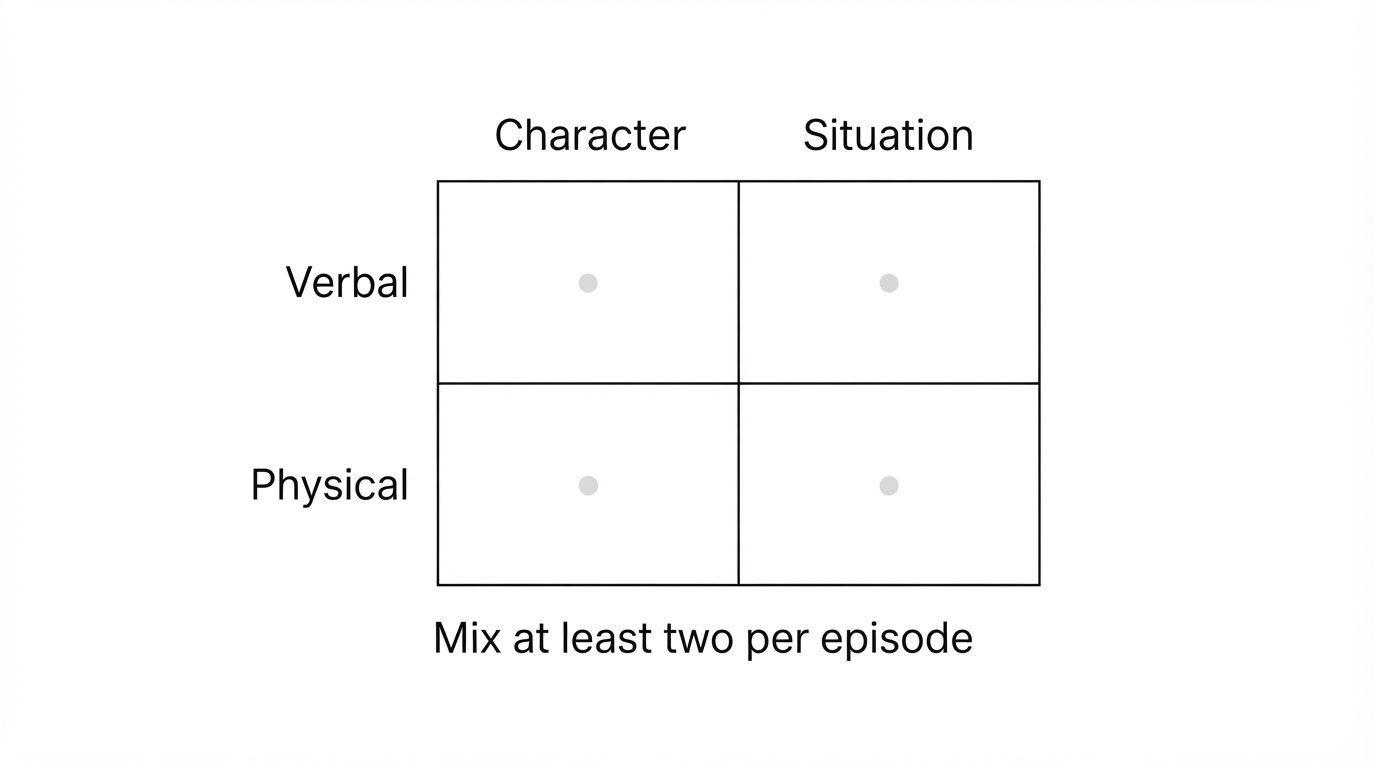
Jokes in short drama generally fall into one of four boxes: verbal or physical, multiplied by originating in character or in situation.
A verbal character joke is a distinctive way of speaking that never changes. A physical character joke is a repeated bodily habit. Both are cheap because they need no fresh setup; viewers already know them.
A verbal situation joke is a misunderstanding or a line heard at the wrong moment. A physical situation joke is an event outside the character's control. Both hit harder but must be rebuilt every time.
Mix at least two boxes per episode. An episode using only one type feels monotonous on a second viewing, and in a serialised format viewers watch many episodes in a row.
Character beats situation
The temptation in short comedy is to make each situation wilder. The problem is that wild situations need explaining, and explanation is the enemy of comedy.
A character with a clear habit needs no explanation. Once viewers know that one character always answers a question with a question, you get a free joke in every scene involving them.
Give each lead one repeatable habit and one weak point that can be triggered. The combination produces different jokes each time the situation changes, without the situation needing to get more extreme.
A simple test: if your joke is still funny delivered by a different character, it is a situation joke. If it only works from one specific character, it is a character joke, and the second kind lasts far longer.
Timing mistakes that make jokes fail
Explaining after the punchline. Adding a line to make sure viewers understood is the fastest way to erase a laugh. Trust the audience.
Cutting too late. A scene running three seconds past the punchline turns from funny into awkward. Cut earlier than feels comfortable.
A character reaction funnier than the joke. If a character laughs at their own joke, viewers stop laughing. Let them respond flatly.
Music marking the joke. A sound effect telling viewers when to laugh makes a joke feel forced, especially on a second viewing, which happens often in this format.
याद रखने योग्य मुख्य बातें।
Consistent characters produce more laughs than wild situations. Viewers laugh because they already know how a character will react and then find they were right. A new situation needs explaining; a habit does not.
Cut on the rise of the laugh rather than after it falls. An episode that ends immediately after the punchline almost always feels funnier than one that lingers.
- Office comedy, Romcom, Fish out of water
- light, fast, and situational
- expectation installed then broken
- one clean punchline that lands and closes fast
- वर्टिकल, हर एपिसोड 1–2 मिनट
इस शैली को निर्माण में कैसे इस्तेमाल करें।
Give each character one habit
One repeatable habit and one weak point that can be triggered.
Install a setup longer than feels necessary
Jokes work by breaking expectation, and expectation takes time to install.
Set the pause at around one second
Controlled at the edit, not in the script. This is the most decisive variable.
Raise density toward the end
Sparse at the start, densest in the final ten seconds.
Mix at least two joke types
Verbal and physical, character and situation. One type alone feels monotonous.
Cut right after the punchline
While the laugh is rising, not after it falls. Do not explain afterwards.
अक्सर पूछे जाने वाले सवाल
What most decides whether short-form comedy works?
Timing, before writing. The same joke succeeds or fails on half a second of pause before the punchline. Before rewriting the line, try moving the cut.
How long should the pause before a punchline be?
Around one second. Too short and viewers have not begun anticipating; too long and they guess it themselves. It is easiest to control at the editing stage.
How many jokes does a one-minute episode need?
More than one, but do not spread them evenly. The pattern that works climbs: sparse at the start, denser in the middle, densest in the final ten seconds.
Why does my joke fail even though the line is funny?
Most often because the scene is cut too late. Letting it run a few seconds past the punchline turns funny into awkward. Cut while the laugh is still rising.
What are the four kinds of joke available?
Verbal or physical, multiplied by originating in character or situation. Character jokes are cheaper because they need no fresh setup; situation jokes hit harder but must be rebuilt each time.
Is it better to rely on character or situation?
Character. Wild situations need explaining, and explanation is the enemy of comedy. Once viewers know a character's habit, you get a free joke in every scene involving them.
How do you test whether a joke is character-based?
Read the line as if a different character delivered it. If it is still funny, it is a situation joke. If it only works from one specific character, it is a character joke and will last far longer.
May a character laugh at their own joke?
Better not. When a character laughs first, viewers stop laughing. A flat response almost always produces a bigger reaction.
Do you need sound effects to mark jokes?
No, and they often hurt. An effect telling viewers when to laugh makes the joke feel forced, particularly on the second viewing that happens frequently in this format.
Which comedy subgenre is easiest to produce?
Office comedy, because one fixed location and everyday ego clashes already supply situations without explanation. Viewers also recognise the dynamic within seconds.
How do you build a comedy hook in three seconds?
Open on a misunderstanding that has already happened rather than one being built. A character caught out in the first second gives viewers a question and a reason to smile at once.
What should you read after this?
The romance genre page if you want to mix comedy with relationship tension, or the character page to build the habits that produce recurring jokes.


Page summary
This section answers the most common questions so you can understand the page context faster before moving to the next creative step.