


Genre "Short Drama Fantasy" trong Microdrama là gì?
A fantasy genre guide for vertical short drama: why every power needs a price, when new world rules may be opened, and the order for introducing characters before their world.
Power without a price removes tension. Once viewers know a character can solve anything without losing something, there is no reason to worry. Decide the price before deciding the power.
Fantasy has a particular problem in short form: its world needs explaining, and the runtime offers no room for explanation. Many vertical fantasy titles fail not because the idea is weak but because the first ten seconds are spent introducing terms that mean nothing yet.
The way out is to invert the order. Viewers do not need to understand a world in order to care about a person, but they do need to care about a person before they will work to understand a world. Fantasy that works on a phone always introduces people first, rules second, and world history last if at all.
This page covers what decides fantasy in production: how to price power so tension survives, when new rules may be opened, and how to keep one symbol legible on a small screen.
Vì sao Genre "Short Drama Fantasy" quan trọng trong sản xuất short drama
Trong thực tế, một genre rõ giúp người xem quyết định nhanh: series có liên quan không, conflict có thú vị không, và tập tiếp theo có đáng xem không.
Vì vậy genre không chỉ là nhãn danh mục. Nó lọc tone, nhịp thoại, hình dạng conflict, visual style và kiểu cliffhanger hiệu quả nhất.
- Viewers have a reason to care before they are asked to understand, so episode one does not feel like a lesson.
- A rule-opening schedule makes the world feel like it deepens rather than changes arbitrarily.
- Visual budgets stay low because one consistent symbol outperforms many world elements.
- A price set early gives every use of power tension without extra effort.
- Every new idea can be tested: does this break a rule already shown to the audience?
Cách đọc genre này trước khi viết episode
Phần này nói về hướng câu chuyện, opening hook, áp lực conflict và cách giữ nhân vật có cảm giác con người.
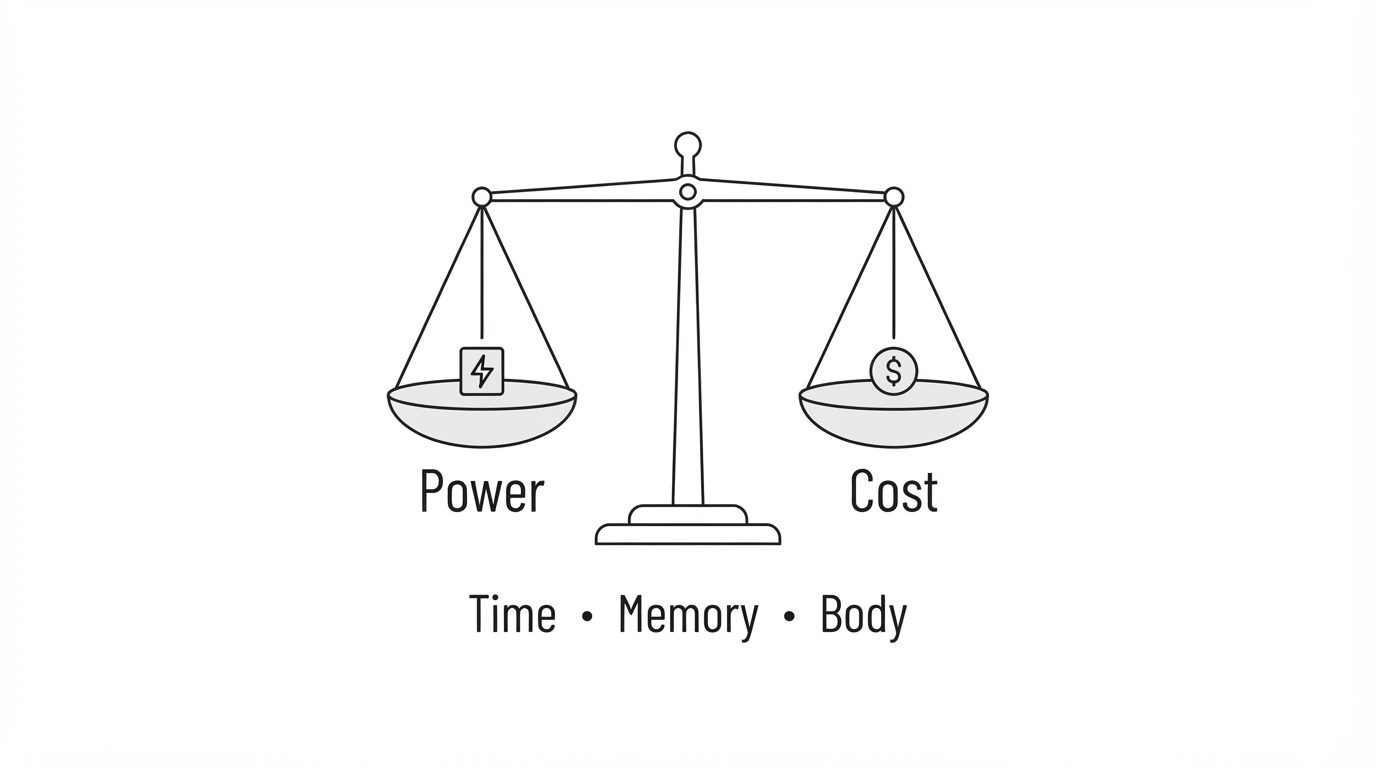
Every power needs a visible price
The first rule of fantasy that works: power must be expensive. Not difficult to obtain, but costly every time it is used.
The three prices viewers read most easily are time, memory, and body. Power that shortens a life, erases memories, or leaves a physical mark reads as risky without any explanation.
The price has to be seen, not stated. If a character loses memories, show them forgetting someone's name in the next scene. If the price is physical, show the mark persisting for several episodes. A price mentioned only in dialogue never lands.
A simple test: if the character can use their power in every scene without hesitating, the price is not large enough. Fantasy tension comes from the moment a character has to decide whether this problem is worth paying for.
A schedule for opening world rules
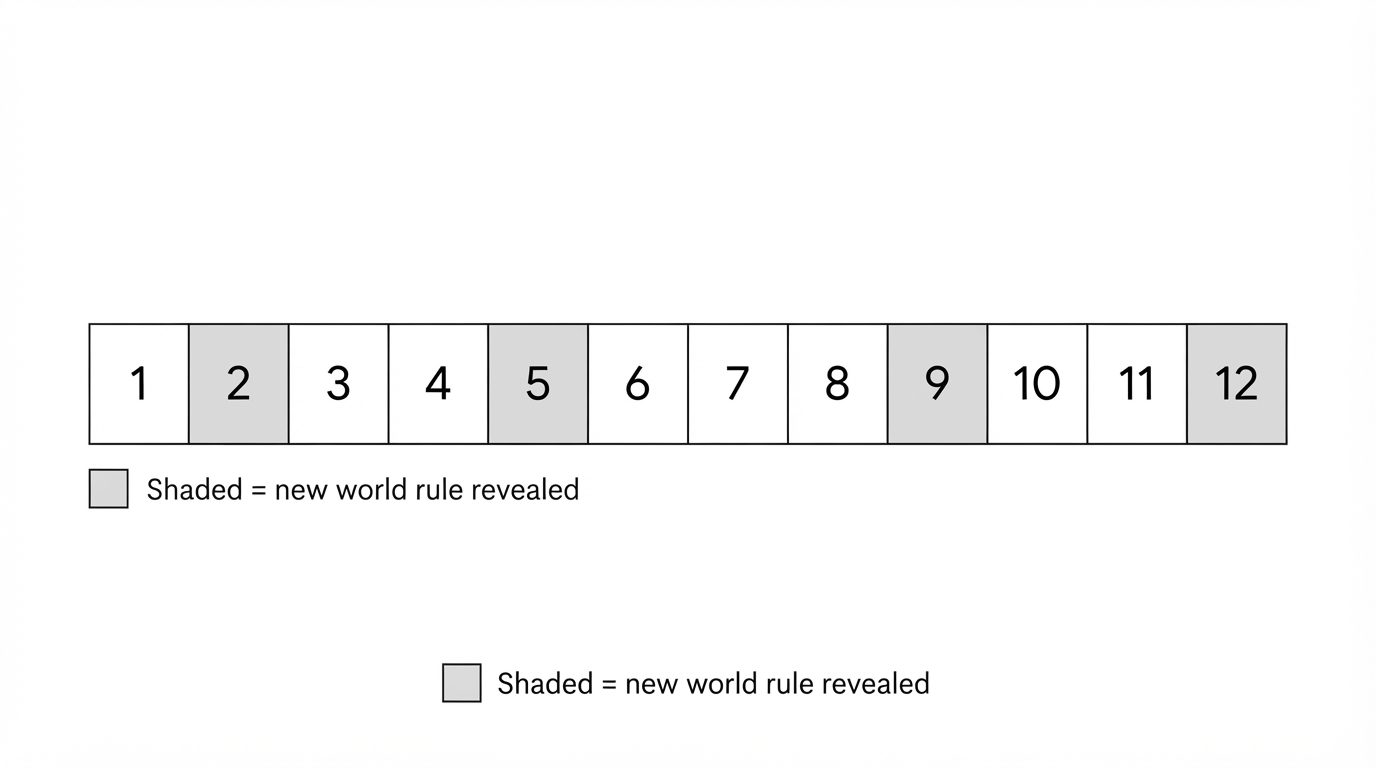
Explaining an entire world in episode one is the most expensive mistake in vertical fantasy. Viewers have no reason to remember yet, so all of it is lost.
The pattern that works opens a new rule four times across twelve episodes, roughly at episodes two, five, nine, and twelve. Each opening changes the meaning of what came before, so the world feels deeper rather than more complicated.
The rule opened at episode two should be the simplest and the one that most directly affects the character. The rule at episode twelve should be the one that changes how viewers understand the whole story.
One rule per opening. Opening two at once forces viewers to choose which to remember, and usually they remember neither.
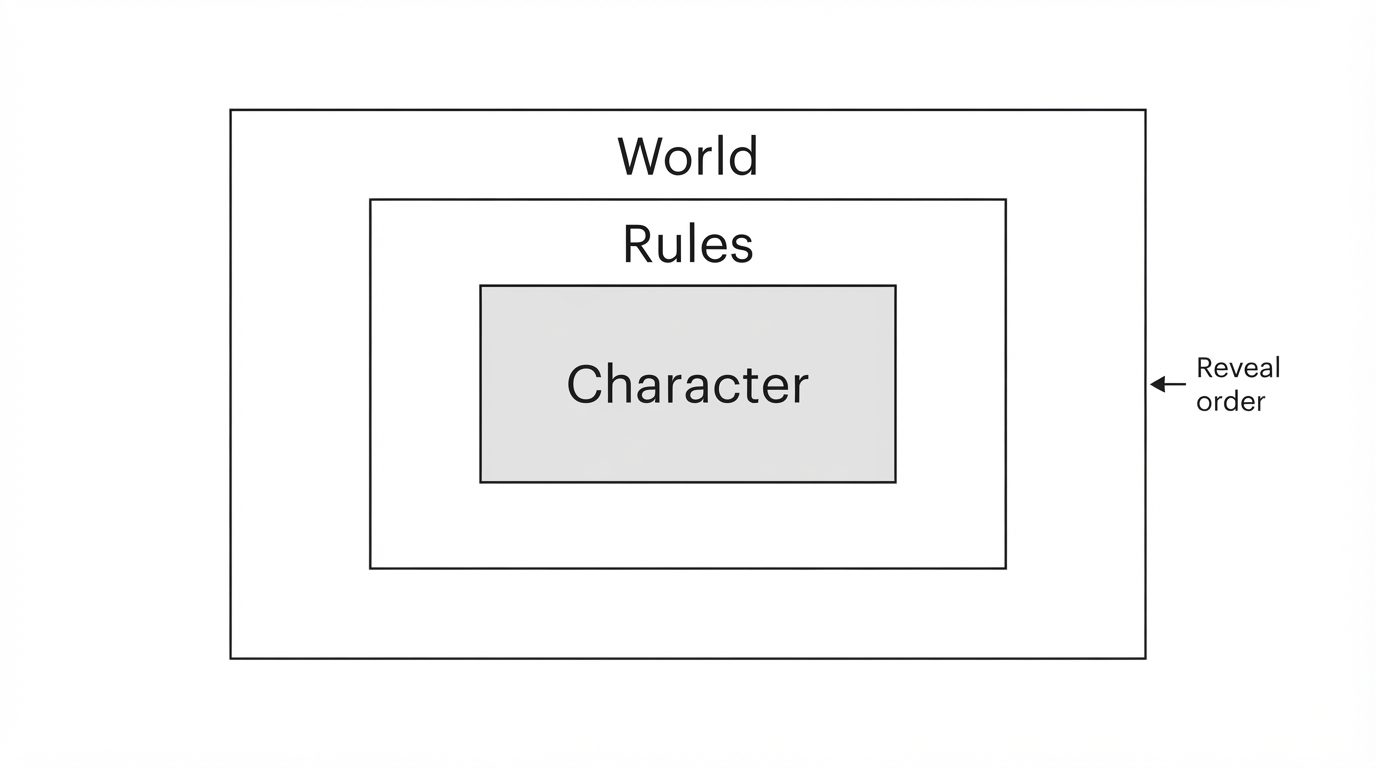
Introduction order: character, rules, world
Picture three concentric layers. At the centre is the character, around them the rules, and outermost the world and its history. Introduction has to run from the inside out.
Viewers can care about a character while knowing nothing about their world. They will not, however, work to understand a world before there is someone in it they care about.
The rules layer is introduced through consequences the character experiences, not through narration. Rather than explaining that magic consumes memory, show the character looking at a photograph and not recognising the person in it.
The outermost layer often never needs explaining at all. Kingdom names, bloodlines, and past wars can appear as background without exposition, and viewers will assemble them on their own.
One symbol beats ten terms
On a narrow screen watched while scrolling, viewers will not remember new names. What they remember is shape.
Choose one recurring object or mark: a ring, a mark on the neck, a lamp that changes colour, or paper that always burns. That symbol becomes the fastest way to tell viewers the world's rules are operating.
A symbol also saves production. Rather than building many different visual elements to signal magic, one consistent symbol is enough and is far easier to recognise in a thumbnail.
Avoid introducing more than three world-specific terms across twelve episodes. Every new term demands explanation space, and that space is taken from the story.
Worldbuilding mistakes that lose viewers
An opening narration explaining the world's history. This is the fastest way to lose viewers in ten seconds, because there is nobody in that narration for them to care about.
Rules that change to save a character. Once viewers feel the rules can be broken whenever the writer needs, there is no tension left in the rest of the title.
Too many characters with different powers. In short form, two clear powers are far stronger than six vague ones. Viewers need to be able to predict what is possible and what is not.
Visuals beyond the production's reach. Fantasy does not demand grandeur; it demands consistency. One simple effect that is always the same is more convincing than a grand one that changes each episode.
Điểm chính cần nhớ
A world is introduced through people, not through explanation. Viewers remember a character who loses memories whenever they use magic far better than they remember the names of three kingdoms. The first is a story; the second is a list.
What makes a fantasy payoff feel earned is the price paid along the way, not the size of the power that finally appears.
- Reincarnation, Time travel, Royal fantasy
- wonder, mystery, and large consequence
- power that costs time, memory, or body
- a power awakening, a curse breaking, or a fate changing
- Dọc, 1–2 phút mỗi tập
Cách dùng genre này trong production
Set the price before the power
Choose from time, memory, or body. A price that is seen, not stated.
Introduce the character first
Viewers must care before they will work to understand the world.
Schedule four rule openings
Around episodes two, five, nine, and twelve. One rule per opening.
Pick one recurring symbol
An object or mark that signals the world's rules are operating.
Limit new terms
Three at most across twelve episodes. Each one takes space from the story.
Keep rules binding
Rules broken to save a character remove tension from the whole title.
Câu hỏi thường gặp
Why do so many short fantasy dramas fail in episode one?
Because the first ten seconds are spent introducing terms that mean nothing yet. Introduce the character first; viewers need to care about a person before they will work to understand a world.
Does a character's power need limits?
It needs a price rather than merely a limit. Power that can be used without losing anything removes tension, because viewers stop worrying whether the character can solve the problem.
Which kind of price do viewers understand most easily?
Time, memory, and body. All three read as risky without explanation, and all three can be shown on screen: a shortened life, a forgotten name, a mark that persists for several episodes.
When should world rules be explained?
Gradually, around four times across twelve episodes at episodes two, five, nine, and twelve. Explaining everything at the start means viewers forget it, because they have no reason to remember yet.
How many new terms are safe in one title?
Three at most across twelve episodes. Every new term demands explanation space, and in a one-minute format that space always comes out of the story.
How do you introduce rules without narration?
Through consequences the character experiences. Rather than explaining that magic consumes memory, show them looking at a photograph and not recognising the person in it. Viewers conclude it themselves, and their own conclusions stick.
Does fantasy require expensive visual effects?
No. What it requires is consistency, not grandeur. One simple effect that is always the same is more convincing than a grand one that changes each episode and breaks the mood.
Why is one symbol more useful than many world elements?
Because viewers on a narrow screen remember shape, not names. One recurring object or mark becomes the fastest way to signal the world's rules are operating, and it saves production too.
May world rules be broken to save a character?
Better not. Once viewers feel the rules bend whenever the writer needs, the rest of the title loses tension because nothing is genuinely at risk any more.
Which fantasy subgenre suits short form best?
Reincarnation, because the premise is understood without explanation and immediately supplies stakes: the character knows something nobody else does, and has a second chance that can still fail.
How many characters with powers should there be?
Two with clear powers beat six with vague ones. Viewers need to be able to predict what is possible and what is not, and that becomes impossible with too many abilities in play.
What should you read after this?
The reincarnation or time travel theme pages for fantasy premises already proven in vertical format, or the microdrama explainer to understand the format's limits before building a world.


Page summary
This section answers the most common questions so you can understand the page context faster before moving to the next creative step.