Contract marriage drama where the obstacle is a document you can actually see
A contract marriage guide for vertical short drama: five clauses that each generate scenes, a breach pattern that tightens toward the end, and why both characters need their own reason to stay.
The contract must be seen, not described. A document that appears on screen, gets signed, and is reread in later episodes is far stronger than a verbal agreement mentioned once.
Contract marriage is one of the most efficient premises in short drama. In a single sentence viewers understand that two people are bound before they want each other, which creates tension without a single scene of explanation.
Its strength rests on one thing: the obstacle has a shape. Unlike romance where the obstacle is a feeling or bad timing, here it is a document that can be shown, read, and broken. Viewers can see the rules, so they can calculate the risk of every moment of closeness.
This page covers structure: which clauses belong in the contract, when those clauses start being broken, and how to give both characters reasons strong enough to stay inside an arrangement that hurts them.
Why Contract Marriage Drama works in short form
Short drama viewers decide in seconds whether to keep watching or swipe away. A familiar theme helps in exactly those seconds, because nobody needs to be taught who the characters are and what the problem is.
For you as the maker, a familiar theme also cuts the work. The conflict already has a shape, the location needs are small, and titles are easier to write. That leaves your energy for what actually sets a series apart: why the character stays, and the turn nobody saw coming.
- The obstacle is a document, so it reads in one shot without explanation.
- Each clause becomes a ready source of scenes callable at any point across dozens of episodes.
- Closeness automatically feels risky because viewers know which rule is being broken.
- Location needs stay small: one shared home covers most of the conflict.
- Every scene can be tested: which clause is being tested here, and what happens if it breaks?
What to prepare before the first episode
The three points below are usually enough to move an idea from a short note to a plan you can actually shoot.
Five clauses that generate scenes
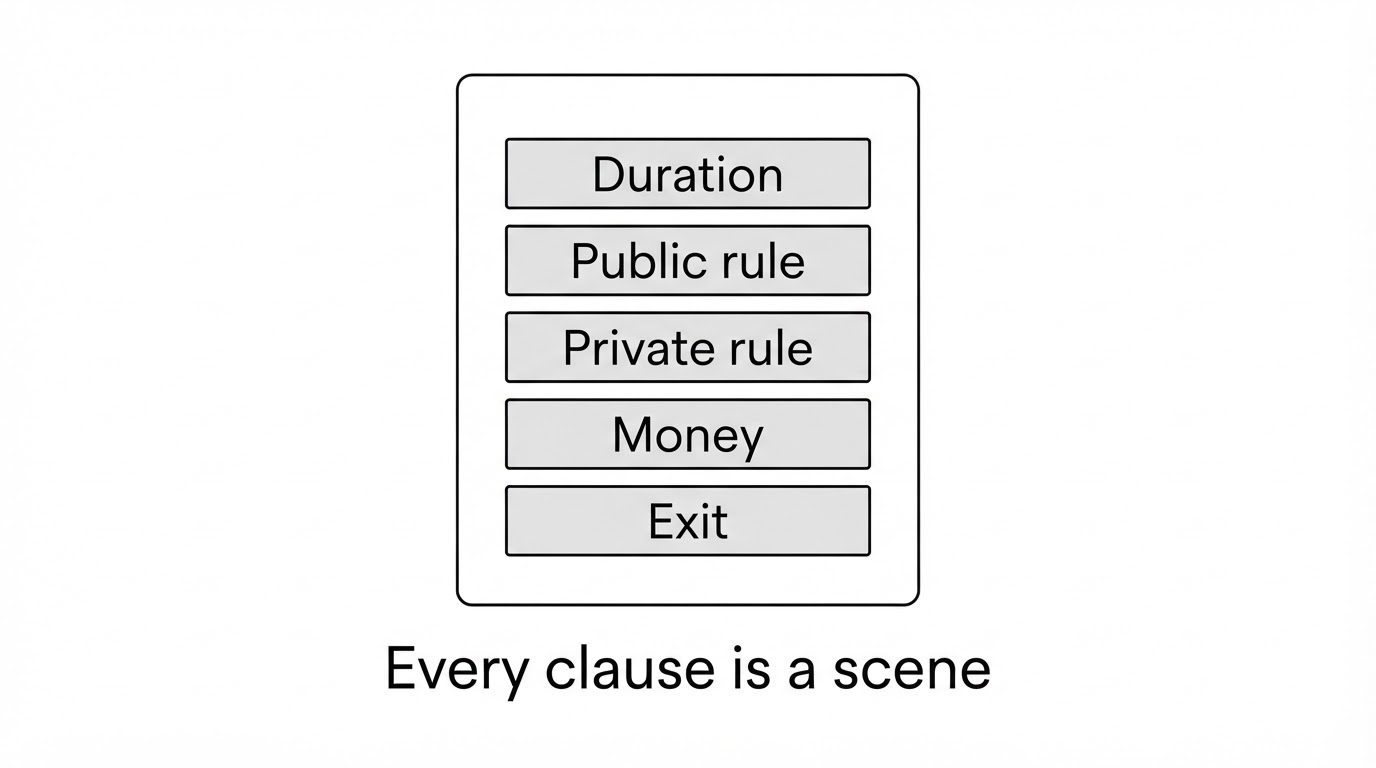
A contract in fiction is not a legal document but a list of scene material. Five clauses cover almost everything you need across dozens of episodes.
Duration sets a clock: how long the arrangement runs. The public rule sets how the two must appear in front of others. The private rule sets the boundary that must not be crossed when they are alone.
The money clause sets what is materially at stake, and the exit clause sets how the arrangement can end and at what penalty.
Every clause is a source of scenes. When you run out of ideas for an episode, pick one clause and build a situation that tests it. This is also why the contract should be reasonably detailed: a contract with a single rule runs out of material quickly.
A breach pattern that tightens
Breaking a clause is the most direct way to show feeling growing without a single line of confession.
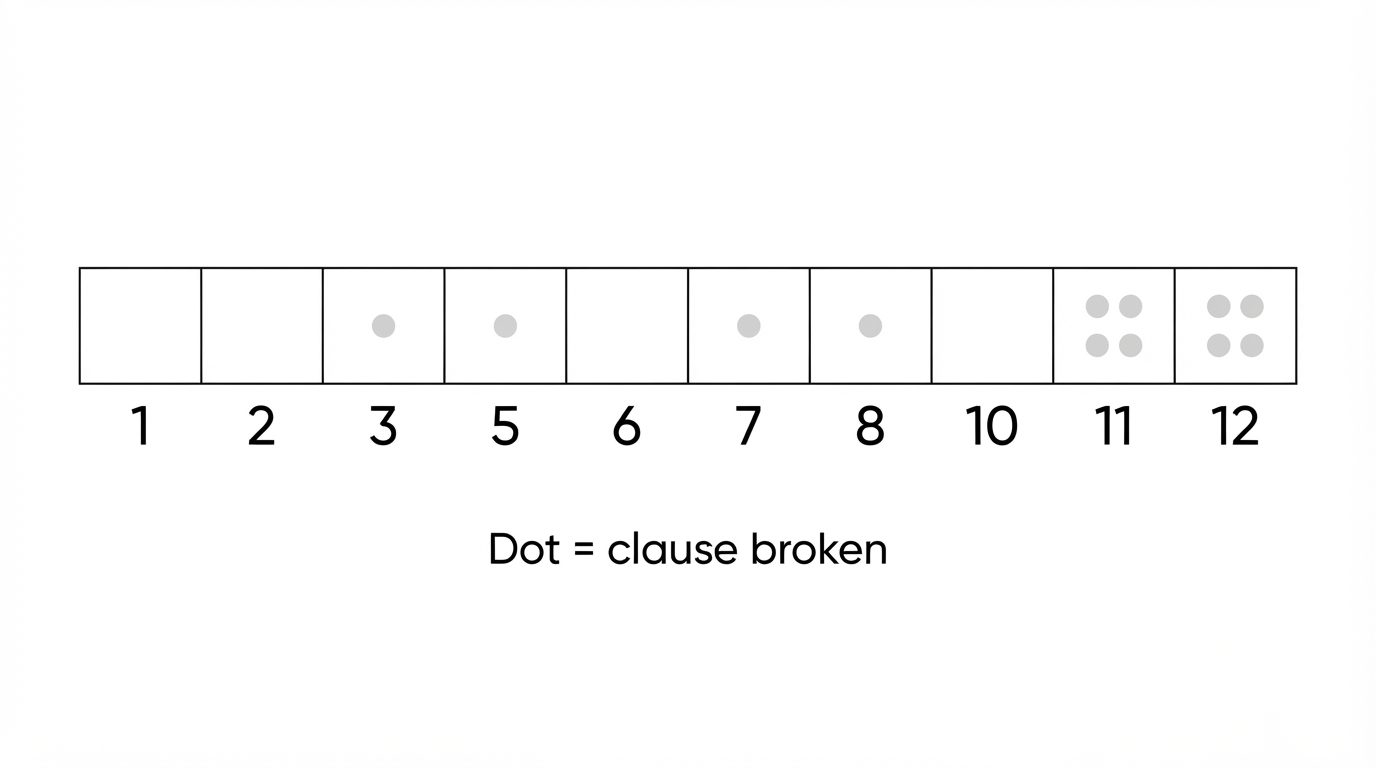
The pattern should escalate rather than spread evenly. In the first third, breaches are rare and small, usually unintentional. In the middle they grow more frequent and both parties begin to notice. In the final third almost every episode breaks something, and both stop pretending it is accidental.
The first breach should happen because of circumstance rather than desire. That gives both characters a reason not to discuss it, and the undiscussed is the best fuel in this theme.
Every breach needs a witness or a consequence, however small. A breach with no consequence reads as an ordinary sweet scene rather than a violation.
Two different reasons to stay
The mistake that most often ruins this theme is giving a reason to only one side. If only one party is desperate while the other simply needs a formal partner, the relationship is lopsided and viewers stop believing it.
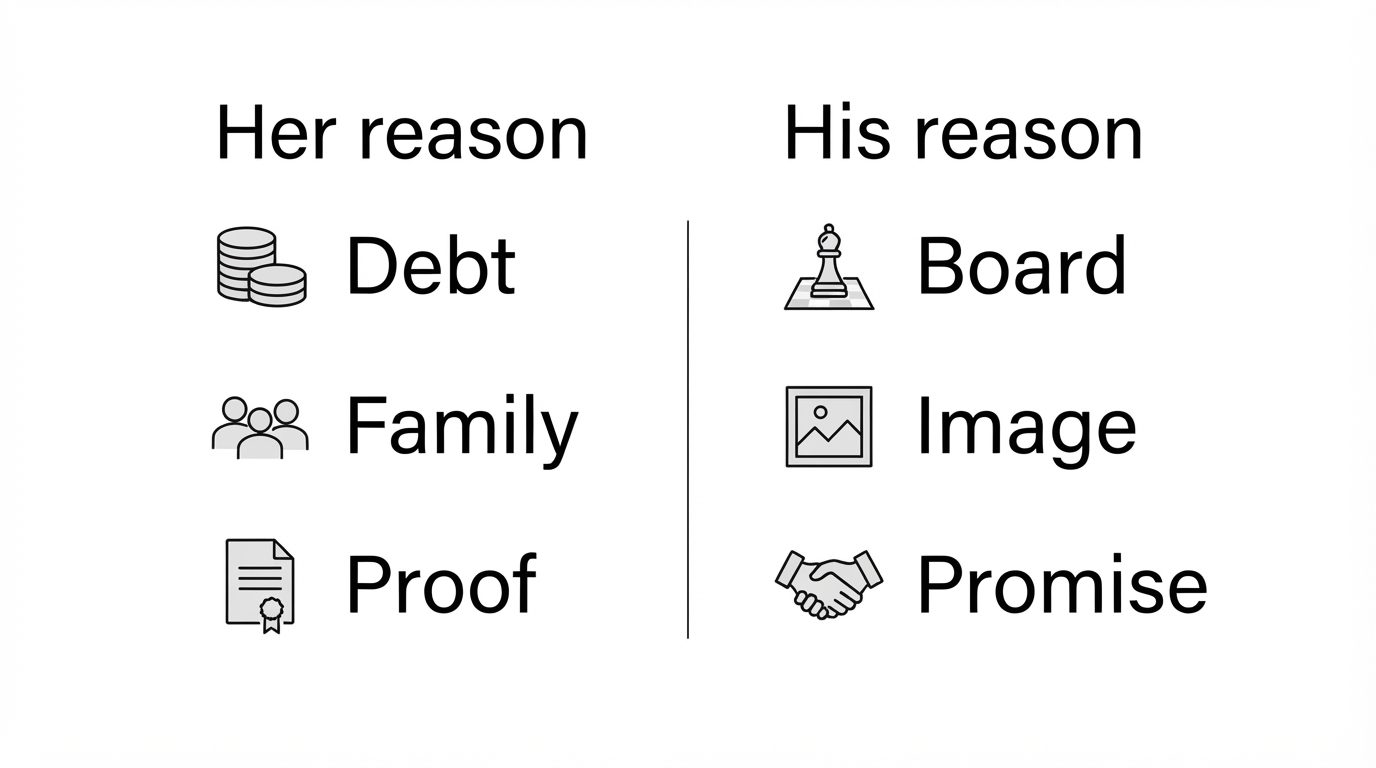
Give each of them a reason strong enough to hold them inside an uncomfortable arrangement. The reasons should differ in kind: one urgent and personal, the other structural and public.
For example, one stays because of a family debt or medical costs; the other stays because of board demands, public image, or a promise made to someone who has died. Neither can walk away, but for different reasons.
Differing reasons also create natural conflict. When leaving the contract benefits one party and harms the other, you have a source of tension you can call on at any time.
The contract has to appear on screen
A verbal agreement mentioned once is quickly forgotten, especially in viewing that runs alongside something else.
Show the document. Show the signature, a page reopened, or a clause read aloud during an argument. Every appearance reminds viewers there are rules currently at stake.
The document also works as a time marker. An end date appearing repeatedly makes viewers count down alongside the characters, and a countdown is one of the cheapest tension devices available.
In the final episode the document should appear once more. What the character does with it, tearing it, signing again, or keeping it, can serve as a visual payoff without a single line of dialogue.
Mistakes that make it feel like a formality
A contract that never restricts anything. If both characters behave exactly like an ordinary couple from episode two, the contract is set dressing rather than an obstacle.
Breaches without consequence. Every breach needs risk, however small: someone sees, a clause becomes actionable, or one of them feels indebted.
A weak reason to stay on one side. A character who could leave at any time but stays without a clear reason makes viewers lose faith in the whole premise.
Cancelling the contract as an ending. Cancelling only removes a rule. What satisfies viewers is a choice that visibly costs one of them, because that is the proof the feeling is genuine.
Điểm chính cần nhớ
Both characters need their own reason to stay, and those reasons should differ in kind. If only one party is under pressure, the relationship runs one way and viewers stop believing the other is genuinely bound.
The strongest payoff is not cancelling the contract but the moment one of them chooses something against their own interest. Cancelling only removes a rule; a costly choice proves a feeling.
- two characters forced to marry for family, business, or inheritance
- the limits of the contract, jealousy, and a secret that must not leak
- a confession, the contract voided, or a surprising public defence
- Dọc, 1–2 phút mỗi tập
How to use this theme in production
Write five contract clauses
Duration, public rule, private rule, money, exit. Detailed enough not to run dry.
Give each a reason to stay
One urgent and personal, one structural and public. Neither can walk away.
Show the document
Signature, reopened pages, an end date appearing at intervals.
Escalate the breach pattern
Rare early, dense late. The first breach happens by circumstance.
Attach a consequence to every breach
A witness, legal exposure, or a sense of debt. Otherwise it is just a sweet scene.
Save the document for the finale
What the character does with it can be the payoff without any dialogue.
Câu hỏi thường gặp
Why is the contract marriage premise effective in short drama?
Because the obstacle has a shape. Unlike romance where the obstacle is a feeling, here it is a document that can be shown and broken, so viewers can calculate the risk of every moment of closeness.
What should the contract contain?
Five clauses: duration, public rule, private rule, money, and exit. Each becomes a source of scenes, so an overly simple contract runs out of material quickly.
Do both characters need to be under pressure?
Yes, but for different reasons. If only one is desperate, the relationship is lopsided and viewers stop believing the other is genuinely bound by the arrangement.
When should the first breach happen?
In the first third, small, and caused by circumstance rather than desire. That gives both characters a reason not to discuss it, and the undiscussed is the best fuel in this theme.
Does the contract document need to be shown?
Very much so. A verbal agreement mentioned once is quickly forgotten. A document appearing repeatedly reminds viewers there are rules currently at stake.
How do you show feeling growing without a confession?
Through clause breaches growing more frequent. An escalating pattern communicates developing feeling without a confession line, which usually arrives too early anyway.
Does every breach need a consequence?
Yes, however small. Someone sees, a clause becomes actionable, or one of them feels indebted. A breach without consequence reads as an ordinary sweet scene.
Should the contract be cancelled at the end?
Cancelling alone feels insufficient. It only removes a rule; what satisfies viewers is a choice that visibly costs one of them, because that is the proof of genuine feeling.
How many locations does this theme need?
Few. One shared home covers most of the conflict, plus one public space to test the public rule. That makes this among the most production-efficient themes available.
How do you build a contract marriage hook in three seconds?
Show a signature or a clause being read, not the wedding. A document plainly governing a personal relationship raises a question immediately without explanation.
How many episodes suit this theme?
Plan twelve first with the five clauses as scene sources. This theme is durable because each clause can be tested repeatedly with different situations.
What should you read after this?
The CEO theme for the power gap frequently paired with this premise, or the romance genre page for managing the rise and fall of closeness.


Page summary
This section answers the most common questions so you can understand the page context faster before moving to the next creative step.