


Making microdramas with AI: what speeds up, and what you still have to decide
How to make a microdrama with AI: a five-stage workflow from prompt to render, a clear split between what the model drafts and what you decide, and an honest comparison of production time.
The most common misunderstanding is that AI replaces the creative process. What actually happens is narrower: the part that used to be most expensive, producing variations, becomes almost free.
In a manual workflow you write one version of a script because writing three costs three times as long. Decisions therefore get made earlier and tested less. In an AI-based workflow three versions can be on screen in minutes, so decisions are made after comparing rather than before.
The consequence is that your work shifts from typing to choosing. And choosing well requires knowing exactly what you are looking for, which means premise and character have to be clearer than before, not vaguer.
The key points on this page
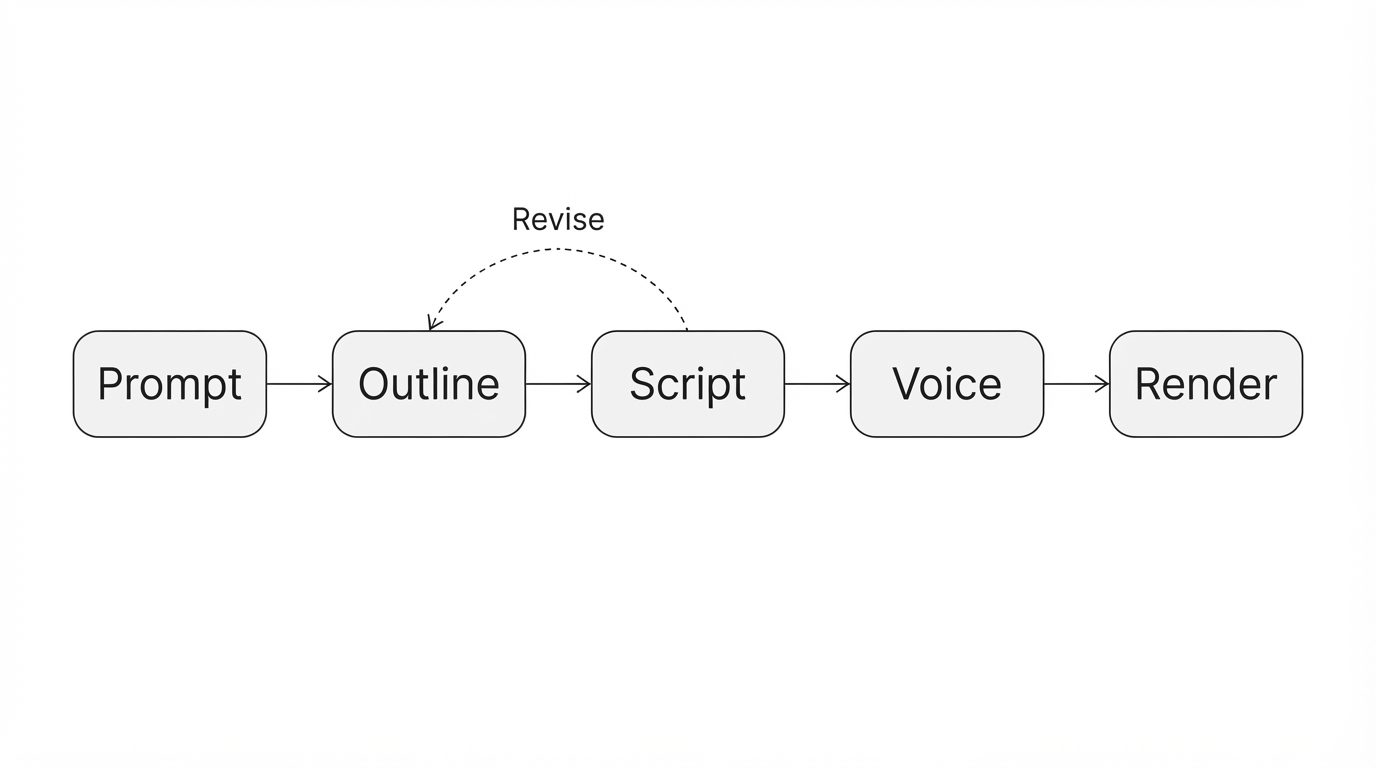
- A five-stage workflow: prompt, outline, script, voice, render, with one revision loop in the middle.
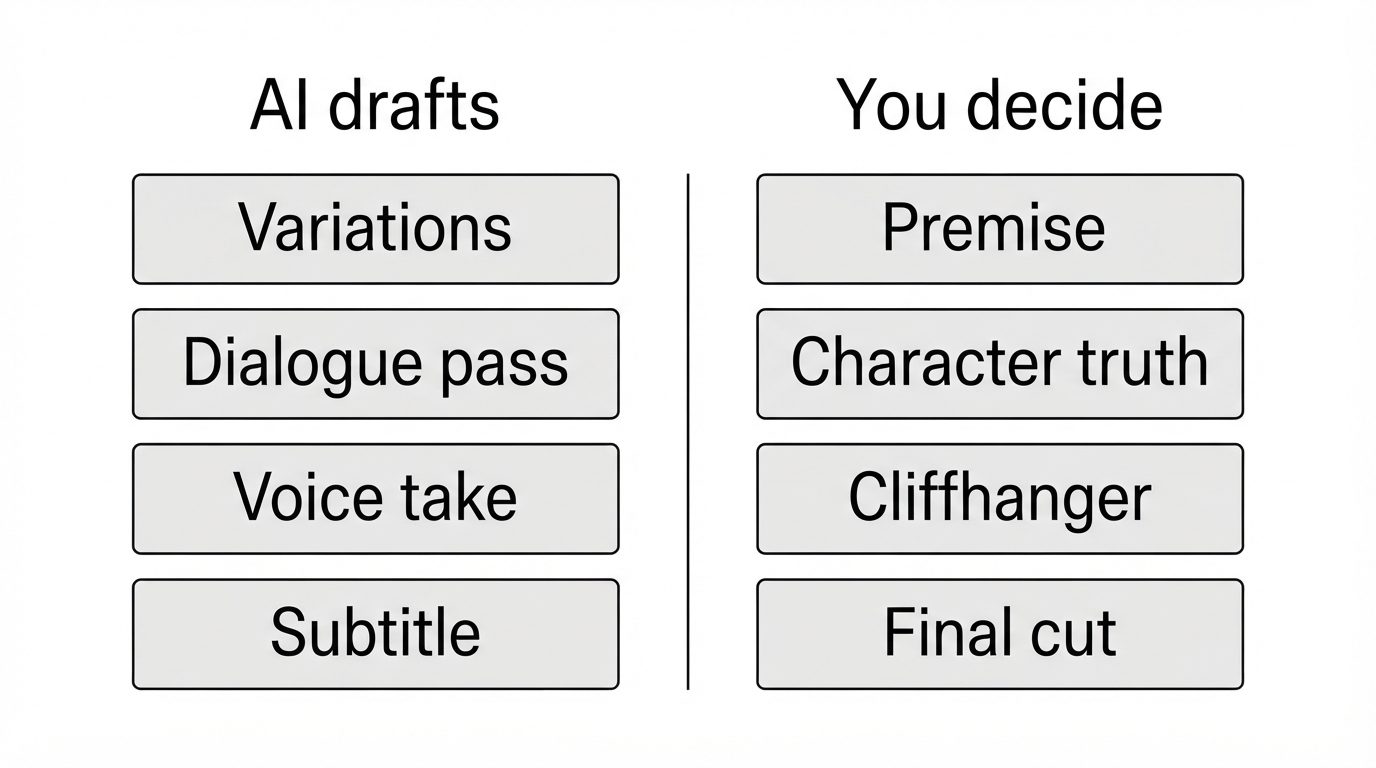
- A clear division between drafts the model produces and decisions that stay yours.
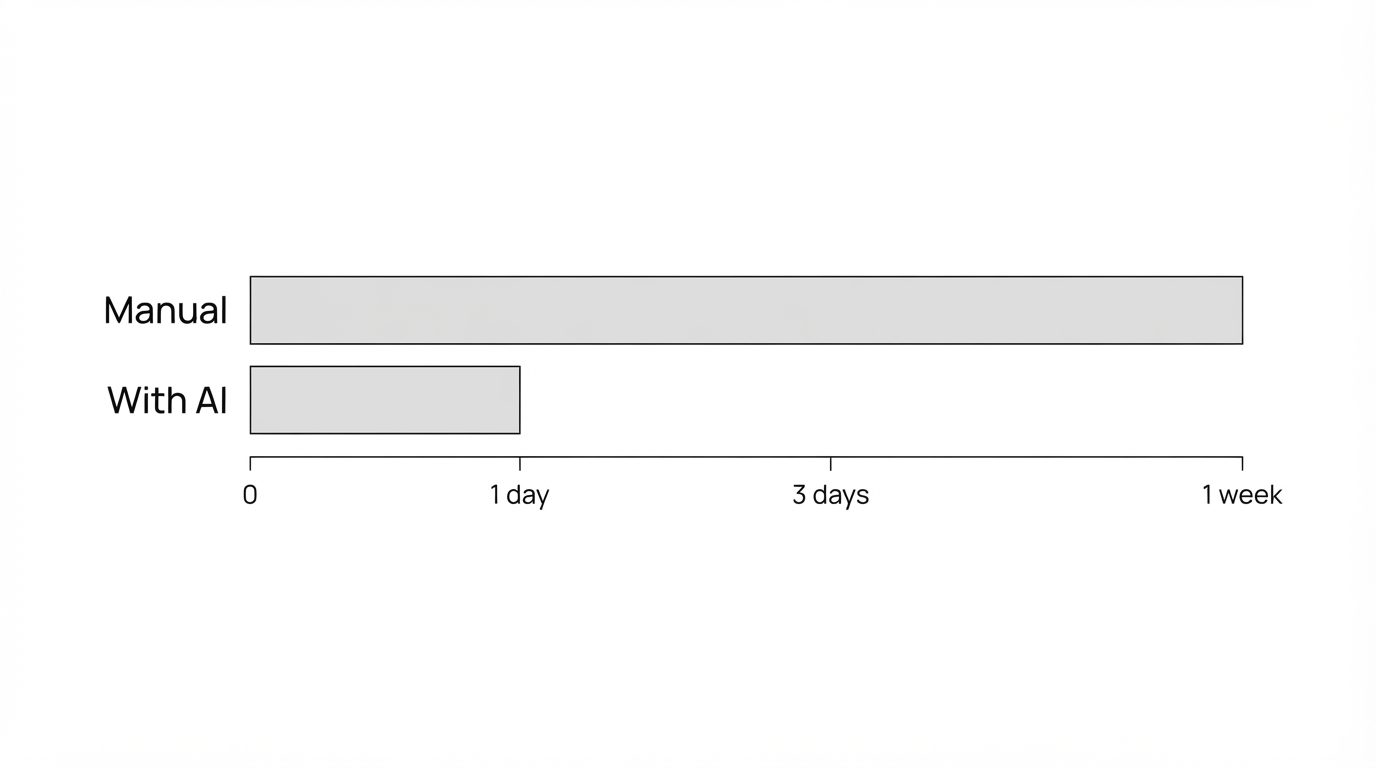
- An honest comparison of production time between manual and AI-based workflows.
- How to write a prompt that returns a usable script rather than a generic one.
- The limits worth knowing before committing a full title to the workflow.
What changes is the order, not the work
AI does not remove the creative decisions; it removes the cost of producing alternatives. That single shift reorders the whole process.
Previously, committing early was rational because revision was expensive. Now committing early is wasteful, because three versions cost almost the same as one.
So the skill that matters most moves from execution to judgement. You need to know what you are looking for before you can recognise it among several options, which puts more weight on premise and character, not less.
The five-stage workflow from prompt to render
The most stable order is prompt, outline, script, voice, render, with one revision loop that returns the script to the outline.
The prompt carries premise, characters, genre, episode count, and tone. The more specific the stakes, the less generic output you have to discard. The outline is twelve sentences, one per episode. Fix problems here, because fixing an outline is far cheaper than fixing twelve scripts.
Write scripts one episode at a time, not all at once. Writing one, reading it, then adjusting the next outline line produces a far livelier story than asking for twelve scripts in a single instruction.
Voice and render are production stages. Here the priority is no longer creativity but consistency: character names, voice colour, and visual style must hold from the first episode to the last.
What the model drafts and what stays yours
This division decides the outcome more than any choice of tool. Models are good at producing variations, tightening dialogue, reading voice, and generating captions. All of these have more than one correct answer and can be judged quickly.
What cannot be delegated is the premise, the truth of a character, where the cliffhanger falls, and the final cut. Each requires a judgement about what an audience will feel, and that judgement needs an intention only you have.
The clearest sign this division has been broken is a script that is tidy but flat. The sentences are correct, the grammar is fine, but nothing is at stake. The cause is almost always the same: the premise was handed to the machine.
The fix is not a longer prompt. It is deciding yourself what the character is afraid of, then asking for the consequences.
How fast an AI workflow actually is
An honest comparison separates writing time from production time. Writing time does not fall as dramatically as advertised, because choosing and revising still take effort. Visual and audio production time is what drops sharply.
In a manual workflow, one short episode involves scheduling, locations, shooting, and editing, so the unit is days. In an AI-based workflow those stages become on-screen iterations, so the unit is hours.
The largest effect is not on a single episode but on the ability to experiment. When a title can be tested to episode three within one day, you can discard a weak premise before spending a budget, and that saving dwarfs any saving in working hours.
Writing prompts that return usable scripts
Prompts that return generic scripts are usually missing three things: stakes, constraints, and voice.
Stakes means naming what is lost if the character fails. "Write a drama about a CEO and a secretary" has no stakes. "A secretary is hiding that she signed forged documents to save her brother, and her new CEO is the person who signed off the report" has stakes you can use.
Constraints means naming what may not happen: how many characters, how many locations, episode length, and tones to avoid. Constraints make output more specific, not narrower.
Voice means describing how each character speaks: who answers in short sentences, who circles, who never answers directly. Without this, everyone sounds the same, and that is the most common problem in AI-written scripts.
Limits worth knowing from the start
Visual consistency between episodes still needs attention. Faces, clothing, and locations can drift between generations, so keep a reference file and check regularly, especially for characters who appear often.
Long dialogue with layered emotion is still better written by a person and tidied by the model. The order matters: writing first and tidying second produces something noticeably different from asking the model to write from nothing.
One thing gets forgotten easily: generated output needs reviewing for things that should not appear on screen, such as unreadable text or details that do not match the local context. A short review per episode is far cheaper than pulling an episode already published.
Finally, an AI workflow does not remove the need for taste. It only moves your work to the part that decides the result.
How to use this theme in production
Write a premise with stakes
Name what is lost if the character fails. Without it, the output will be generic.
Ask for a twelve-episode outline
One line per episode. Fix problems here rather than at the script stage.
Write scripts one episode at a time
Write one, read it, adjust the next outline line. Do not request twelve at once.
Lock each character's voice
Set voice colour and speech pattern before the first episode is recorded.
Render and check consistency
Faces, clothing, locations, and on-screen text against the reference file.
Test three episodes with an audience
Only continue once retention across episodes 1-3 looks healthy.
Frequently asked questions
Can a microdrama be made entirely with AI?
Most of the production chain can be, including script, voice, visuals, and captions. What you still have to decide is the premise, the truth of the characters, where cliffhangers fall, and the final cut, because those determine whether the story feels alive.
Do you need a camera or actors?
Not if the visuals are generated through an AI workflow. What you do need is a clear script and a character reference file so faces and clothing stay consistent between episodes.
How long does one episode take with AI?
Visual and audio production drop from days to hours. Writing time does not fall as sharply, because choosing and revising still take effort. The largest benefit is being able to test three episodes in a single day.
Why do AI-written scripts often feel flat?
Almost always because the premise was delegated to the machine. The sentences are correct but nothing is at stake. The fix is not a longer prompt but deciding yourself what the character fears, then asking for the consequences.
How do you stop every character sounding the same?
Describe how each one speaks in the prompt: who answers briefly, who circles, who never answers directly. Without that instruction, all characters tend to adopt the same sentence rhythm.
Should you request the whole script at once or episode by episode?
Episode by episode. Writing one, reading it, then adjusting the next outline line produces a far livelier story than asking for twelve scripts in one instruction, which tends to repeat patterns.
How do you keep faces and clothing consistent?
Keep a reference file with fixed descriptions of each character and check every episode against it. Small drift between generations is normal and is easiest to catch through routine checking rather than at the end.
What makes a prompt produce specific output?
Three things: clear stakes, constraints such as character and location counts, and a description of each character's voice. Constraints make output more specific rather than narrower.
Does AI output need review before publishing?
Yes. A short per-episode review for on-screen text, local context details, and continuity is far cheaper than pulling an episode that has already been published.
Can AI write convincing emotional dialogue?
For long dialogue with layered emotion, the best results usually come from writing a rough version yourself and asking the model to tidy it. That order produces something noticeably different from asking it to write from nothing.
How many episodes should you produce before testing?
Three. Enough to see whether retention holds past the first episode, and cheap enough to discard if the premise turns out to be weak.
What is the biggest advantage over conventional production?
Not the saved hours, but the ability to discard a weak premise before the budget is gone. When testing a title costs one day, mistakes become far cheaper.


Page summary
This section answers the most common questions so you can understand the page context faster before moving to the next creative step.