


Build drama characters that stay consistent, recognisable, and visually strong
How to build drama characters that stay consistent: a six-field character card, a relationship map that generates conflict on its own, and a change arc across twelve episodes.
Characters in short drama carry more weight than in longer formats, because there is no time to explain anyone. The audience has to grasp who someone is from how they stand, what they wear, and the first line they say.
That puts the work at the front. A character built while writing tends to change personality without reason, and that is the kind of inconsistency loyal viewers catch fastest.
This page covers the fields worth fixing before episode one, the relationships that generate conflict on their own, and the arc shape that makes a character worth following for twelve episodes.
The key points on this page
- A six-field character card that serves both writing and production.
- A relationship map that makes conflict appear without being forced.
- A twelve-episode change arc with a deliberate lowest point.
- How to keep faces, clothing, and voice consistent between episodes.
- The design mistakes that make characters hard to recognise in a thumbnail.
Six fields are enough for one character card
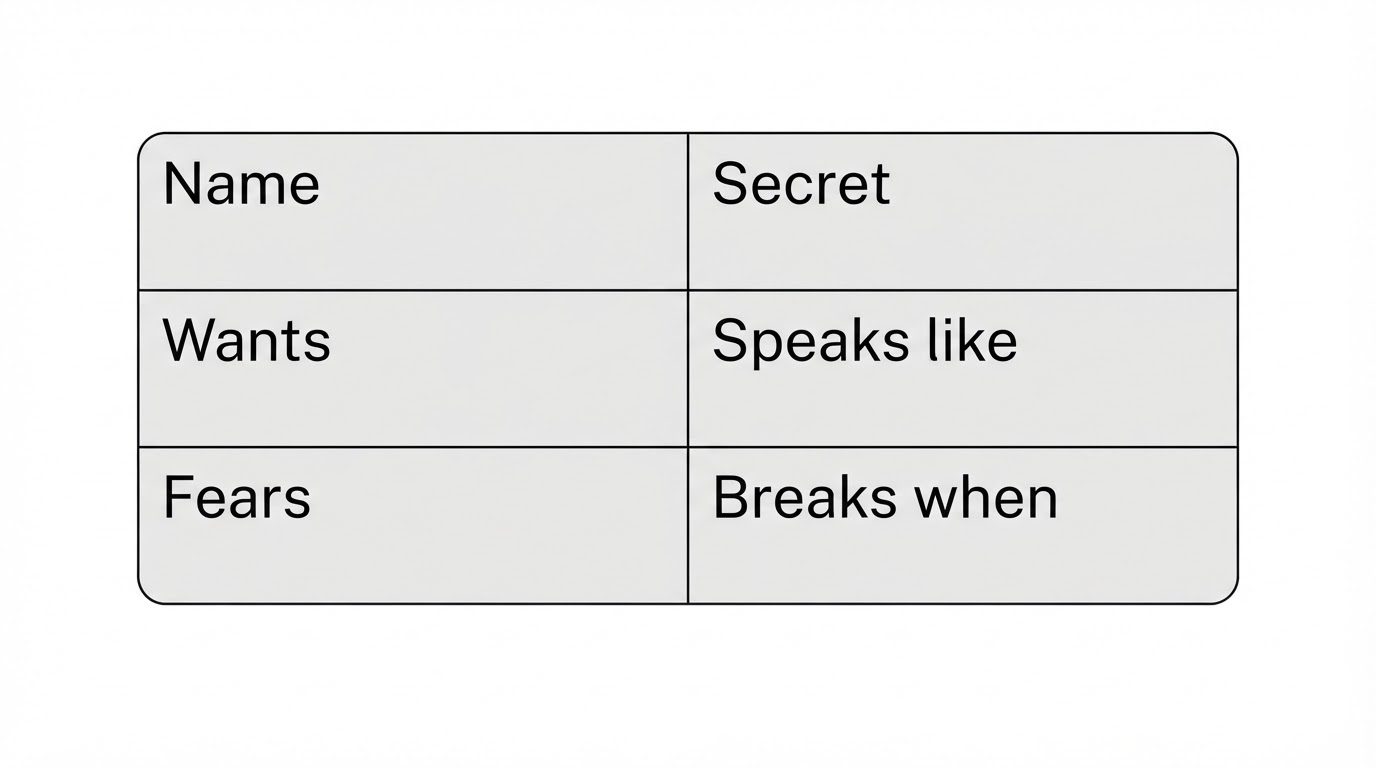
A character profile that runs too long is rarely reread, and one that runs too short does not help while writing. Six fields is usually the balance: name, what they want, what they fear, what they hide, how they speak, and what breaks them.
The first four drive the story. The fifth keeps their dialogue from sounding like everyone else's. The sixth is the one most often skipped and the most useful: it tells you which scene will feel heaviest, and that scene is usually the best in the title.
Fill the card before writing episode one, not after. Characters built while writing tend to shift personality without reason, and that inconsistency is caught faster than you would expect.
A relationship map that generates conflict
Conflict that feels forced almost always comes from characters with no clear relationship to each other. When relationships are already tense, conflict scenes write themselves.
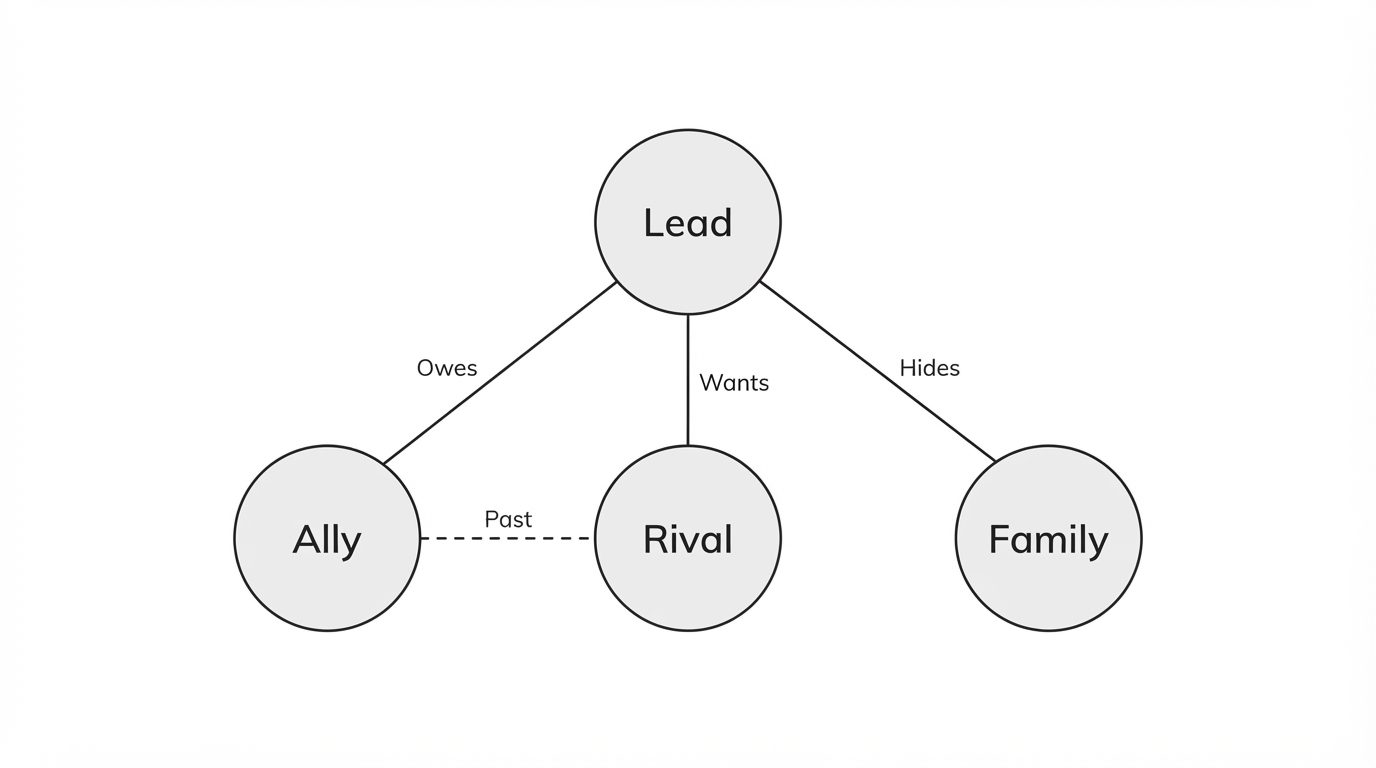
Put the lead in the centre and draw lines to three others: an ally, a rival, and family. Label each line with one word naming the nature of the relationship: owes, wants, hides.
Add one line between two supporting characters. A relationship that does not pass through the lead is what makes a story world feel alive, because the audience senses things happen even when the lead is off screen.
Four characters with clear relationships almost always produce a stronger story than eight with vague ones. In a vertical format, viewers need to remember who everyone is within seconds.
A change arc across twelve episodes
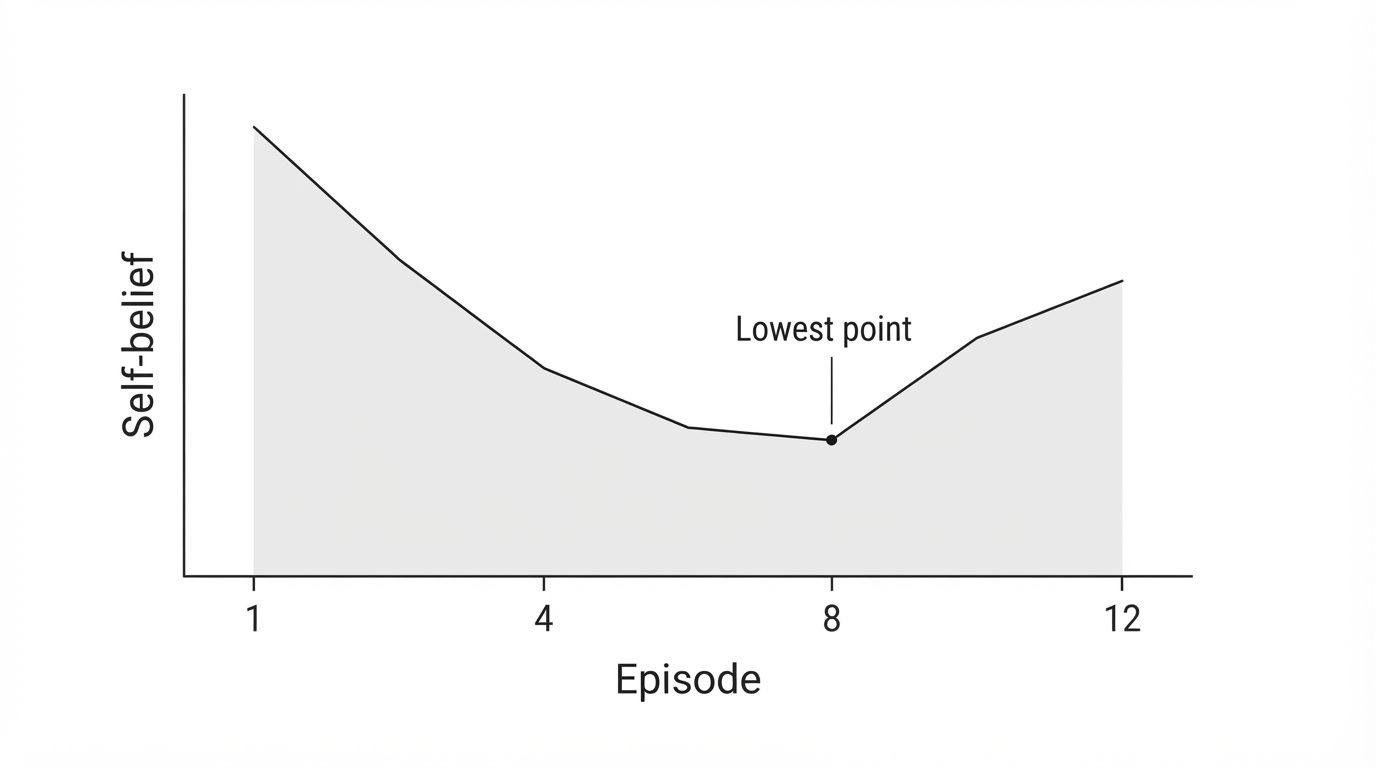
Interesting characters do not travel in a straight line. The shape that most often works falls before it rises: the character begins with a belief, loses it in the middle, then leaves with something different from what they arrived with.
The lowest point is best placed around episode eight, at the transition into the third act. Earlier and the remainder feels flat; later and there is no room for a convincing recovery.
What changes need not be circumstance. It is often stronger when what changes is what the character believes about themselves, shown through one small decision they could not have made in episode one.
Write one sentence of change per lead character before writing anything else. If a character does not change at all across twelve episodes, question whether they need that much screen time.
Keeping faces, clothing, and voice consistent
In an AI-based workflow, small drift between episodes is normal and has to be managed rather than ignored. The three things that drift most are face shape, clothing colour, and voice colour.
Keep one reference file with fixed descriptions and include it in every generation request. A description as general as "young woman" produces a different result each time; one naming specific features is far more stable.
For clothing, fix one primary look per character used across most episodes. This is not a limitation: series with consistent character appearance are considerably easier to recognise in a feed.
For voice, lock the parameters in episode one and use the same ones through to the end. A change in voice colour mid-title is far more noticeable to viewers than a small visual shift.
Design mistakes that make characters hard to recognise
Too many characters with similar silhouettes. In a small thumbnail, viewers recognise shape before face. Give each lead one visual trait that survives being scaled down.
Names that resemble each other. Two characters whose names start the same way confuse anyone watching while doing something else. It is a small problem and free to avoid.
Supporting characters more interesting than the lead. When this happens it is usually not because the supporting character is too strong but because the lead has nothing to lose.
Characters who are always right. A character without weakness leaves no room for bad decisions, and bad decisions are the primary engine of a short serial.
How to use this theme in production
Fill the six-field card
Name, wants, fears, hides, speaks like, breaks when. Do not skip the last.
Draw the relationship map
Lead at the centre, three characters around, every line labelled.
Add one relationship without the lead
This is what makes the world feel like it runs off screen.
Place the lowest point at episode eight
Write one sentence of change per lead character.
Lock descriptions and primary look
Keep a reference file and include it in every generation request.
Test silhouettes at thumbnail size
Scale the characters down. If two are hard to tell apart, change one.
Frequently asked questions
How many characters should one short drama title have?
Four with clear relationships almost always beat eight with vague ones. In a vertical format viewers need to remember who everyone is within seconds of an episode starting.
What belongs in a character profile?
Six things are enough: name, what they want, what they fear, what they hide, how they speak, and what breaks them. The last is most often skipped and most useful when writing heavy scenes.
How do you keep a character's face consistent between episodes?
Keep a reference file with fixed descriptions and include it in every generation request. A description like "young woman" produces a different face each time; naming specific features is far more stable.
Should characters wear the same clothes throughout?
One primary look used across most episodes helps considerably. It is not a limitation: series with consistent character appearance are much easier to recognise in a feed and in thumbnails.
Where should the character's lowest point fall?
Around episode eight in a twelve-episode structure, at the transition into the third act. Earlier makes the remainder feel flat; later leaves no room for a convincing recovery.
What should change about a character over the story?
It is often stronger when what changes is what they believe about themselves rather than their circumstances. Show it through one small decision they could not have made in episode one.
Why is my supporting character more interesting than the lead?
Usually not because the supporting character is too strong, but because the lead has nothing to lose. Add stakes to the lead before reducing the supporting character's screen time.
How do you make characters recognisable in a thumbnail?
Give each lead one visual trait that survives being scaled down. Viewers recognise silhouette before face, so test your design at small size rather than full size.
Do characters need weaknesses?
Yes. A character without weakness leaves no room for bad decisions, and bad decisions are the primary engine of a short serial. Weakness is also what makes them feel human in very little time.
How do you make each character's dialogue sound different?
Assign one speech trait per character on the card and include it in every prompt: who answers briefly, who circles, who never answers directly.
Should characters be built before or after the script?
Before. Characters built while writing tend to shift personality without reason, and that is the kind of inconsistency loyal viewers detect fastest.
Can a character's voice be changed mid-series?
Better not. A change in voice colour is far more noticeable than a small visual shift. Lock voice parameters in episode one and use the same settings through to the end of the title.


Page summary
This section answers the most common questions so you can understand the page context faster before moving to the next creative step.