


Ano ang Genre "Short Drama Thriller" sa Microdrama?
A thriller genre guide for vertical short drama: why the audience should know more than the character, how to build suspicion fairly, and when false leads and reveals should land.
Suspense is built by giving, not withholding. An audience that knows more than the character will watch the most ordinary scene tensely. Holding everything back until the end produces one second of surprise after ten minutes of confusion.
Thriller is often confused with surprise, although the two work in opposite directions. Surprise is information hidden until the end. Suspense is information given to the audience early and then withheld from the character. The second is far stronger in short form.
The reason is simple: an audience that knows there is a bomb under the table will watch an ordinary conversation for a full minute in a state of tension. An audience that knows nothing is just watching an ordinary conversation. Information given early is the cheapest tension engine available.
This page covers the technical side: how to manage who knows what, how to build suspicion that feels fair, and when false and real clues should land across twelve episodes.
Bakit mahalaga ang Genre "Short Drama Thriller" sa short drama production
Sa practice, ang malinaw na genre ay tumutulong sa viewers na magdesisyon agad: relevant ba ang series, interesting ba ang conflict, at worth it ba ang next episode.
Kaya hindi lang catalogue label ang genre. Sinasala nito ang tone, rhythm ng dialogue, shape ng conflict, visual style, at uri ng cliffhanger.
- Viewers stay tense even in scenes where nothing happens, because they hold information the character lacks.
- Writers get a clear framework for deciding which information to release and when.
- Visual budgets stay low because thriller needs faces and pauses more than large locations.
- A twist planned from the start saves revision, because clues are planted while writing rather than added afterwards.
- Every scene can be tested: after this, who knows something they did not know before?
Paano basahin ang genre na ito bago magsulat ng episodes
Sakop dito ang story direction, opening hooks, conflict pressure, at paraan para manatiling human ang characters.
Information asymmetry: who knows what
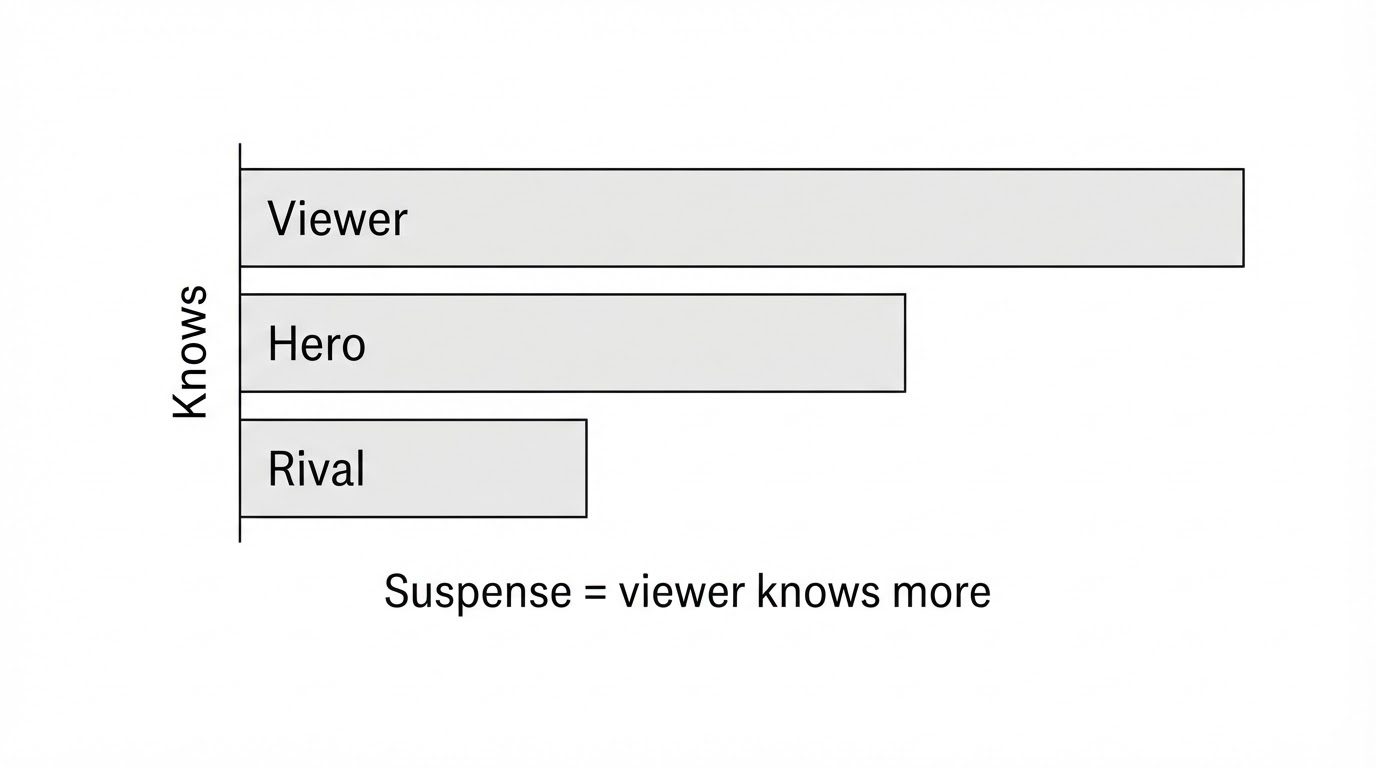
The main instrument of thriller is managing three levels of knowledge: what the audience knows, what the lead knows, and what their opponent knows.
The configuration producing the highest tension is the one where the audience knows most. They see danger the character has not registered, and every ordinary scene becomes tense because they are waiting for the moment of realisation.
A second useful configuration is where the opponent knows more than the lead while the audience also does not know. This produces productive confusion and suits a first act, but it cannot run long.
What to avoid is the audience knowing least throughout. That feels like being kept out rather than like a mystery, and viewers lose their reason to engage.
A fair suspicion map
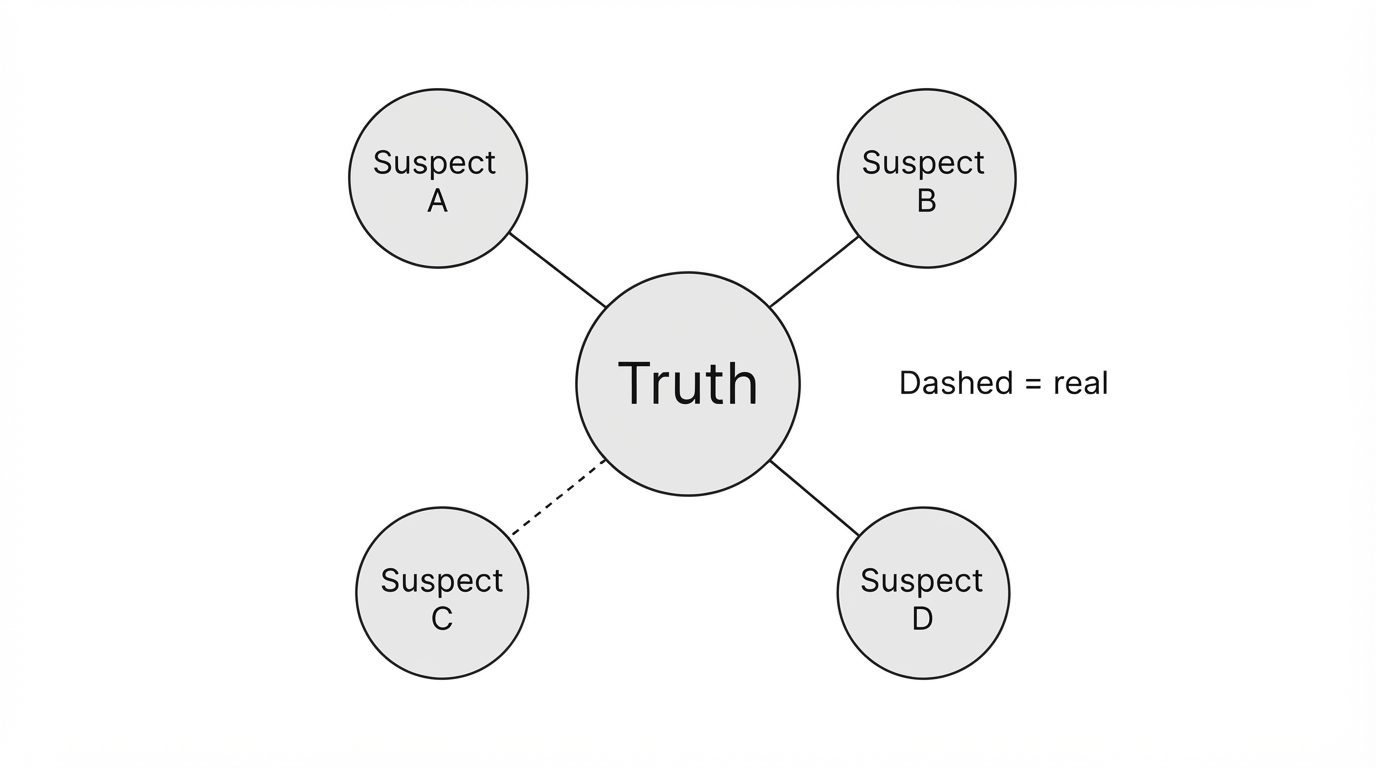
A satisfying mystery needs several candidates who all make sense. Four is usually right for twelve episodes: enough to create doubt, few enough to remember.
Each candidate needs three things: a plausible reason, an opportunity, and one suspicious detail. Without all three, viewers cross them off immediately and your effective candidate count shrinks.
The real answer must already sit among the four from the beginning, with clues planted before episode eight. Introducing a new culprit at episode eleven is the form of cheating that most reliably disappoints.
One trick that works: give the correct candidate the weakest reason early. Viewers cross them off first, and when it turns out to be them, they look back and find the clues were there all along.
Scheduling false leads and real clues
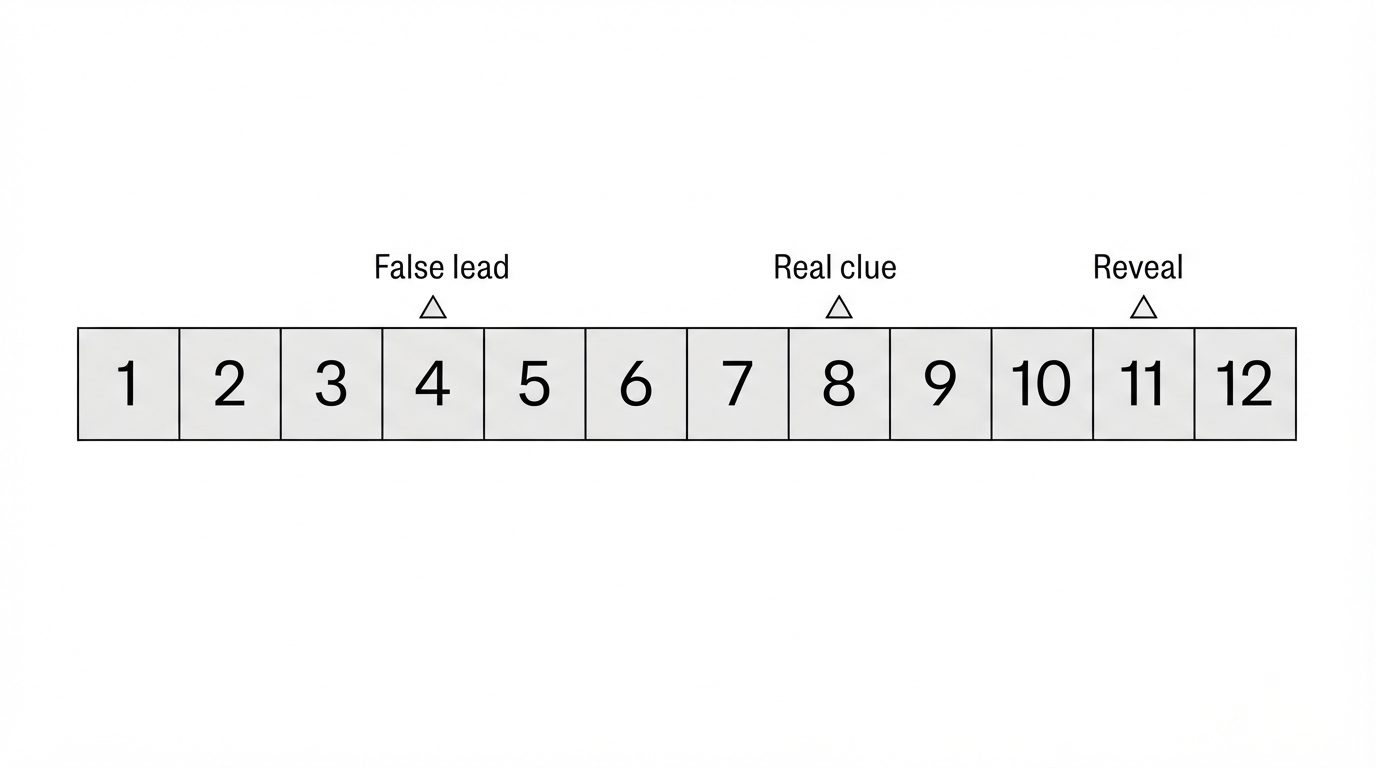
Clue placement across twelve episodes follows a fairly stable pattern: a false lead around episode four, the real clue around episode eight, the reveal around episode eleven.
A false lead is not a lie to the audience. It is a true fact interpreted wrongly. The distinction matters: a true fact misread feels fair when explained, while false information feels like cheating.
The real clue at episode eight is best placed inside a scene whose attention is directed elsewhere. Viewers will pass over it on first viewing and find it when they look back.
Placing the reveal at episode eleven rather than twelve leaves one episode for consequence. A reveal landing in the final episode gives the audience no room to feel its consequences, and consequence is what makes a title memorable.
A fair twist can be traced backwards
The measure of a successful twist is not how surprising it is but how sensible it becomes when traced back.
After a reveal, viewers automatically replay the story in their heads. If they find clues that were already there, they feel fairly outplayed and satisfied. If they find nothing, they feel tricked.
A practical way to guarantee it: once you have decided the answer, write backwards three clues that must appear before episode eight. Plant all three inside scenes that have another reason to exist, so they do not stand out.
Do not fear some viewers guessing early. A viewer who guesses correctly also feels satisfied. What is never forgiven is a viewer who guesses and then finds the answer was something they could not possibly have known.
Mistakes that make a mystery feel like cheating
Introducing the culprit in a late episode. This is the most damaging violation, because the audience never had a chance to solve it.
Information withheld without reason. If the lead knows something and the camera deliberately does not show it, viewers feel the manipulation. Withholding must have a reason inside the story, not a writing reason.
Too many consecutive false leads. After being sent down three dead ends, viewers stop trying to guess, and once they stop guessing the tension is gone.
An answer resting on coincidence. A culprit caught because they happened to drop something feels disappointing. The answer must come from a character's decision, not from luck.
Mahahalagang tandaan
A fair twist can always be traced backwards. After the reveal, viewers must be able to look back and find clues that were already there. A twist that cannot be traced feels like cheating, and cheating damages far more than a predictable twist does.
Satisfaction comes from a combination: the answer makes sense, but it is not the easiest one to guess.
- Psychological thriller, Mystery revenge, Digital thriller
- tension, suspicion, and constant movement toward crisis
- information held unevenly between viewer, hero, and rival
- answering the central puzzle while still earning its surprise
- Vertical, 1–2 minuto bawat episode
Paano gamitin ang genre na ito sa production
Set who knows what
Three levels: audience, lead, opponent. The audience should generally know most.
Prepare four candidates
Each needs a reason, an opportunity, and one suspicious detail.
Decide the answer first
Then write backwards three clues that must appear before episode eight.
Plant a false lead at episode four
A true fact interpreted wrongly, not false information.
Place the reveal at episode eleven
Leave one episode for consequence, because that is what makes it memorable.
Test by tracing backwards
Replay the story. If the clues are not there, the twist is not fair yet.
Mga madalas itanong
What is the difference between suspense and surprise?
Surprise hides information until the end and produces one second of reaction. Suspense gives information to the audience early then withholds it from the character, producing tension across a whole scene. The second is far stronger in short form.
Should the audience know more than the character?
For most scenes, yes. An audience seeing danger the character has not registered will watch an ordinary conversation tensely. An audience that knows least throughout feels kept out rather than curious.
How many suspects is ideal?
Four for twelve episodes. Enough to create doubt, few enough to remember. Each needs a reason, an opportunity, and one suspicious detail so they are not crossed off immediately.
When should the twist be revealed?
Around episode eleven of twelve, not the final episode. Leaving one episode for consequence matters, because consequence is what makes viewers remember the title.
What makes a twist feel fair?
Being traceable backwards. After the reveal, viewers must be able to find clues that were already there. A twist that cannot be traced feels like cheating, and cheating damages more than predictability.
What is a proper false lead?
A true fact interpreted wrongly, not false information. The distinction decides everything: a misread truth feels fair when explained, while lying to the audience feels like cheating.
May a new culprit be introduced in a late episode?
Better not. It is the most damaging violation because the audience never had a chance to solve it. The answer must already sit among the candidates introduced early.
What if viewers guess early?
That is fine. A viewer who guesses correctly also feels satisfied. What is never forgiven is a viewer who guesses and then finds the answer was something they could not possibly have known.
How many false leads are safe?
One strong lead beats three in a row. After being sent down several dead ends viewers stop trying to guess, and once they stop guessing the tension disappears.
May the answer depend on coincidence?
Better not. A culprit caught because they happened to drop something feels disappointing. The answer must come from a character's decision, because that is what makes the earlier struggle meaningful.
Which thriller subgenre is cheapest to produce?
Digital thriller, because the threat arrives through recordings, messages, or data. All of it can be shown on screen without special locations, while feeling more personal rather than less.
What should you read after this?
The revenge theme for the motive most often used in thrillers, or the horror genre page for tension-building techniques the two genres frequently share.


Page summary
This section answers the most common questions so you can understand the page context faster before moving to the next creative step.