


AI voice for drama that sounds alive, clear, and matched to the emotion of a scene
An AI voice guide for short drama: five parameters that turn a voice into a character, how to map characters to voice colours, and an audio pipeline through to a safe loudness standard.
A flat-sounding voice is usually not a limitation of the engine but a set of parameters left at their defaults. Five settings decide most of the difference between a voice that reads text and a voice that reads as a person.
There is a second factor that people underestimate: the script. Lines written to be read look fine on a page and sound stiff when spoken, no matter who or what speaks them.
This page covers the parameters, the mapping that keeps characters distinguishable, the audio stages that most affect the final result, and the writing habits that make dialogue sound like conversation.
The key points on this page
- Five parameters that decide whether a voice reads as a character or as a text reader.
- How to map characters to voice colours so no two are ever confused.
- The audio pipeline from script through to a loudness standard safe for vertical platforms.
- Why voice must be locked in episode one and never changed mid-title.
- The mistakes that make dialogue sound recited rather than spoken.
Five parameters that turn a voice into a character
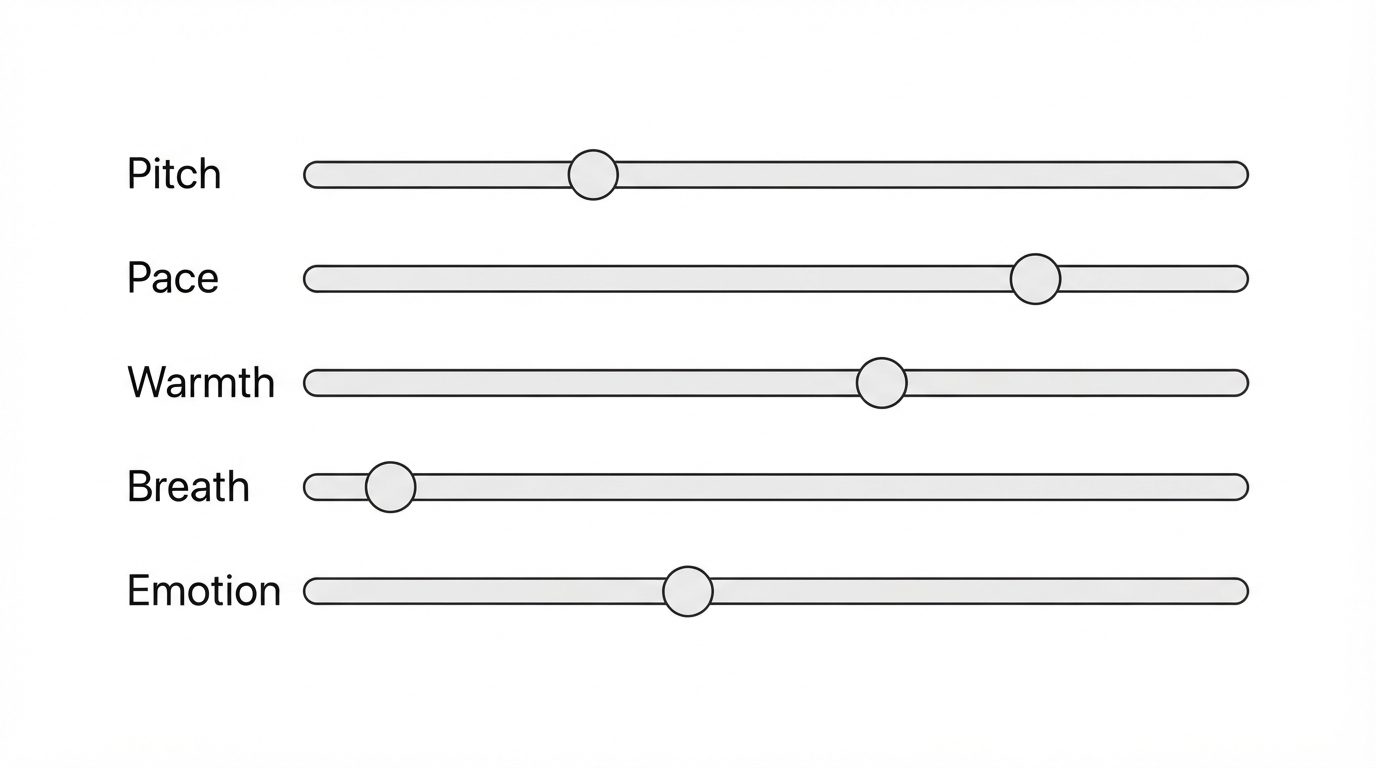
A voice that sounds flat usually has default settings rather than an engine problem. Five parameters matter most: base pitch, pace, warmth, breath, and emotion.
Pitch and pace establish age and temperament. A character in control almost always speaks more slowly than one under pressure, regardless of pitch.
Warmth and breath establish distance. A voice with audible breath feels close and suits intimate scenes; a voice without breath feels formal and suits narration or authority figures.
Emotion is the parameter most tempting to maximise and the one most likely to ruin a scene. Dialogue delivered at high emotion in every line is exhausting. Reserve the top level for one or two moments per episode.
Mapping characters to voice colours
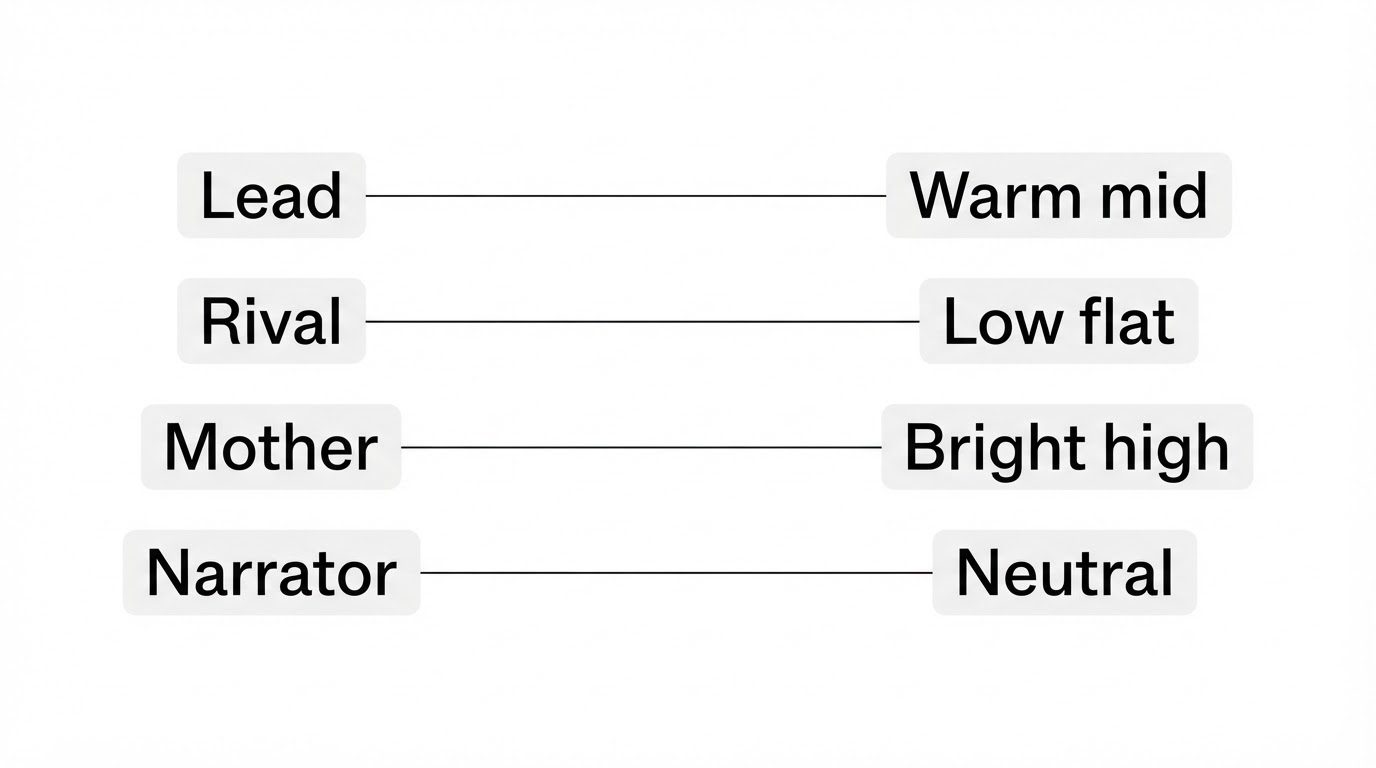
The practical rule is simple: no two characters should be confusable when a viewer is watching while doing something else. In a vertical format viewers frequently look away, so voice becomes an identity marker.
The easiest method places each lead at a different position on two axes: high or low pitch, and fast or slow delivery. Four characters can occupy four different quadrants, and the result is almost always easy to tell apart.
A narrator, if present, should sit outside all four: neutral, slightly slower, without pronounced emotion. A narrator who sounds like one of the characters confuses viewers in the early episodes.
Record this mapping in the same file as the character cards. By episode twenty, that note is what keeps characters sounding the way they did in episode one.
The audio pipeline through to upload
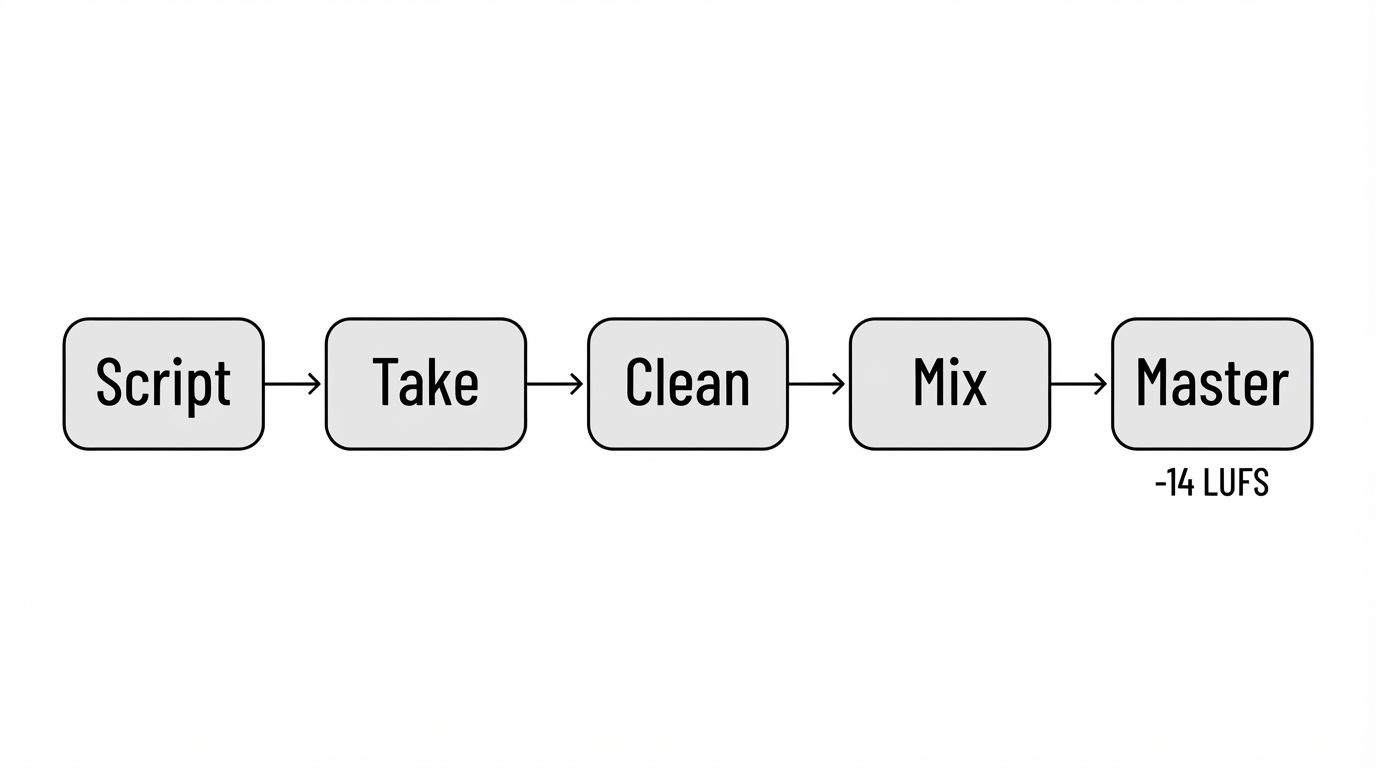
Audio for short drama passes through five stages: script, take, clean, mix, master. Skipping one is usually audible in the result.
Cleaning removes excess breath, empty pauses, and artefacts. This is the stage that saves the most running time: trimming empty pauses alone often removes several seconds per episode, and in this format several seconds matter.
Mixing balances dialogue against music and effects. The safe rule for short drama is that dialogue always sits in front; music competing with dialogue almost always lowers retention because viewers stop working to understand.
Mastering equalises loudness across all episodes. Without it, viewers have to adjust volume between episodes, and that is a small but real reason to stop watching.
Lock the voice in episode one
The temptation to change a voice mid-title usually appears after you find a setting that sounds better. Almost always, resisting is the right call.
Viewers recognise characters by voice far faster than by face, especially in viewing that happens alongside something else. A change in voice colour mid-title feels like a recast, even when the visuals are identical.
If a change is genuinely necessary, make it at an act boundary and give it a reason inside the story, such as illness or a return after a long absence. A change the story explains is far easier to accept than one that simply happens.
Store each character's settings in one file and reuse them. This also saves time, because you are not searching for the right configuration on every episode.
Why dialogue sounds recited
The most common cause is lines written to be read rather than spoken. Long sentences with nested clauses look natural in text and sound stiff when delivered.
The fix happens in the script, not in the voice settings. Read the dialogue aloud. Any part that leaves you out of breath almost certainly needs splitting.
The second cause is the absence of interrupted lines. In real conversation people cut in, repeat themselves, and stop halfway. Adding one or two interruptions per scene immediately makes an exchange feel alive.
The third cause is pauses of identical length everywhere. A pause is a dramatic tool: a long pause before an important answer conveys more than any line could.
How to use this theme in production
Set five parameters per character
Pitch, pace, warmth, breath, emotion. Reserve top emotion for one moment per episode.
Map characters to voice quadrants
High or low pitch by fast or slow delivery. No two leads in the same quadrant.
Read dialogue aloud
Anything that leaves you out of breath needs splitting before recording.
Clean pauses and excess breath
Trimming empty pauses often removes several seconds per episode.
Mix with dialogue in front
Music competing with dialogue almost always lowers retention.
Equalise loudness across episodes
So viewers never have to adjust volume when moving between them.
Mga madalas itanong
Can AI voice sound natural enough for drama?
Yes, but the result depends more on the script than on the engine. Lines written to be read will sound stiff spoken by anyone. Read dialogue aloud before production and split anything that leaves you out of breath.
Which parameters need setting per character?
Five: base pitch, pace, warmth, breath, and emotion. Pitch and pace establish temperament, warmth and breath establish distance, and emotion should be kept high only for one or two moments per episode.
How do you stop two characters sounding alike?
Place each lead in a different quadrant of two axes: high or low pitch, and fast or slow delivery. Four characters in four quadrants are almost always easy to tell apart even without looking.
Can a character's voice change mid-series?
Better not. Viewers recognise characters by voice faster than by face, so a change reads as a recast. If unavoidable, do it at an act boundary and give it a reason inside the story.
How should a narrator be handled?
Give the narrator a voice outside all four leads: neutral, slightly slower, without pronounced emotion. A narrator who sounds like a character confuses viewers in the early episodes.
What loudness standard is safe for vertical platforms?
Consistency across episodes matters most, so viewers never adjust volume when moving between them. Master the whole title to the same target rather than episode by episode.
How should dialogue and background music be balanced?
Dialogue always in front. Music competing with dialogue makes viewers stop working to understand, and that shows directly on the retention graph as a drop across the musical section.
Why does dialogue sound recited rather than spoken?
Usually because no lines are interrupted. In real conversation people cut in and stop halfway. Adding one or two interruptions per scene immediately makes an exchange feel alive.
Do you still need human voice actors for the best result?
For most short drama dialogue, AI voice with well-set parameters is sufficient. What remains challenging is long dialogue with layered emotion, and that is most often improved by rewriting the script.
How long does audio take for one episode?
The decisive stages are cleaning and mixing rather than generation. Trimming empty pauses and balancing dialogue against music usually takes longer than producing the voice itself.
Can you produce another language version from the same audio?
Yes, and the order is the same: translate the script first, then remap each character's voice parameters for that language. Translating and reusing identical settings often produces a pace that feels wrong.
How do you keep settings consistent to the final episode?
Store each character's settings in the same file as their character card and reuse them. Besides consistency, it saves time because you are not rediscovering the right configuration each episode.


Page summary
This section answers the most common questions so you can understand the page context faster before moving to the next creative step.