
Love triangle drama where both options genuinely make sense
A love triangle guide for vertical short drama: what must fill each side of the triangle, how leaning shifts across the serial, and the three conditions that make the final choice feel heavy.
Both options must genuinely make sense. A triangle with one clearly better option is not a triangle but a delay. Viewers stay because they can argue, and they can only argue if both sides have real cases.
The love triangle is the easiest theme to sell and the easiest to ruin. Easy to sell because viewers immediately know the question: who will be chosen. Easy to ruin because once the answer becomes obvious in episode three, there is nothing left to wait for.
Triangles that work always share one trait: both options genuinely make sense. Not one good option and one bad one, but two people who are equally worthy for different reasons. Viewers must be able to argue about it, because the argument is what keeps them watching.
This page covers structure: what must fill each side of the triangle, how to manage the shifting of the lead's leaning, and the three conditions that make a final choice feel heavy rather than predetermined.
Why Love Triangle Drama works in short form
Short drama viewers decide in seconds whether to keep watching or swipe away. A familiar theme helps in exactly those seconds, because nobody needs to be taught who the characters are and what the problem is.
For you as the maker, a familiar theme also cuts the work. The conflict already has a shape, the location needs are small, and titles are easier to write. That leaves your energy for what actually sets a series apart: why the character stays, and the turn nobody saw coming.
- The story question reads in a single shot, so three seconds are not spent on setup.
- Two options mean two conflict sources that can alternate across dozens of episodes.
- Viewers split into two camps, and their advocacy generates conversation that widens reach.
- Cast needs stay small: three characters carry the entire main arc.
- Every scene can be tested: does this shift the leaning, or repeat the same position?
What to prepare before the first episode
The three points below are usually enough to move an idea from a short note to a plan you can actually shoot.
Three sides that each need content
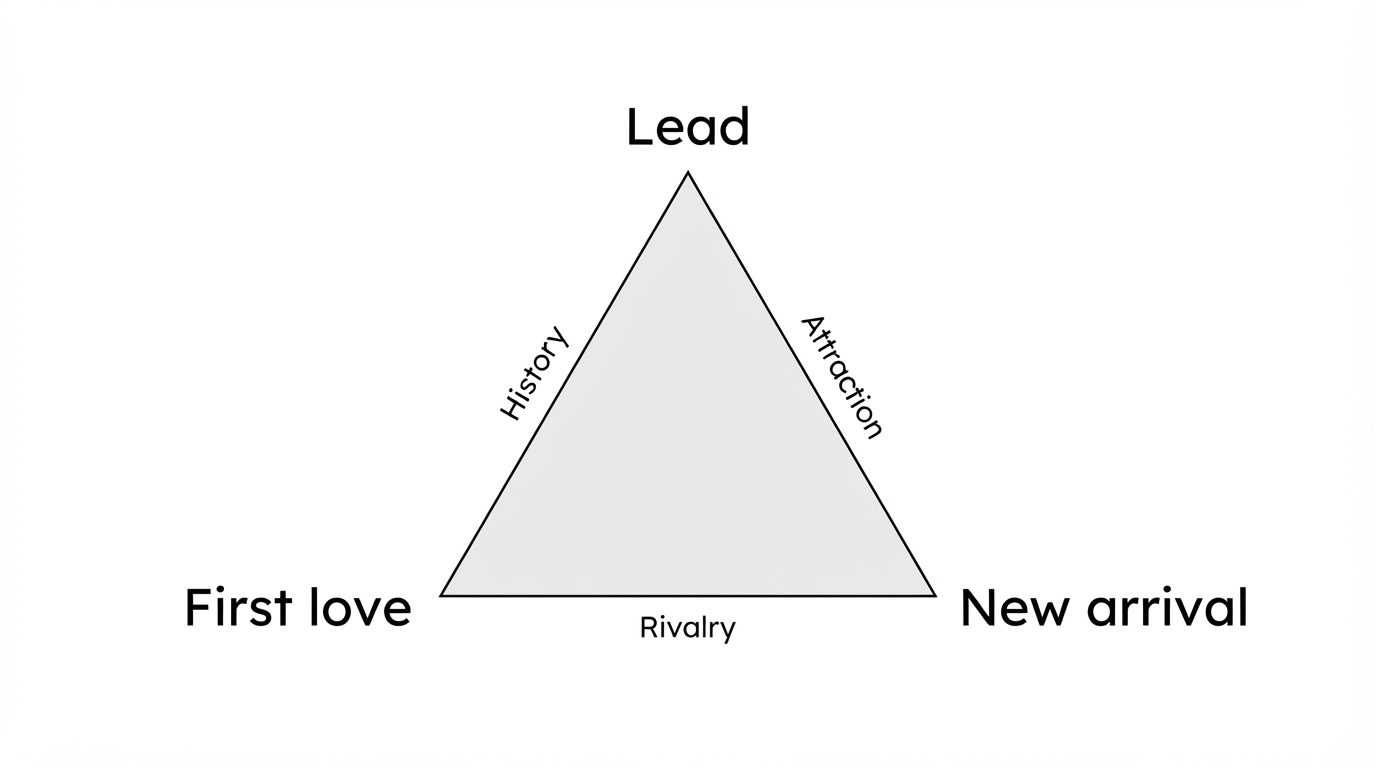
A triangle is not merely one person chosen by two others. What makes it live is that all three sides carry something.
The side between the lead and the first love is filled by history: things they went through together that cannot be explained to anyone else. The side between the lead and the newcomer is filled by attraction: something they have never felt before.
The third side, between the two rivals, is the one most often forgotten. Yet their relationship, whether rivalry, respect, or a past the lead knows nothing about, is the freshest source of scenes precisely because it does not involve the lead at all.
Give at least one important scene between the two rivals without the lead present. Scenes like that are almost always among the most remembered.
A leaning pattern that crosses twice
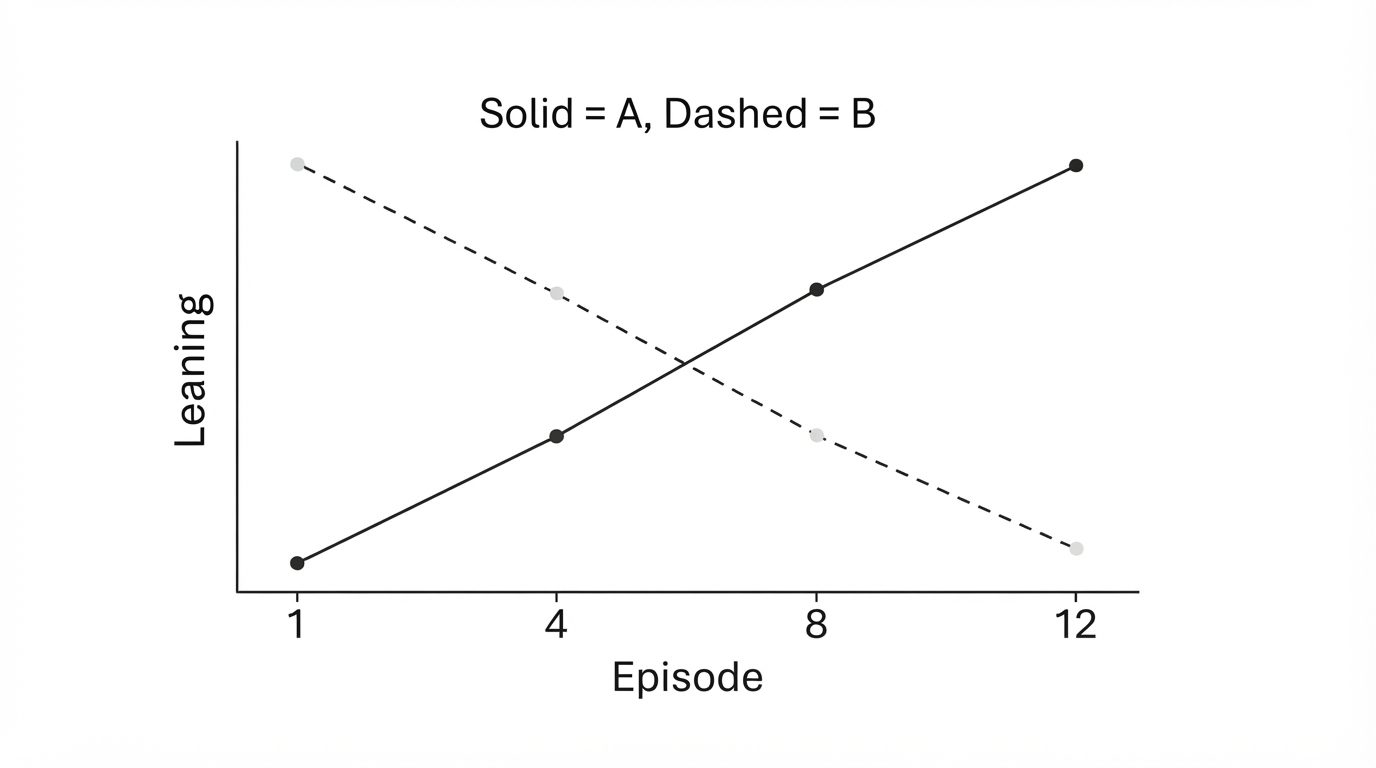
If the lead leans one way from the start and never changes, viewers stop asking. What keeps the question alive is movement.
The pattern that works uses two crossings: around episode four and episode eight. At the first, whichever character was ahead loses position through a mistake or a revelation. At the second, the position reverses again.
Every crossing needs a clear and fair cause. Movement without reason makes the lead look indecisive, and viewers stop respecting them.
After the second crossing, the gap between the two lines should narrow rather than widen. A choice made when the options are nearly equal feels far heavier than one that was obvious two episodes earlier.
Three conditions for a fair triangle
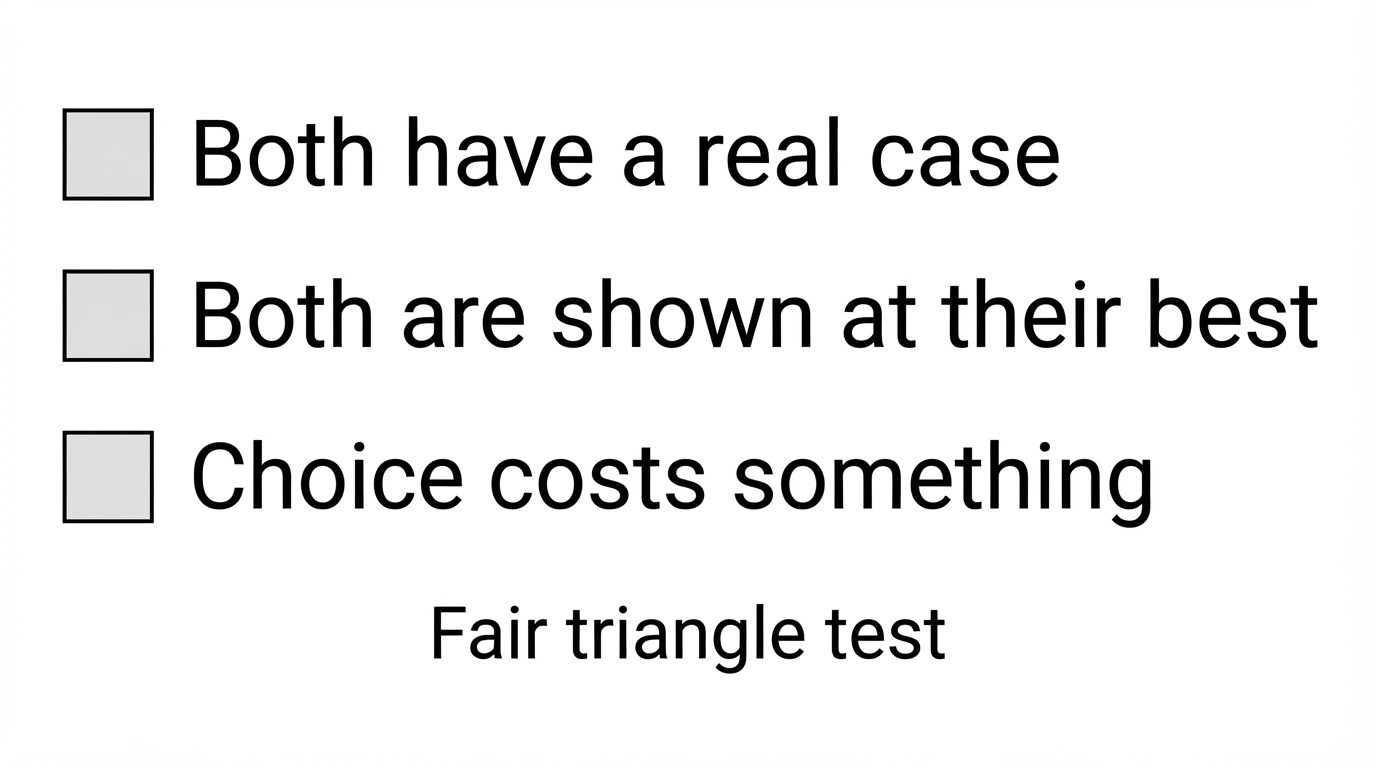
Three things separate a real triangle from a disguised delay.
First, both options have real cases. Not one good person and one problematic one, but two people offering different things of comparable value.
Second, both are shown at their best. If one only appears when they are in the wrong, viewers know the answer from the start and stop waiting.
Third, the final choice has a price. The lead must lose something real by choosing, whether a friendship, an opportunity, or part of their past.
If any condition fails, what you have is a two-person story with an extra character creating delay.
Respect the one who is not chosen
Roughly half your audience will support the character who is not chosen. How you treat them in the final episode decides whether those viewers feel respected or played.
The great temptation is diminishing them near the end so the choice becomes easy: having them do something ugly, or suddenly revealing a side that never existed before. That solves a writing problem at the cost of half the audience.
A better approach gives them a dignified close: a chance to say something true, or a decision to step back that they make themselves. A character who loses well often becomes the most discussed once a title finishes.
There is a practical benefit too: an undamaged character can still be used in a follow-up title.
Mistakes that make viewers stop caring
An answer visible from episode three. If one option is clearly better in every respect, viewers stop asking and simply wait for confirmation.
A lead who never decides anything. Delaying for twelve episodes without a single small decision makes the character look passive, and viewers lose their reason to support them.
Misunderstanding as the only engine. A triangle driven entirely by misunderstandings is exhausting, because viewers know one honest conversation would end it.
A final choice with no price. If choosing closes off nothing, the decision reads as a conclusion long since known rather than something worth twelve episodes of waiting.
Poin penting untuk diingat
The character who is not chosen must be respected to the end. Diminishing them in the final episode to make the choice easy is the fastest way to disappoint half your audience.
The strongest payoff is not the choice itself but the price attached to it. A choice that costs nothing reads as a conclusion; one that closes off something valuable reads as a decision.
- one character choosing between an old love and one arriving as life collapses
- jealousy, misunderstanding, and divided loyalty
- a final choice that closes one relationship and opens a future
- Menegak, 1–2 minit setiap episod
How to use this theme in production
Fill all three sides
History, attraction, and the relationship between the two rivals.
Give both options real cases
Two people offering different things of comparable value.
Show both at their best
If one appears only when in the wrong, the answer is obvious from the start.
Design two crossings
Around episodes four and eight, each with a clear cause.
Narrow the gap near the end
A choice made when the options are nearly equal feels far heavier.
Give a dignified close
The unchosen character steps back with respect rather than being damaged.
Soalan lazim
What makes a love triangle work in short drama?
The question reads in a single shot: who will be chosen. What sustains it is both options genuinely making sense, so viewers can argue, and that argument is what holds them.
Why does my triangle feel dull in the middle?
Usually because the answer was visible by episode three. If one option is clearly better in every respect, viewers stop asking and simply wait for confirmation.
How should the lead's leaning shift?
Design two crossings, around episodes four and eight. Every shift needs a clear and fair cause, because movement without reason makes the lead look indecisive.
What are the three conditions for a fair triangle?
Both options have real cases, both are shown at their best, and the final choice carries a price. If any one fails, it is not a triangle but a delay.
How should the unchosen character be treated?
Give them a dignified close: a chance to say something true, or a decision to step back that they make themselves. Diminishing them to make the choice easy costs you half the audience.
Do the two rivals need scenes together?
Very much so. A scene between them without the lead present is almost always among the most remembered, because it reveals a relationship viewers have not seen.
Is misunderstanding enough to drive the story?
Not on its own. A triangle driven entirely by misunderstanding becomes exhausting, because viewers know one honest conversation would end everything.
May the lead keep postponing the decision?
Better not. Delaying for twelve episodes without a single small decision makes the character look passive. Give them smaller decisions along the way even before the large one.
When should the final choice be made?
When the gap between the options has narrowed, not when one is clearly ahead. A choice made while both are nearly equal feels considerably heavier.
Does the final choice need a price?
It does. The lead must lose something real by choosing, whether a friendship, an opportunity, or part of their past. A choice without a price reads as a conclusion, not a decision.
How many characters does this theme need?
Three carry the entire main arc, which makes this theme highly production-efficient. Additional characters should only apply pressure to one side rather than adding another side.
What should you read after this?
The romance genre page for managing the rise and fall of closeness across a serial, or the CEO theme to add a power gap as extra pressure on one side.


Page summary
This section answers the most common questions so you can understand the page context faster before moving to the next creative step.