


How to make a microdrama, from premise and pacing to a vertical release
A complete guide to making a microdrama from scratch: writing a premise that holds, splitting 60 seconds into three unequal parts, designing for a 9:16 frame, and planning twelve episodes before you shoot anything.
A microdrama is not a short film cut into pieces. It is a serial: 40 to 100 episodes, 45 to 120 seconds each, made to be watched in order with one thumb on a phone. That difference is not about running time. It changes how a story has to be divided.
In a short film, one idea resolves in a single sitting. In a microdrama, one idea is broken into dozens of pieces that each have to stand alone: a reason to begin, one change in the middle, and a reason to open the next episode. Someone who finds you at episode 7 still has to understand what is at stake.
The practical consequence is that you write structure before you write dialogue. A strong first episode is worthless if episodes 2 through 12 have no direction yet.
The key points on this page
- A full work order: premise, 60-second structure, vertical frame, a twelve-episode plan, then production.
- Reference numbers you can use today: 45-120 seconds per episode, hook inside 15 seconds, cliffhanger in the last 10.
- Framing rules for 9:16 including the areas covered by TikTok, Reels, and Shorts interfaces.
- The mistakes that most often get a first episode abandoned.
- Where each stage connects to the rest of the Microdrama AI workflow.
What separates a microdrama from an ordinary short video
A microdrama is serialised, and that single fact drives every other decision. Episodes run 45 to 120 seconds, arrive in vertical 9:16, and a full title usually runs 40 to 100 of them.
Because the audience can leave at any second, the story has to give a reason to stay at every second. Opening scenes that establish mood, which are perfectly normal in longer formats, are fatal here.
That is also why the writing order is inverted. You decide the shape of the whole title first, then write the dialogue for the episode in front of you.
Start with a premise that fits in one sentence
A working premise names three things at once: who the character is, what is pressing on them, and what they lose if they fail. Missing any one of them, the audience has no reason to care by the third second.
Compare two sentences. "A woman works at a large company" promises nothing. "A secretary is hiding that her new boss is the husband who walked out five years ago" already contains a secret, a pressure, and a clock. The second one can be split into episodes immediately.
Test your premise with one question: what happens if the character does nothing? If the answer is "nothing", there is no pressure yet. Add a deadline, a witness, or a debt until doing nothing becomes expensive.
Split 60 seconds into three unequal parts
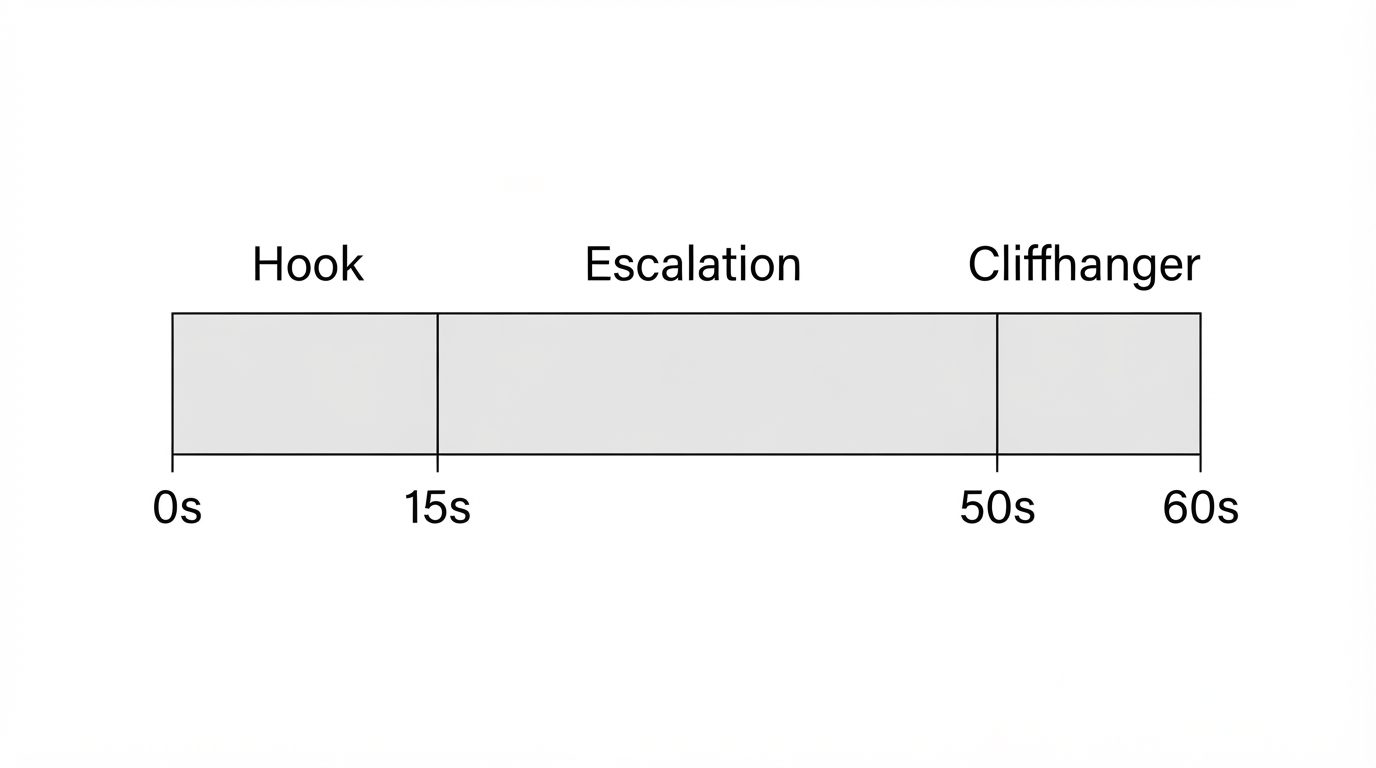
Episodes that work almost always share a shape: a short opening, a long middle, a very short close. A safe ratio is roughly 15 seconds of hook, 35 seconds of escalation, and the final 10 seconds for the cliffhanger.
The hook is not an introduction. It is an event. Do not open on a character walking into a room; open on the second they find a message on someone else's phone. Almost every explanation you think belongs at the front can be moved to the middle and delivered through dialogue once the conflict is already running.
The escalation cannot be flat. It needs at least one turn: new information, a third person entering, or a decision that makes things worse. If a stretch can be deleted without changing anything, delete it.
The strongest cliffhanger is not a random shock but a withheld answer. The audience has known the question since the fifth second; you cut just before it is answered.
Design for 9:16, not for a cropped widescreen frame
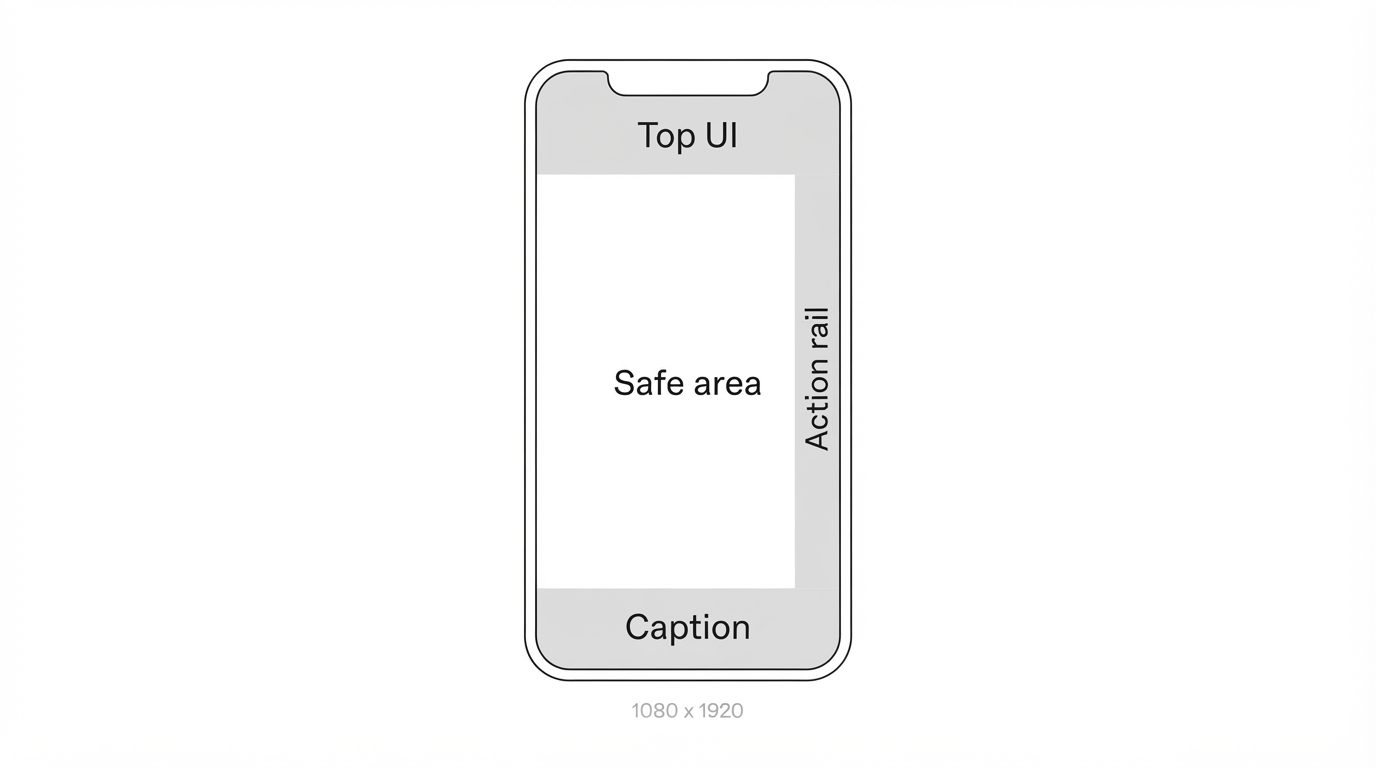
A 1080x1920 frame is not a rotated wide shot. It changes where you place faces, how far the camera sits, and how many people fit in one image. Two characters talking face to face almost never fits; use alternating shots or a front-and-behind arrangement instead.
What gets forgotten: part of your frame will be covered by the app. On TikTok, Reels, and Shorts, the right edge carries action buttons, the bottom carries the caption and account name, and the top carries status and menus. Keep faces and important text in the safe middle.
On-screen text should be large, short, and never more than two lines. Many viewers watch the first five seconds muted, so subtitles are part of the image rather than an addition to it. A comfortable size on a phone is roughly 48 pixels on a 1080-wide canvas.
Plan twelve episodes before producing the first
Before opening a camera or a script generator, write a working title and a one-line summary for the first twelve episodes.
Twelve is a practical number: long enough to prove the premise has fuel, short enough to revise in one afternoon. If you run out of events by episode 9, that is a sign the premise needs strengthening now, not after eight episodes are already produced.
Mark which episodes carry a hard cliffhanger and which are allowed to close more quietly. Eight episodes at identical intensity is exhausting; a managed rise and fall keeps people watching much longer.
The production order from premise to upload-ready file
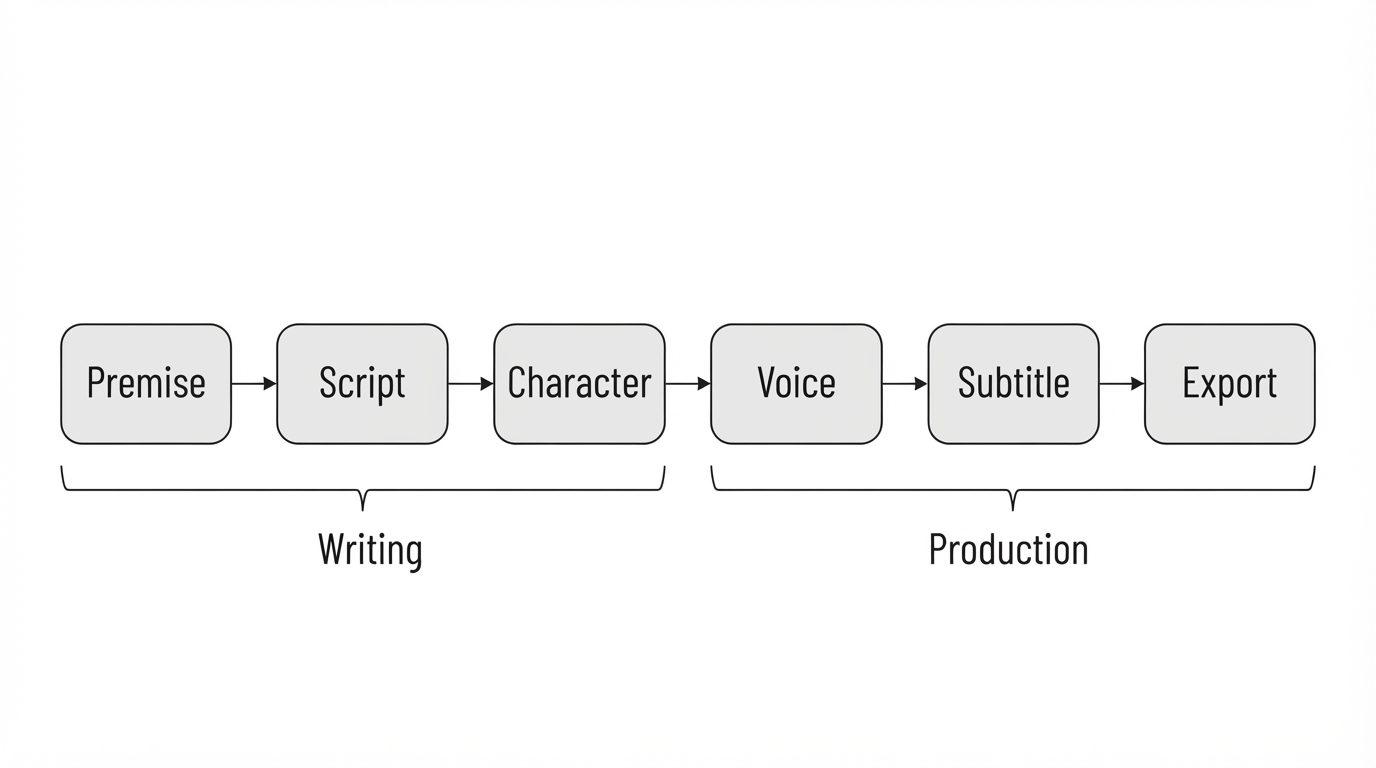
Once the structure is set, production follows a fairly fixed order: premise, script, character, voice, subtitle, export. The first three are writing work; the last three are production work. Keeping them separate stops you from rewriting the story while sorting out audio.
Each stage has its own page in Microdrama AI. Scripts start from the script generator, characters are built in the character tool, voices are set in the voice tool, and captions in the subtitle tool. You do not have to use all of them, but the order stays the same.
Keep one reference file with character names, relationships, and the rules of your story world. By episode 20, that file is what saves you from continuity errors your most loyal viewers will spot.
The mistakes that get a first episode abandoned
Openings that explain. Nobody needs a character's background before they care about the character. Start at the problem and explain on the move.
Dialogue written at the audience rather than at the other character. A line like "as you know, my father died last year" reads false immediately. Let information leak through reactions instead of statements.
Cliffhangers attached to nothing. Cutting mid-sentence is not a cliffhanger, it is an interruption. Cut at the moment the audience already wants a specific answer.
Episodes that run long because the material felt too good to lose. If an episode passes 120 seconds, there are almost always two episodes inside it. Split it, and you get an extra cliffhanger for free.
How to use this theme in production
Write the premise in one sentence
Name the character, the pressure, and the stakes. Test it: what happens if they do nothing?
Plan twelve episodes on paper
One line each. Mark the hard cliffhangers and the quieter closes.
Build a hook inside 15 seconds
Open on an event, not an introduction. Move every explanation into the middle.
Lock the 9:16 rules
Camera distance, face placement, and app-safe areas, decided before the first shot.
Produce voice and captions
Dialogue must carry on a phone speaker and read cleanly with the sound off.
Watch it back as a stranger
If you are bored before the fifth second, rebuild the hook.
Soalan lazim
How long should one microdrama episode be?
45 to 120 seconds. Under 45 seconds rarely fits a change that registers; over 120 seconds and people leave before the cliffhanger. If your script runs past 120 seconds, there are almost always two episodes inside it.
How many episodes does a single microdrama title need?
Industry norms sit between 40 and 100 episodes for a complete title. To start, plan twelve. If those twelve hold without feeling forced, the premise is strong enough to continue.
What is the difference between a microdrama and a short film?
A short film resolves one idea in a single viewing and is built for a wide screen. A microdrama splits one idea into dozens of 9:16 episodes, each with its own hook and cliffhanger, made to be watched while scrolling on a phone.
Can you make a microdrama without a camera or actors?
Yes. An AI-based workflow produces visuals, voice, and captions from the script, so there are no locations to book and no shoot days to schedule. What you still decide yourself is the premise, the characters, and where the cliffhangers fall.
What resolution and aspect ratio should vertical drama use?
1080x1920 pixels at 9:16, 24 to 30 frames per second. Keep faces and key text in the middle, because the right, top, and bottom edges are frequently covered by the app interface.
How do you build a three-second hook that works?
Start at the second something changes, not before. Show a face reacting, an object that should not be there, or a line that should not have been heard. Avoid logos, title cards, and establishing shots in the first three seconds.
How long does one episode take to produce?
In a manual workflow, a short episode usually costs several working days because it involves shooting and editing. In an AI-based workflow most of the time moves into writing and revision, while visual and audio production runs far shorter.
Which genre is easiest for a beginner?
Romance and revenge are usually the easiest because the audience recognises the conflict within seconds and the location needs are small. Horror and fantasy demand higher visual consistency, so they are better attempted once you are comfortable with episode rhythm.
Do you need full scripts or is an outline enough?
Write the twelve-episode outline first, then full scripts only for the episodes you are about to produce. Writing 40 complete scripts before testing episodes 1 through 3 is a large bet, because audience reaction almost always changes the direction.
How do you keep viewers past episode 5?
Episodes 5 through 8 are the most common drop-off point. The most effective fix is introducing information that changes the meaning of what already happened, so the story feels like it is developing rather than circling.
How many people does one microdrama title take?
A conventional production usually involves a writer, director, cast, and editor. With an AI-based workflow one person can hold the whole chain from premise to export, provided they stay disciplined about structure and continuity.
Where do you start if you have no idea yet?
Begin with the story ideas page to find a source of conflict, then the script generator to turn it into an episode outline. Once the premise feels alive, come back to this guide to build the structure.


Page summary
This section answers the most common questions so you can understand the page context faster before moving to the next creative step.